
Senior Reporter
Movement into and out of designated communities could become subject to a permit system if an area is declared a “closed area” under Government’s new Special Operations Bill, 2026.
The bill was passed in the House of Representatives shortly after midnight on Saturday and is now headed to the Senate. It is intended to replace the Government’s defeated Zones of Special Operations (ZOSO) Bill.
The legislation establishes seven policing districts across Trinidad and Tobago and creates a legal framework for special operations by law enforcement targeting criminal activity.
But what does it mean for residents and others who need to travel through an area once it is designated a closed area?
Under Clause 11, the President may, by Order subject to negative resolution of the House of Representatives, declare an area within a policing district a closed area.
Such a declaration can be made where public safety and peace are threatened by escalating violent crime, homicides, shootings, kidnappings, gang-related activity, the prevalence of illegal firearms, ammunition, weapons or explosives, or where a gang exercises control over or intimidates a community.
The President must also be satisfied that ordinary law enforcement measures are insufficient to restore public safety and peace.
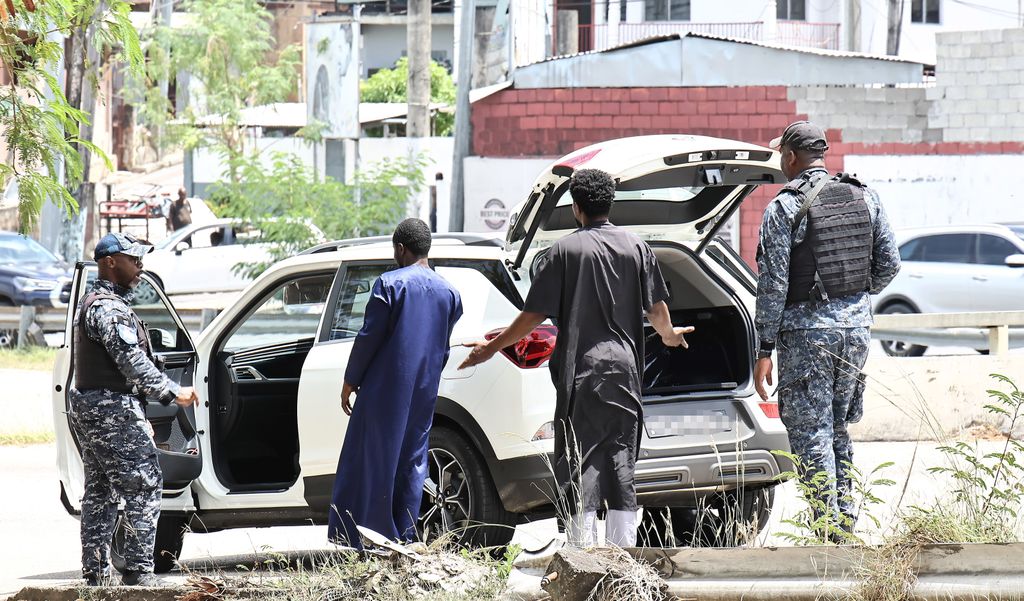
Once an area is declared closed, the Head of Special Operations may enforce the closure through barriers, roadblocks or other measures.
Clause 12 states that no person may enter or leave a closed area without a permit.
Exemptions apply to specified public officials, the Head of Special Operations and the Head of Military Assistance responsible for the area, as well as police officers and Defence Force personnel travelling to, from, or while performing their duties.
Permits may be issued by the Commissioner of Police, the Chief of Defence Staff, the Head of Special Operations, or the Head of Military Assistance responsible for the area.
A permit may specify the times a person is permitted to enter or leave and set conditions or restrictions governing that movement.
The bill also authorises the CoP and other designated officials to suspend or cancel permits.
During debate on the legislation, Defence Minister Wayne Sturge said residents of communities designated as closed areas would be able to apply for permits electronically, including through WhatsApp.
The bill does not create a specific exemption for people merely travelling through a closed area.
Instead, Clause 12 establishes the general rule that no person may enter or leave a closed area without a permit, unless they fall within one of the listed exemptions.
As written, this could mean that someone whose route requires them to pass through a closed area may need permission to do so.
The conditions attached to a permit could determine when and under what circumstances such movement is allowed.
Restrictions may become even more specific.
Under Clause 13, the Head of Special Operations may establish a cordon around or within a closed area using barriers, roadblocks or other measures.
Notice of the cordon must be published and displayed in conspicuous locations. The notice must identify the boundaries of the cordon and outline the requirements applicable to persons within, entering or leaving the area.
Anyone not specifically exempted under the legislation would require a permit to enter or leave the area within the cordon.
As with closed areas, those permits may be issued, suspended or cancelled by authorised officials.
A further layer of restrictions can also be imposed.
Under Clause 14, the President may impose a curfew in a closed area by Order, subject to negative resolution of the House of Representatives.
The curfew may require people within the area to remain on their premises during specified hours.
However, permits may be issued allowing individuals to be outside their premises during restricted hours, subject to conditions and limitations.
The bill gives authorities the power to establish barriers and roadblocks as part of a closure or cordon.
Persons attempting to enter or leave a closed area would therefore be subject to the requirements of the relevant order, cordon and permit system.
A person who enters or leaves a closed area without the required permit, or breaches a permit condition, commits an offence. The penalty is a fine of up to $50,000 and imprisonment for up to one year upon summary conviction.
The same penalty applies to breaches involving cordons and violations of curfew orders or permit conditions.
The legislation grants police enhanced powers during special operations.
Under Clause 15, a police officer may search a place, vehicle or person without a warrant if there is reasonable suspicion that an offence is being committed, has been committed, or is about to be committed.
Police may also seize vehicles, articles or documents that may assist in preventing or controlling public disorder or that may be of substantial value to an investigation.
However, the bill specifically prohibits the seizure of tools used in a lawful trade or business and materials protected by legal professional privilege.
Authorities must compile a list of seized items and provide a receipt to the owner or person in possession of the property.
The bill establishes a threshold for arrest and detention.
Under Clause 17, a person may not be arrested or detained during a special operation in a closed area unless the Head of Special Operations is satisfied there are reasonable grounds to suspect that the individual has committed, is committing, or is about to commit an offence.
The person must be informed of the reason for the arrest or detention and brought before a magistrate as soon as reasonably practicable.
A magistrate may authorise detention for up to 48 hours, after which the person must be brought before a High Court judge.
The legislation also provides for immediate release where a magistrate or judge is not satisfied that continued detention is justified.
The bill requires, as far as possible and subject to available resources, that police and Defence Force personnel use body-worn cameras during special operations in closed areas.
Footage may be accessed by oversight and investigative bodies, including the Police Service Commission, Police Complaints Authority, internal police investigative units, the Office of the Director of Public Prosecutions and the Ombudsman.
The legislation also requires weapons and ammunition assigned to police and Defence Force personnel involved in special operations to be registered with the Trinidad and Tobago Forensic Science Centre, including ballistic signatures, unless otherwise determined by the relevant authorities.
The bill creates a framework under which a community can first be designated a closed area, after which authorities may use barriers, roadblocks and other measures to regulate movement.
For most residents and members of the public, entering or leaving such an area would generally require a permit.
A separate cordon could impose additional restrictions within part of the closed area, while a curfew could prevent people from leaving their premises during specified hours unless authorised.
The legislation does not necessarily mean roads are automatically closed to everyone. Rather, it establishes a controlled-access system under which movement may continue where authorised by permit and subject to conditions imposed by authorities.
The bill provides for permits to be issued electronically, and Defence Minister Wayne Sturge said residents could apply through WhatsApp and other electronic channels.
Guardian Media has submitted questions to Prime Minister Kamla Persad-Bissessar, Homeland Security Minister Roger Alexander and Sturge seeking clarification on how the system would operate in practice, including:
How would residents apply for permits?
Would permits be valid for a single trip or a specified period?
Would persons merely passing through a closed area require permits?
What happens if someone is inside an area when a closure or cordon is imposed?
How would permits be verified at checkpoints?
What happens if a person’s phone is dead or they cannot access their electronic permit?
Could someone leave without a permit in an emergency, such as a medical emergency or fire?
Opposition MP and former prime minister Stuart Young has condemned the Government’s Special Operations Bill, 2026, arguing that provisions regulating movement within designated closed areas could seriously restrict citizens’ freedoms.
In a Facebook post yesterday, Young took particular issue with the prospect of residents being required to obtain permits to move in and out of curfew-restricted areas. He rejected comparisons drawn by Government members between closed areas and gated communities.
“How could a gated community be comparable to you having to go to the State and apply to the police to go to your own home, to go to your own business?” Young asked.
He argued that the proposed system would mark a significant departure from the current situation, in which citizens do not require State authorisation to access their homes or businesses.
According to Young, residents could potentially need permission both to leave their homes and receive visitors.
Young described the legislation as “akin to apartheid.”
Apartheid was the system of institutionalised racial segregation and white minority rule that existed in South Africa from 1948 until the early 1990s. Among its features were pass laws that required non-white South Africans to carry documents authorising their presence in certain areas.