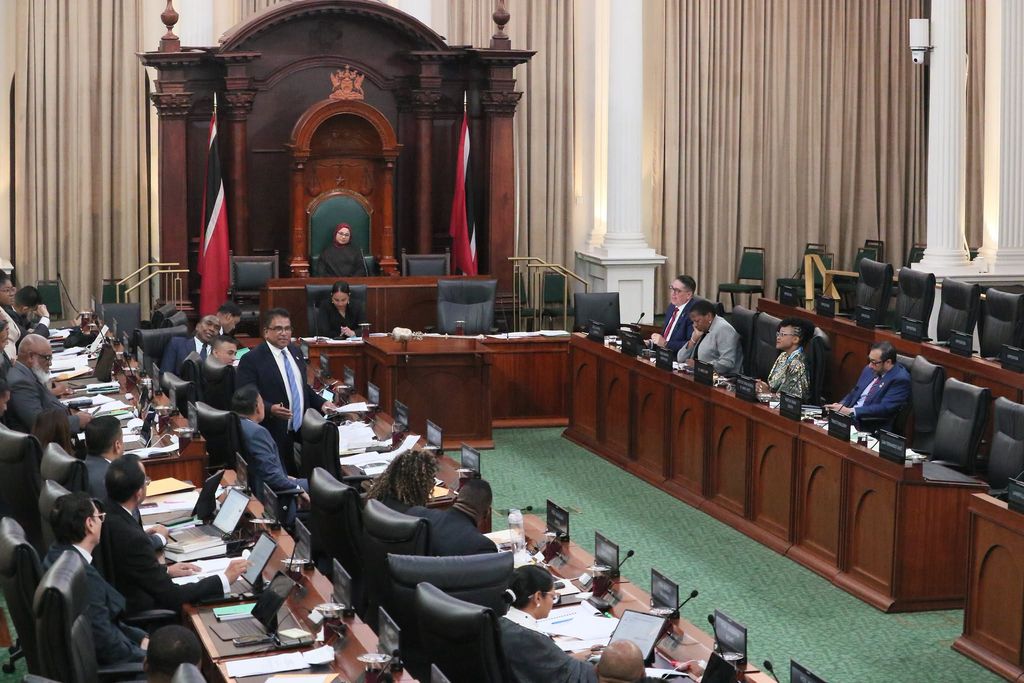

The Special Operations Bill, 2026 has been passed in the House of Representatives following a marathon sitting, with Attorney General John Jeremie saying the Government is not promising perfection from its latest crime-fighting measure but will consider it a success if it delivers a steady and sustained reduction in violent crime.
The Bill was passed shortly after midnight on Saturday, after the House sat for more than 13 hours on Friday.
Wrapping up the debate, Jeremie said the ultimate objective was a return to peace, while acknowledging that no piece of legislation could completely eradicate crime.
“Success looks like the state which I described in my opening. It is a return to peace and the recognition that there is no perfection on earth,” Jeremie said.
“A continuing reduction in the levels of violent criminal activity in our country is what we seek.”
The legislation, which replaces the Government’s defeated Zones of Special Operations (ZOSO) Bill, establishes seven policing districts across Trinidad and Tobago and creates a framework for special operations to combat criminal activity.
Within those districts, specific locations can be declared “closed areas,” where enhanced law enforcement powers can be exercised for limited periods.
Those powers include curfews, cordons, checkpoints, road closures, restrictions on entry and exit and, in specified circumstances, searches without warrants.
Unlike the previous ZOSO legislation, the Special Operations Bill does not expressly invoke Sections 4 and 5 of the Constitution or seek passage under Section 13, which would have required a three-fifths majority.
The legislation instead passed by a simple majority.
That issue formed a major part of the Opposition’s criticism during the debate, with Port-of-Spain South MP Keith Scotland arguing that the legislation infringes constitutional rights and should therefore have been passed with a special majority.
In his closing contribution, Jeremie rejected that argument.
He acknowledged Scotland’s concerns surrounding curfews, cordons and warrantless searches, but maintained that the Government considers the legislation a proportionate response to threats to public order.
“There is a legitimate object being pursued, we say, by proportionate measures,” Jeremie said.
He pointed specifically to parliamentary scrutiny, judicial oversight and the Bill’s sunset clause as safeguards supporting the Government’s position that the legislation is constitutionally proportionate.
The legislation contains a two-year sunset clause, meaning the Act will expire two years after it comes into operation.
Jeremie also rejected Scotland’s warning that dividing Trinidad and Tobago into policing districts could move the country towards a police state.
“The legislation does establish police districts. But police districts don't equate to a police state,” he said.
Responding to criticism that some of the powers contained in the legislation were draconian, Jeremie again maintained that the measures were proportionate and necessary to confront violent crime.
“We say that the measures in the legislation are proportionate,” he said, adding that the legislation was “exactly what is required to treat the scourge of crime that we all face in this country today.”
The Attorney General also defended the role assigned to the President under the legislation.
Under the Bill, the President can declare closed areas and curfews by Order following an application from the Minister of Homeland Security, once the statutory requirements are met.
Jeremie said the President’s discretion under the legislation was circumscribed, arguing that policing was an executive function and that the powers assigned under the Bill were therefore executive in nature.
All 26 clauses and the schedule were approved without amendment.
The Bill must now proceed to the Senate.