
Senior Reporter
kay-marie.fletch[email protected]
Two Independent senators have acknowledged improvements in the Government’s proposed Special Operations Bill compared with the defeated Zones of Special Operations (ZOSO) legislation, but say concerns remain over several key provisions.
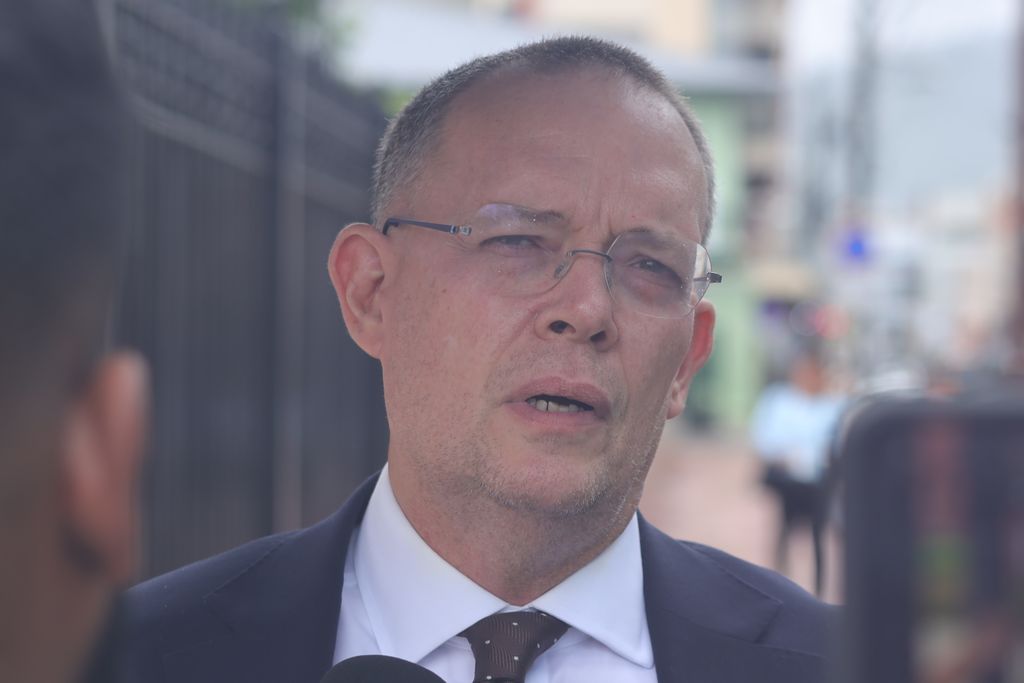
Independent Senator Michael Simon Victor de la Bastide yesterday raised concerns about clauses governing curfews and cordons within designated closed areas.
Speaking with Guardian Media outside Parliament, de la Bastide said some of the issues highlighted by the Independent Bench during debate on the ZOSO Bill earlier this year appear to have been addressed. He also welcomed the inclusion of a sunset clause, which he had previously advocated for.
However, he said changes relating to curfews and cordons remain troubling.
“On the last occasion, the power to make a cordon, the power to impose a curfew, were limited to a certain period of time. That limitation has gone,” de la Bastide said.
“And then, from the bill that I’ve read, which could be amended before it comes to the Senate, as soon as an area is declared a closed area, you have to get permission to leave or to enter. And the cordon is really little areas within that. It seems that you have to get permission to leave the cordon area. So those are things that concern me greatly.”
Under the previous ZOSO Bill, a cordon could remain in place for no more than 24 hours, while a curfew was limited to 72 hours. Those specific restrictions do not appear in the new legislation.
De la Bastide said he would like to see some form of judicial oversight governing the exercise of powers related to curfews and cordons, as well as limits on the length of time an area can remain closed.
He also expressed concern about the administration of the proposed law and the potential for abuse of its powers.
“These are SoE-type powers, not as broad, but one has to trust that the Government, that these powers will not be abused. And therefore one has to look at the record of the Government with respect to how the SoE powers under the State of Emergency have been exercised, and consider, given how those powers have been exercised, whether this Government should be trusted,” he said.
Despite those reservations, de la Bastide said he has not yet decided whether he will support the legislation when it comes before the Senate. He said the decision requires balancing concerns about civil liberties against the need to address the country’s crime problem.
“I’m a little hesitant to give you an answer, well, yes, I’ll support it or not, because it’s a balancing act,” he said.
Meanwhile, Independent Senator Courtney McNish, who abstained when the ZOSO Bill was voted on in the Senate in January, said he too was encouraged to see that some of the amendments he had proposed were incorporated into the new legislation.
However, he expressed concern that provisions dealing with social and community development, which formed part of the previous ZOSO Bill, were omitted.
Speaking outside Parliament, McNish said, “I’m happy at least that I’ve seen some of the amendments I wanted. I’m a little more concerned by the social development parts of the bill that was in the previous bill that has been left out. I am not sure why, but we will get there and we’ll have that discussion.”
Asked whether the new bill was preferable to either a State of Emergency or the former ZOSO legislation, McNish said it was.
“To me, it is better than the previous bill, save and except the social development and the community development parts of it. And is it better than the State of Emergency? I think it is,” he said.
The previous ZOSO Bill was defeated in the Senate in January by a vote of 15 in favour, 14 against and one abstention. McNish cast the lone abstention.
Related News
More ferry sailings expected for Tobago Carnival

PM declassifies report on SoE crime operations

Valencia man jailed 18 years for repeatedly raping runaway teen boy