Poll shows Americans are increasingly alarmed by AI’s ecological footprint
 16 September 2026
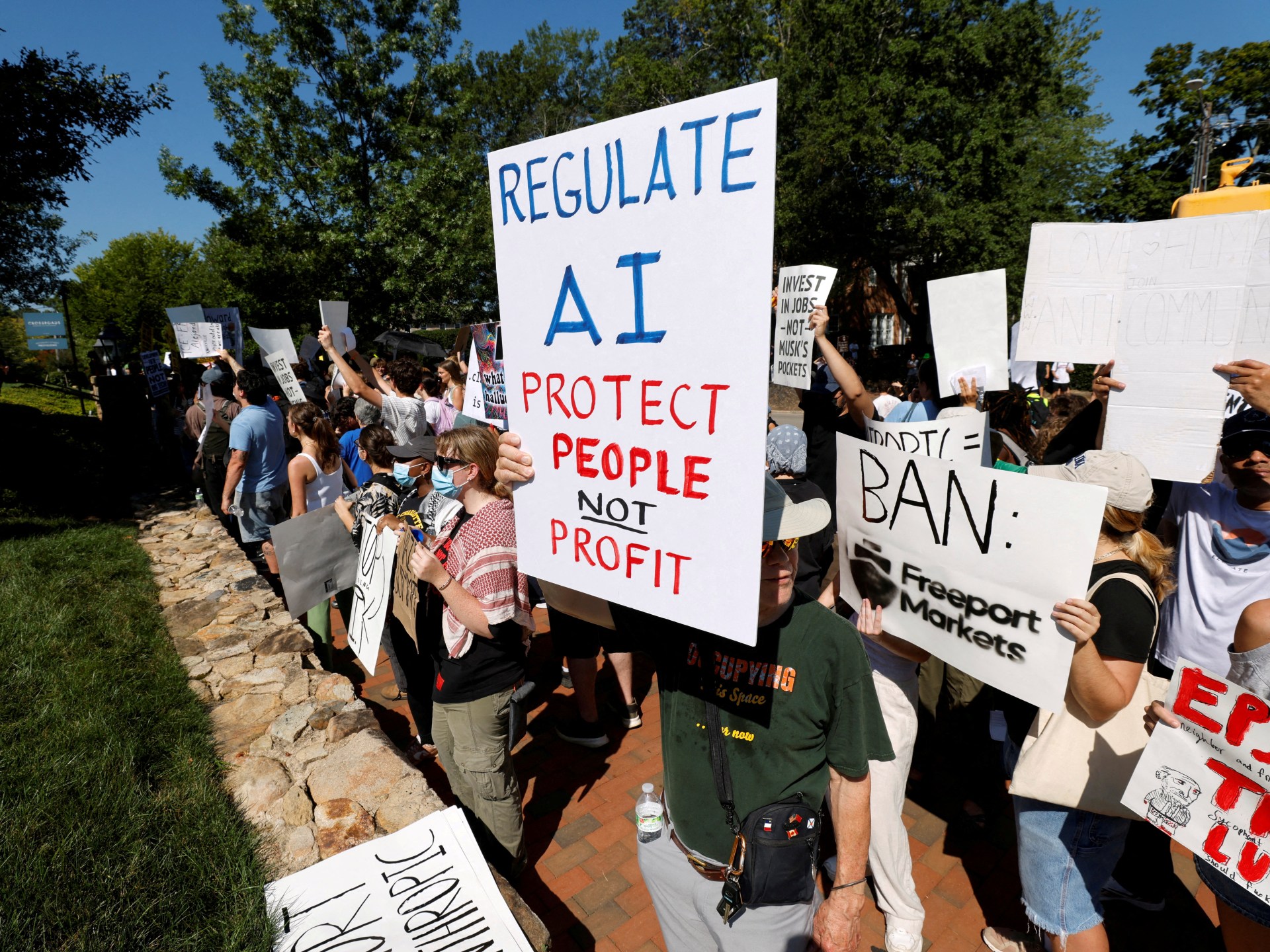

A new survey of adults in the United States finds that more than half worry about artificial intelligence’s environmental impact, up 12 percentage points from last year.
The poll, a joint effort by The Associated Press, the NORC Center for Public Affairs Research and the University of Chicago’s Energy Policy Institute, indicated that Americans dread AI’s carbon footprint far more than high-emission giants like meat production and aviation.
Released on Wednesday, data from interviews with 3,424 US adults in August show that 53 per cent of Americans are “extremely” or “very” concerned about artificial intelligence’s environmental impacts. The increased wariness marks an upward trend from the 41 percent recorded last year.
While Democrats are fuelling much of the rise in eco-awareness, with two-thirds expressing great concern compared to half of independents and 4 in 10 Republicans, greater public anxiety is emerging over how local data centres powering AI and cloud computing could affect nearby communities. According to the survey, most Americans are “extremely” or “very” concerned about the impact of data centres on electricity prices or the water supply in the communities where they are built.
“We’re undertaking a massive experiment in real time, and I don’t think there’ll be any putting the milk back in the bottle,” said Michael Greenstone, who directs the University of Chicago institute that collaborated on the survey. “Change is scary, and I think some of that is being reflected here.”
Advertisement
Despite bipartisan pushback, thousands of data centres already span the US, with extensive construction underway to meet escalating demand. The scope includes decades-old conventional facilities alongside massive and newly built hyperscale centres engineered for resource-intensive AI processing. While Virginia and Texas lead the nation in operating facilities, California, Ohio and New York follow behind closely as top digital infrastructure hubs.
United States President Donald Trump has urged communities across the country to embrace the tech facilities, promising that they will bring jobs.
“There’s a lot of water usage by AI data centres that’s taking away from other things like agriculture and farmers and places that really need it, and people who really need it,” Gedeon Kebede, a computer science student and Democrat from Cincinnati, Ohio, told the AP.
While data centres aren’t the US’s largest water gobblers, they still retain water to cool AI chips and computers and can be “nationally modest but potentially locally decisive”, according to Fengqi You, an energy systems professor with Cornell University.
“I think that decisions are being made for the company, not for the community that they’re being built in,” Nancy Antunes, a 60-year-old retired Democrat from Waltham, Massachusetts, told the AP.
Related News

Leaders of Scotland, Wales, Northern Ireland unite for self-determination

Nord Stream bombing suspect to Hollywood fixer: Who is Volodymyr Zhuravlev?

What to watch in the Alaska and Wyoming primary elections