
Seigonie Mohammed
Climate Change Editor
seigonie.mo[email protected]
Despite scientists making extraordinary discoveries in Trinidad and Tobago’s deep sea, Dr Diva Amon says they have barely scratched the surface, and the country must now take greater charge of understanding and managing what lies beneath its waters.
The marine scientist, who led the month-long Deep Wonders of Trinidad and Tobago expedition, said high exploration costs have historically kept much of the deep ocean out of reach, while research conducted here has not always remained in the country.
“Essentially, researchers come from richer countries, do the research here, and then leave with the data, with the samples, with the knowledge, and do not actually leave anything in country,” Amon told Guardian Media.
She described the practice, which is not unique to T&T, as “parachute science.”
“Often scientists are not trained in country,” she said.
Amon said this meant previous research had not always filtered into local science, governance, management or public awareness.
The latest expedition was deliberately different. Led by local scientists aboard Schmidt Ocean Institute’s research vessel Falkor (too), it mapped more square kilometres of seafloor, detected more bubble streams and confirmed more cold seeps than had ever been known before.
“Make no mistake, we are just scratching the surface still,” Amon said.
She also pointed to information already being gathered through offshore energy activity.
Amon said oil and gas companies are not required to make their maps or environmental data available to researchers or the public.
“There is so much that has been collected that is locked away,” she said.
“And it would benefit science in so many ways. It would benefit the public.”
Her comments come as energy exploration moves farther into T&T’s deep waters. Amon said establishing baseline scientific information is important to understanding the potential impact of such activity.
‘It has to come top down’
The expedition also found evidence that human activity has already reached places people had never before seen.
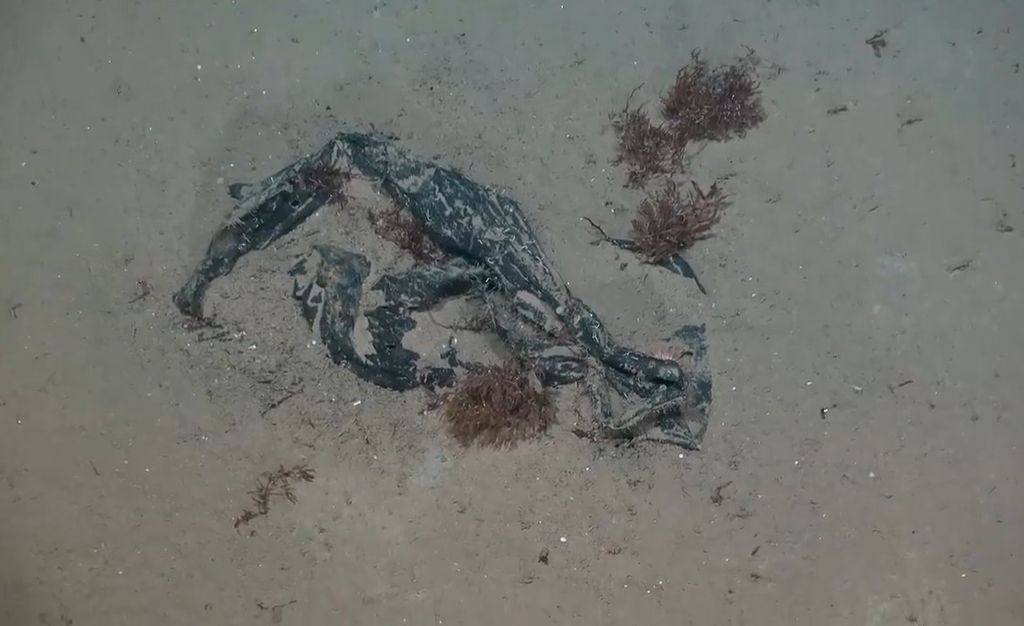
“On every single dive we went on, despite the fact that we were amongst the first people on the planet to see these places, we found our trash,” Amon said.
“No one had ever been there before. And yet our trash was already there.”
Fishing nets, plastic bottles and plastic bags were among the debris encountered.
But Amon said responsibility for changing the country’s relationship with its marine environment should not rest primarily with fishers or individual consumers.
“It wouldn’t be to the fishers. It wouldn’t be to the average person who goes to the grocery. It would actually be to the government,” she said.
Amon believes stronger laws and enforcement should form part of the response.
“We need better laws and we need them to be actually implemented.”
T&T currently has one marine protected area, Buccoo Reef. Amon pointed to the country’s commitment under the Global Biodiversity Framework to protect 30 per cent of its land and sea by 2030 as an opportunity to do more.
“We can protect enormous parts of our ocean and still use other parts,” she said.
Amon also wants Caribbean countries to take greater ownership of deep-sea research, even floating the possibility of a shared regional research vessel.
“Why don’t we have our own ship and share it amongst the countries?” she asked.
For Amon, the discoveries have shown both how much T&T possesses and how little has been seen.
“This expedition has proven we have so much here in our waters, so much to uncover, so many discoveries to make, and discoveries that really could change our country, right, and the way we think about our country.”
Related News
Barry blasts critics of UNC leader's Independence Day message
DCP says police will maintain presence at 51 schools

Alexander says security threat still exists as SoE nears end