
Senior Multimedia Reporter
radhi[email protected]
Scrap Iron Dealers Association president Allan Ferguson says the industry welcomes the Government’s plan to reopen Trinidad and Tobago’s steel mill, but warned that scrap metal exports must continue to ensure competition and protect dealers from unfair pricing.
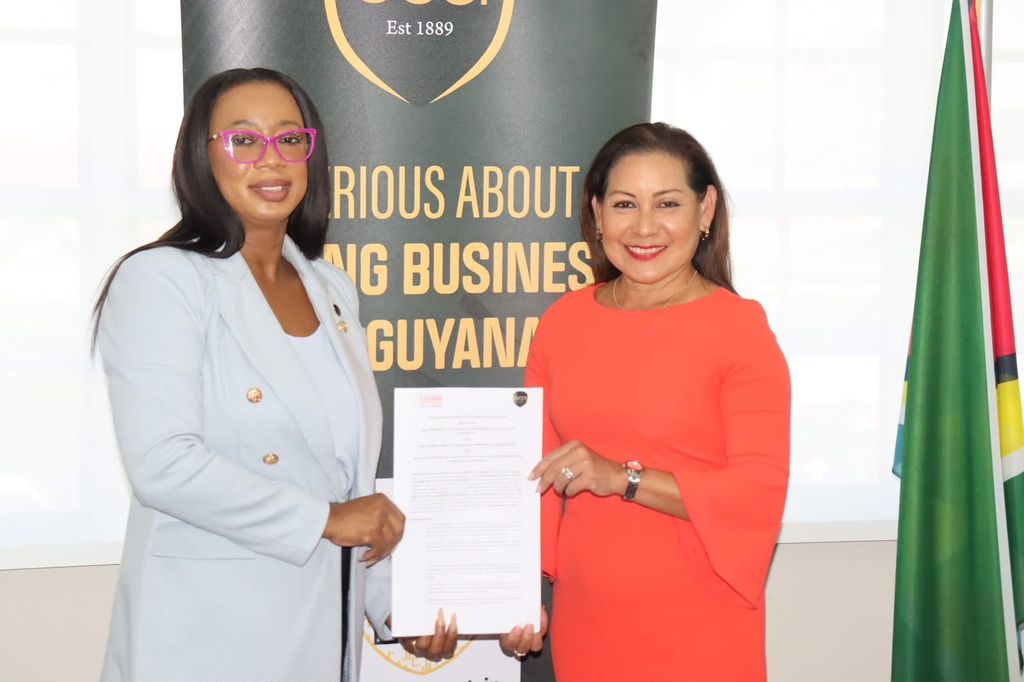
His comments come after Trade Minister Kama Maharaj announced that the Government had signed a memorandum of understanding (MOU) with a Canadian company to restart the steel mill, with plans to process the country’s scrap iron and waste tyres locally.
Ferguson said the association fully supports the reopening of the facility, provided dealers are paid international market prices for their scrap.
“We welcome the steel mill opening. We have absolutely no problem with it as long as the State buys from us at the same international price,” he said.
However, he cautioned against creating a monopoly by directing all scrap metal to a single local buyer.
“We must not stop demanding our exports because when you have only one market, that creates a great problem. We must allow people who want to export to continue exporting,” Ferguson said.
He said dealers have long-standing export contracts and forcing all scrap to be sold locally could result in significant financial losses.
“We cannot agree to supplying all the material to one mill because anytime you remove competition, you leave it open for problems,” he added.
Ferguson also disputed suggestions that the reopened mill would be capable of processing every type of scrap generated locally.
He explained that the former ArcelorMittal facility was designed mainly for heavy scrap and not lighter materials such as thin sheet metal and galvanised products.
“There is no steel mill in the world that takes every single type of scrap,” he said, adding that some materials would still need to be exported.
He also questioned whether the plant would have sufficient gas and electricity to process a wider range of scrap products, noting that such operations require significant energy resources.
Ferguson said the association was established in 1991 after dealers complained that they were not receiving international prices from the former steel producer.
He maintained that any new operator should work through the association, as was done previously, and honour agreements governing the purchase of scrap from members.
Turning to the ongoing ban on copper exports, Ferguson said restricting exports alone would not stop copper theft.
He argued that authorities should instead regulate local buyers and strengthen oversight of the industry.
“You have to fix the problem properly. If you don’t regulate the industry, people will continue stealing copper and finding ways to export it,” he said.
Ferguson called for the licensing of scrap collectors and mandatory identification for anyone selling copper to scrapyards.
He said copper remains the most valuable commodity in the scrap industry, fetching about $40,000 per tonne, making it a prime target for thieves.
“Copper theft is not just a Trinidad and Tobago problem. It is happening all over the world because of the high price,” he said.
Ferguson welcomed the Government’s decision to engage industry stakeholders on the issue, saying previous policies had been introduced without sufficient consultation.
He estimated that while there are only about 28 licensed scrapyards operating across the country, more than 250 unlicensed yards may be in operation.
The association also believes employment in the industry has fallen sharply, with an estimated 10,000 to 13,000 people now earning a livelihood from scrap metal, down from about 25,000 before the 2022 shutdown of the sector.
Meanwhile, Steel Workers Trade Union president Timothy Bailey said the union had not been consulted on the proposed project and first learnt of the MOU through media reports.
“We heard about the MOU just like everybody else, and since then we have not heard anything from anyone. That’s all we know,” Bailey said.
He said the union had not been contacted by the Ministry of Trade and Industry or any other government representative since the announcement.
Despite that, Bailey said any effort to revive the steel industry would be welcomed.
“Any plan to reopen the steel mill would be a good idea. The steel plant in general would be a good idea. But again, at the end of the day, we have no details. We are waiting to hear the details of such a plan,” he said.
Bailey said the union was also concerned that there had been no discussion on how the proposal would affect the liquidation process involving the former ArcelorMittal operation, which has been ongoing for the past decade.
He noted that displaced workers remain creditors in the liquidation and deserve clarity on what the proposed investment means for their future.
“There is a liquidation process that has been in existence for the past ten years and that is why we are mum. We want to hear the details because there is a liquidation process as it relates to the plant, and now we are hearing there is an MOU,” Bailey said.
He added that the union had not been told who the agreement was signed with or what its terms were.