
Senior Political Reporter
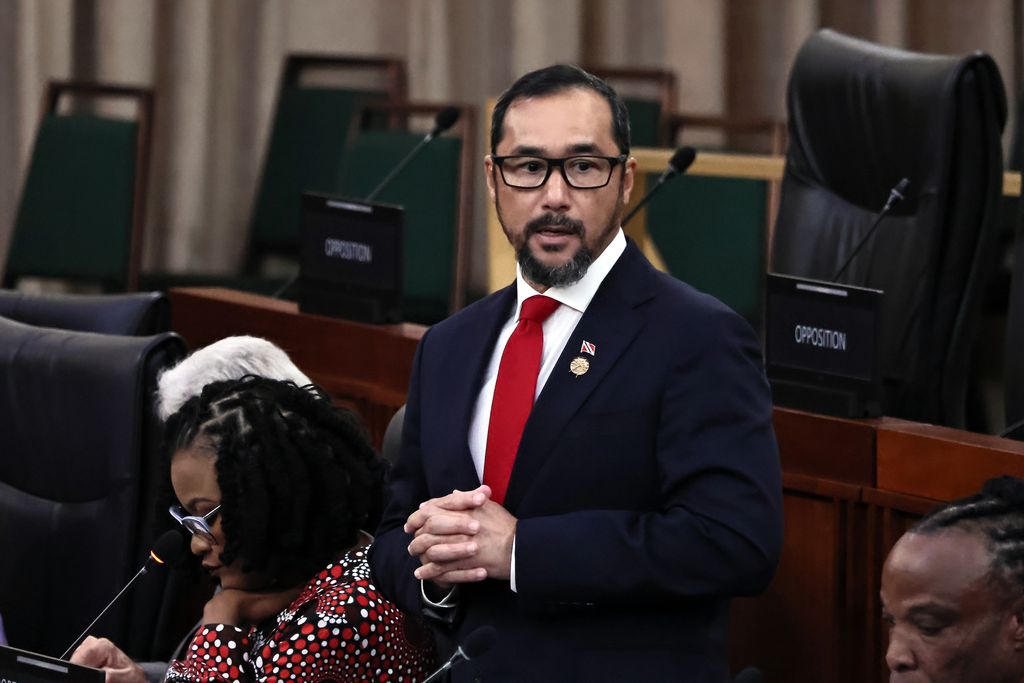
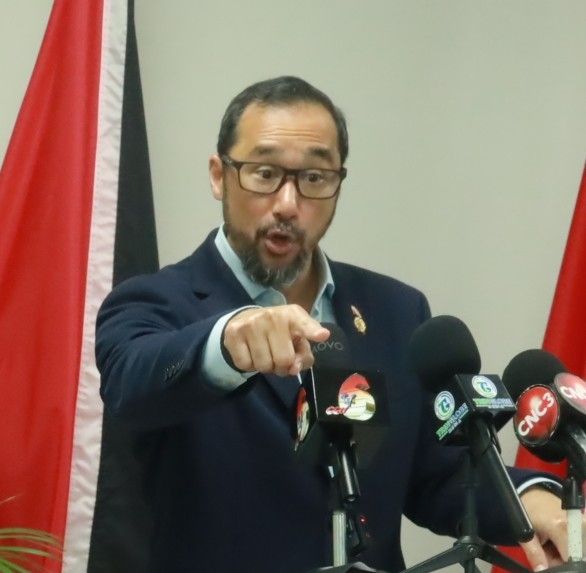
Former prime minister Stuart Young and former National Security Minister Gary Griffith are calling for the immediate removal of Minister of Homeland Security Roger Alexander, following the release of businessman Dominic Hadeed and his wife after 30 days in custody under Preventive Detention Orders without charge.
In a statement yesterday, Young said both Alexander and Attorney General John Jeremie must immediately resign—or be removed by Prime Minister Kamla Persad-Bissessar, after Alexander revoked the couple’s PDOs yesterday following weeks of legal wranglings.
“And there should also be an immediate end to the State of Emergency and all political targeting and persecution by the UNC Government,” Young demanded yesterday.
Young did so in a statement issued ahead of last night’s People’s National Movement public meeting at Balisier House, Port-of-Spain, as he is out of the country on business.
Young said it was clear that Government has been utilising the unjustified SoE and, in particular, the ministerial-issued Preventive Detention Orders (PDOs), “... to suppress democracy and to attack those whom they wish.”
He said T&T’s Constitution never intended states of emergency to be used in the manner that has been seen since mid-2025, “... And certainly, PDOs which are not substantiated or supported with evidence, but merely stamped with language that the minister is of the belief that there is a threat to public safety. What we are witnessing is not constitutional nor is it justifiable in a democratic state.
“When these actions are preceded by documented verbal and other threats from senior members of the Government as we have seen, both in and out of Parliament, it is clear evidence of political targeting, persecution and prosecution. These actions are unprecedented in Trinidad and Tobago and exist only in dictatorships.”
He added, “The complete disregard of safeguards (which in themselves are arguably not satisfactory) like ignoring the recommendations of the tribunal set up under the Emergency Powers Regulations was unacceptable and another clear indicator of undemocratic behaviour and disregard for due process and protection of the law.
“The use and abuse of rolling states of emergency and the weaponising of the various arms of the State against citizens who the Government sees as their opponents cannot continue.”
Griffith, meanwhile, described the decision as “total incompetence at the highest level”, arguing that those responsible must be held accountable.
He criticised Alexander’s decision to authorise the detentions based on what was described as “credible intelligence” without charges being laid, saying the information should have been developed into evidence capable of supporting criminal charges.
Griffith said the failure to convert the intelligence into admissible evidence showed that the basis for the detentions was flawed. He said intelligence could sometimes amount to little more than hearsay and argued it should not be used as the sole justification for depriving citizens of their freedom.
“This is tantamount to what takes place in a police state or a dictatorial country,” Griffith said.
He claimed the matter could expose taxpayers to significant legal costs as the issue continues through the courts.
Griffith also rejected suggestions that the minister’s role was limited to approving documents presented to him, saying the law placed the responsibility solely on the minister.
“He is not a rubber stamp,” Griffith said.
He argued that the minister’s decision-making powers under the law were extensive, saying the same authority could potentially be used against any citizen, including senior public officials.
Griffith said the controversy had damaged the Government’s credibility and could continue to affect T&T’s reputation before the courts, the Privy Council and across the Caribbean.
He also compared the situation to the Brent Thomas matter under the former People’s National Movement administration, where he said state action contributed to public dissatisfaction with that government.
Griffith maintained that the issue stemmed from a lack of proper intelligence gathering and said if authorities had sufficient information, it should have resulted in criminal charges.
He repeated his call for Alexander to be removed, saying responsibility must be accepted and taxpayers should not be left to carry the burden of the fallout.
“The consequences must not be borne solely through the pockets of taxpayers. A head must roll,” Griffith said.