
Senior Reporter
kay-marie.fletch[email protected]
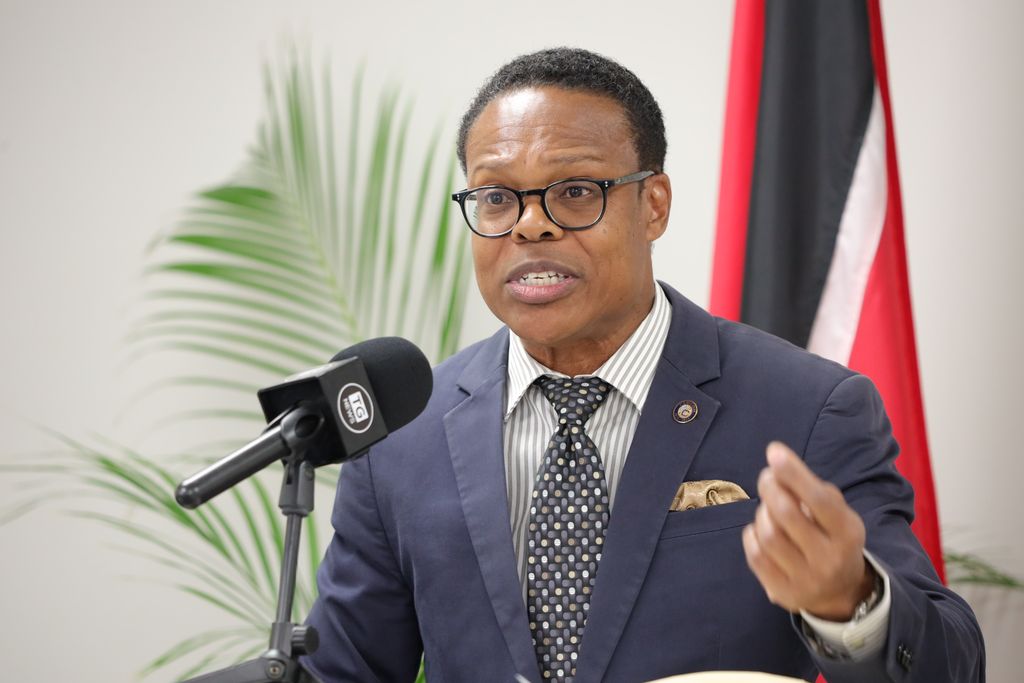
Former foreign and Caricom affairs minister Dr Amery Browne is calling on the Government to explain Trinidad and Tobago’s decision to abstain from a United Nations General Assembly (UNGA) vote calling for an end to the United States’ economic embargo on Cuba.
Speaking at an Opposition media briefing yesterday, Dr Browne said the decision marks a significant departure from T&T’s long-standing foreign policy position, noting that successive administrations have supported UN resolutions against the embargo since 1992.
Dr Browne questioned what mandate the Government had to adopt this new position and whether citizens were consulted before the change.
“Why? On what basis have you changed the principled stance of Trinidad and Tobago in this manner? Trinidad and Tobago has always supported United Nations denouncements of the embargo. Why have we done so? Well, according to the United Nations, the embargo violates the United Nations Charter, which is an agreement which binds all member states of the UN. It also violates international law and significantly for us, these unilateral sanctions also affect the third country’s legitimate rights to engage in freedom of commerce.”
Dr Browne rejected the argument that the embargo is solely a bilateral issue between the United States and Cuba, saying it has wider implications for countries that engage in international commerce.
“I saw the Prime Minister a couple months ago saying that the sanctions are exclusively a bilateral issue between the United States and Cuba. Rubbish. According to United Nations, and to anyone with an iota of sense, these sanctions also affect third countries, such as us, such as every other country in the world, besides the United States and Cuba, their freedom to legitimately engage in commerce. And that is why the United Nations General Assembly, that is why Caricom, that is why regional and international organisations across the spectrum have always had a stake and a voice and a role and a vote in this matter. We cannot exclude ourselves. We cannot be abstaining. We cannot be fleeing the room as has occurred recently. Trinidad and Tobago was looked upon as a leader.”
He further criticised the Government’s decision as T&T prepares to assume a seat on the United Nations Security Council, arguing that the country should be demonstrating leadership and consistency in its foreign policy.
Guardian Media reached out to Foreign Affairs Minister Sean Sobers for a response on the matter, but received no response up to press time.