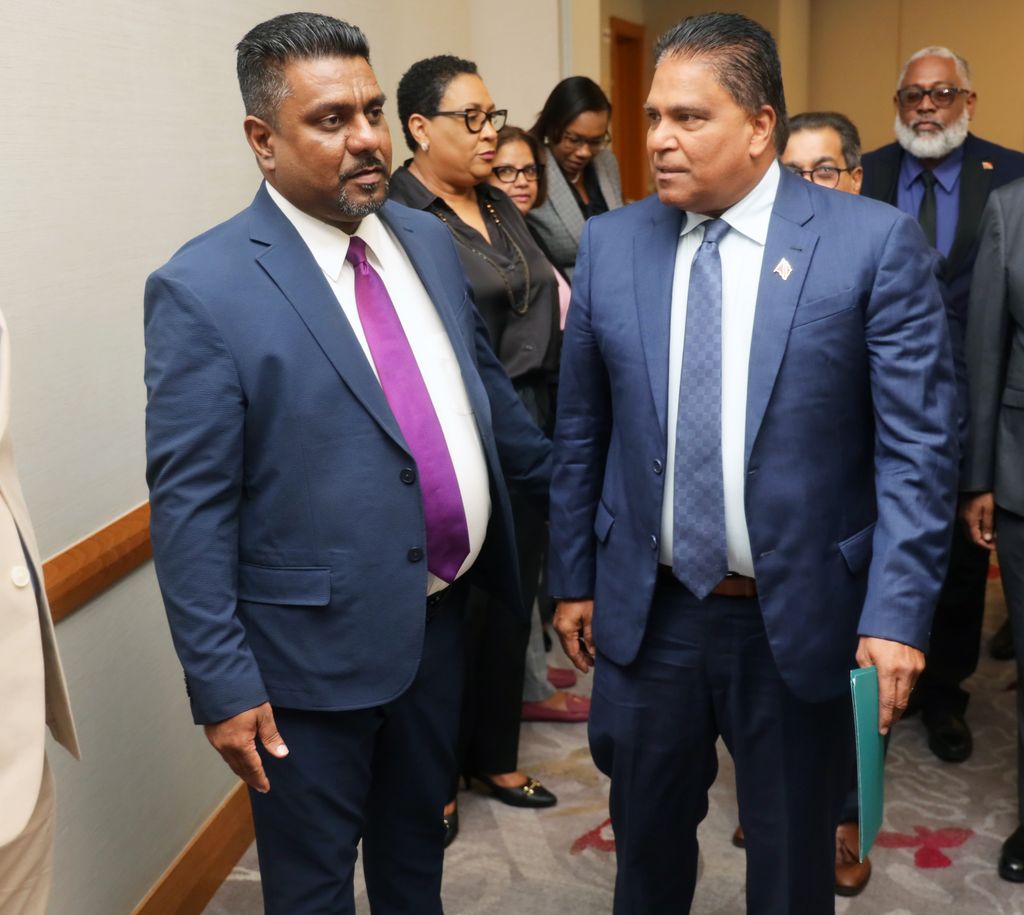

National Gas Company chairman Gerald Ramdeen is defending the state company’s decision to end its 21-year relationship with international ratings agency Moody’s, saying the move does not represent a retreat from transparency or independent scrutiny.
In a letter responding to criticism from former minister Vasant Bharath, Ramdeen said NGC had instead engaged Fitch Ratings while maintaining its existing relationship with S&P Global Ratings.
Ramdeen said all three agencies are internationally recognised members of the “Big Three” credit ratings firms and argued the decision was part of a strategic realignment rather than an attempt to avoid oversight.
“The suggestion that NGC is somehow retreating from scrutiny is plainly absurd,” Ramdeen wrote.
He said credit ratings are paid professional services and NGC was entitled to assess factors including cost, methodology, investor reach, service quality and strategic fit when deciding which agencies to retain.
Ramdeen rejected suggestions NGC was “rating shopping”, saying the company continues to maintain international ratings coverage through S&P and Fitch.
“The proper question is whether the agencies engaged are independent, competent, reputable and internationally recognised,” he wrote.
Ramdeen also outlined several measures he said had been implemented since the current board assumed office, including the creation of an expenditure review committee which he claimed reduced operating costs by more than TT$700 million in ten months.
He said NGC had also moved to address payment issues linked to gas supplied to T&TEC, restructure relationships within the energy sector, encourage exploration and pursue equity participation in upstream gas projects to secure future supply.
Ramdeen said the company was also pursuing downstream investments aimed at generating foreign exchange revenue.
According to the NGC chairman, officials from the International Monetary Fund had indicated earlier this year that several of the reforms being pursued aligned with recommendations long made for improving Trinidad and Tobago’s economic resilience.
He argued the company inherited significant challenges, including declining gas production, foreign exchange pressures and weakened investor confidence.
Ramdeen said NGC would continue maintaining international ratings coverage, publishing financial information and communicating with investors.
The issue emerged after Moody’s withdrew NGC’s Ba2 corporate family rating, ba2 baseline credit assessment and Ba2 senior unsecured notes rating, saying the company had ceased participating in the ratings process.
NGC later said the split reflected “fundamental differences” over Moody’s approach to assessing sovereign linkage and state-owned enterprises. The company argued Moody’s methodology failed to fully recognise NGC’s standalone financial strength and recent performance improvements, including a projected TT$3.3 billion profit after tax for 2025.
The development drew criticism from former prime minister Stuart Young, who described the withdrawal as a “serious red flag” for the country’s energy sector and wider economy.