
Hire more prosecutors before hiring more judges.
This was the suggestion of a junior State counsel in response to reports that the Office of the Director of Public Prosecutions (ODPP) has been unable to assign prosecutors to four recently appointed judges due to chronic and ever increasing staff shortages.
Speaking under the condition of anonymity following a report on correspondence sent recently by DPP Roger Gaspard to acting Supreme Court Registrar Kimberly Prescott, the prosecutor confirmed Gaspard’s claims over the constraints faced by his office and staff.
“We cannot deal with four more courts. We are under intense pressure,” the prosecutor said.
The prosecutor claimed they and their colleagues are required to manage over 100 complex cases despite receiving minimal training and having little experience.
“It’s not humanly possible,” the prosecutor said.
The prosecutor, who joined the ODPP shortly after being called to the bar, noted that the ODPP was not an attractive prospect for many of their newly qualified lawyers.
Citing security concerns, a high turnover of experienced prosecutors to learn from and inherent difficulties associated with poor investigations conducted by police officers, the prosecutor said: “Nobody wants to be a prosecutor in 2026. How many attorneys are willing to risk their lives for the State?”
The prosecutor claimed that hiring more inexperienced attorneys like them would not have a major positive impact immediately.
“Prosecution is really a career,” the prosecutor said, while lamenting over the loss of highly respected prosecutors who left the ODPP after serving for years.
The prosecutor also noted that while the public may believe that State prosecutors only handle scores of murder cases that are initiated annually, they also have to contend with much less serious criminal offences which require similar time and effort to prosecute.
“Nobody hears about the non-capital offences and those can be in the thousands,” the prosecutor said.
In the correspondence to Prescott, Gaspard claimed that his office’s inability to assign the prosecutors was not based on unwillingness or recalcitrance but rather staff capacity.
Stating that his office has been operating with acute prosecutorial staff deficits for years, Gaspard noted that over the past three years, three deputy DPPs and two assistant DPPs have been given judicial appointments.
He noted that currently, the three deputy DPP positions are vacant and there are only three out of six assistant DPPs, with two being recently appointed by the Judicial and Legal Service Commission (JLSC).
Gaspard said the few attorneys currently assigned to his office are already stretched to their limits, with each having to manage over 70 matters.
“To redistribute these severely limited human resources among three or four additional courts would, quite simply, risk systemic diminution in the quality and timeliness of prosecutions, thereby undermining the very objective which the expansion of the Bench seeks to achieve,” he said.
“Speaking candidly, this is unworkable,” he added.
Gaspard suggested there should be a direct correlation between hiring new judges and prosecutors.
He said even if the JLSC and the Office of the Attorney General were able to fill the long-standing vacancies, it would take time for them to make a discernible impact.
“Even upon appointment, newly recruited counsel must undergo a period of rigorous training and supervised integration before they can be entrusted with the conduct of serious criminal matters,” Gaspard said.
“To do otherwise would be tantamount to an abdication of my professional responsibility and a breach of public trust,” he added.
Gaspard also took issue with newly appointed judges liaising directly with his staff to obtain updates on matters, as he suggested such enquiries should be done through a dedicated department for indictable cases.
“While I fully appreciate the imperative of judicial case management, such communications, if not properly channelled, risk creating administrative inconsistency and, in some instances, unintended pressure upon individual counsel,” he said.
Responding to the concerns in a newspaper report yesterday, the Judiciary acknowledged Gaspard’s concerns and assured him the staff shortages were being addressed by the JLSC under Chief Justice Ronnie Boodoosingh.
The Judiciary highlighted its efforts to improve the criminal justice system through case management initiatives, judicial training, stakeholder collaboration, and strategic administrative reforms.
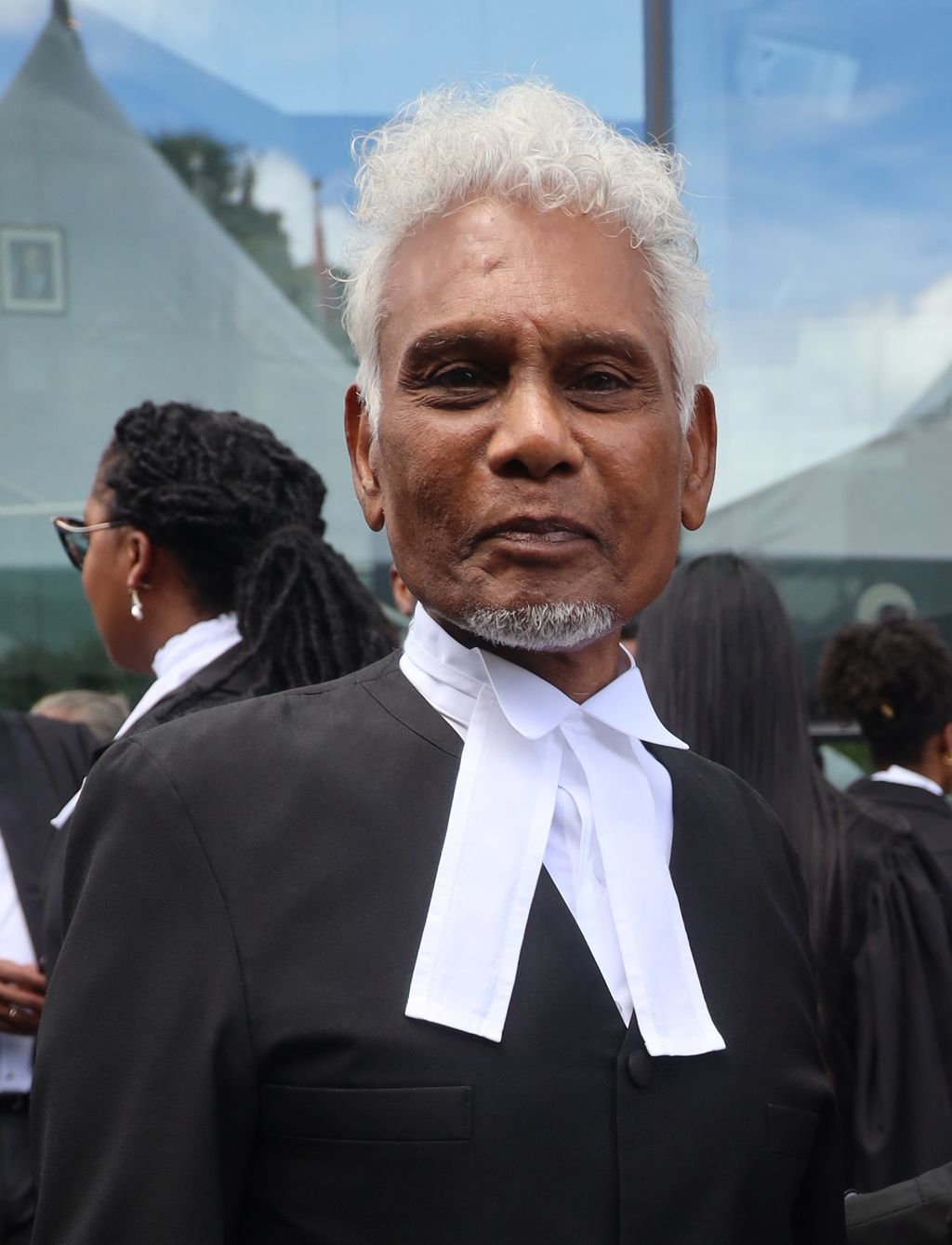
In a response to the issue yesterday, Criminal Bar Association (CBA) president Israel Khan, SC, supported Gaspard’s position.
“Making the necessary appointments and adding support staff to expedite criminal matters without taking care of his department means they are spinning top in mud,” Khan said.
“Not having a proper complement of attorneys will cause further delay. They need competent attorneys to prosecute,” Khan added.