
Senior Multimedia Reporter
radhi[email protected]
As the Government intensifies its fight against crime through State of Emergency measures, policing strategies and legislative reform, one of the country’s most critical crime-generating environments—the prison system—continues to operate under severe strain. Experts warn that without urgent intervention, it risks fuelling the very criminality authorities are trying to contain.
After three decades in the prison service, former Prison Officers’ Association president Rajkumar Ramroop is again calling for sweeping reforms to overhaul Trinidad and Tobago’s correctional system. He has long warned that prisons are evolving into “command centres” for crime rather than institutions of rehabilitation.
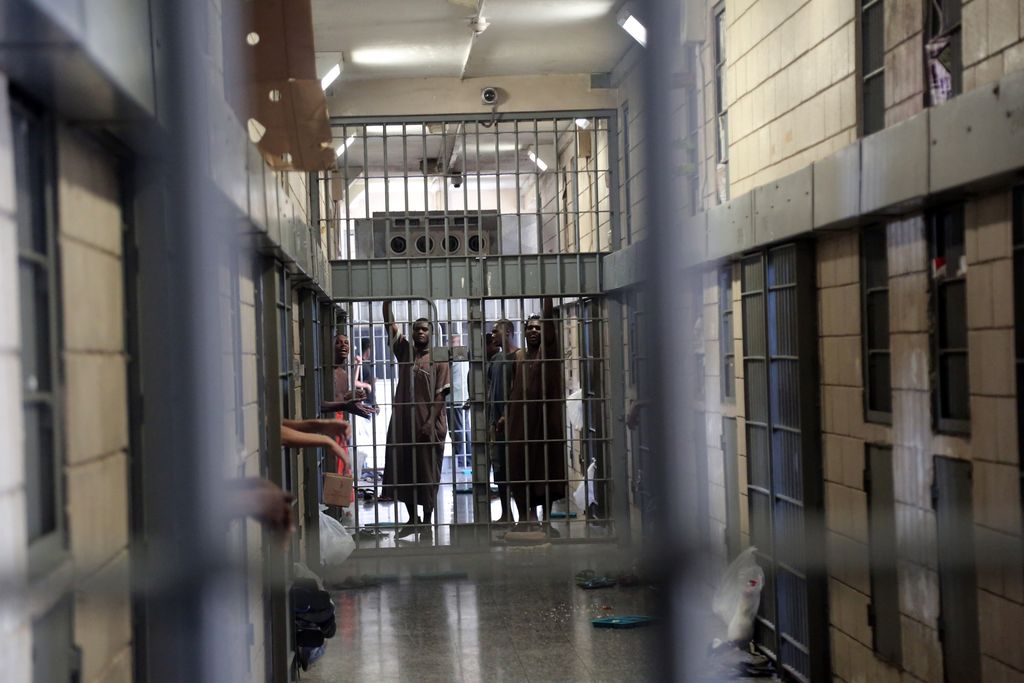
At the core of his concern is chronic overcrowding, driven largely by a remand population that accounts for nearly two-thirds of inmates.
According to the latest data from the Trinidad and Tobago Prison Service and the World Prison Brief, the prison population stands at approximately 3,802 inmates across nine facilities, including the Port of Spain Prison, the Maximum Security Prison and the Golden Grove Remand Prison, along with specialised institutions such as the Women’s Prison and the Carrera Convict Prison. While the system’s official capacity is listed at 4,886, occupancy levels vary significantly, with several facilities operating beyond intended limits. Of particular concern is that an estimated 60 per cent of inmates—roughly 2,270 individuals—are on remand, often awaiting trial for years.
Ramroop said the imbalance has created a system focused more on containment than correction.
“Overcrowding is the single biggest issue,” he said. “It creates an environment where the system is focused on containment rather than rehabilitation—and that has dangerous consequences.”
Those consequences, he warned, are already evident within prison walls.
“Prisons continue to be places where murders are planned, kidnapping and gang activities flourish,” he said. “Instead of rehabilitation, you have environments where criminal networks are strengthened, gangs operate freely, and even practices like spiritism and demonism can take root.”
He said outdated infrastructure and weak security systems have compounded the problem, making it easier for contraband to enter facilities and for corruption to take hold.
“Staff are managing high-risk populations in poorly designed environments. It puts pressure on officers and increases risk for everyone,” he said.
Ramroop believes the solution begins with reducing the number of people entering and remaining in the system unnecessarily. He is advocating for dedicated remand courts to fast-track cases, along with expanded use of electronic monitoring and bail for low-risk, non-violent offenders.
“That remand culture undermines everything,” he said. “Many inmates do not access programmes because they are not serving a sentence—they are simply waiting. Some for years.”
Beyond easing congestion, he argues that structural transformation is required, including the creation of a Prison Management Board to oversee administration, operations and correctional policy.
“You need a body that addresses all aspects of the prison system. That way you get proper monitoring of conditions, performance standards and long-term planning,” he said.
He is also pushing for the introduction of prison industries—what he describes as “industry cottages”—to equip inmates with practical skills and work experience.
“Education and skills training must be the backbone of rehabilitation,” he said. “Right now, prisoners leave unskilled, addicted, and still connected to gangs. That is a recipe for reoffending.”
He said structured work programmes could break that cycle by providing inmates with purpose and a pathway to legitimate income.
“Give them real work, real skills, and a sense of direction. Without that, unemployment and frustration will continue to drive recidivism,” he added.
Ramroop also stressed the importance of separating hardened criminals from low-risk offenders, noting that overcrowding often forces authorities to house them together.
“You cannot reform someone if they are constantly exposed to hardened criminals. Classification and separation are critical, but overcrowding makes that difficult,” he said.
He added that rehabilitation should be mandatory.
“Every inmate should have a personal development plan. Rehabilitation cannot be secondary—it must be the engine of the system.”
Criminologist Dr Randy Seepersad supported Ramroop’s recommendations, stressing that meaningful reform must be guided by data and targeted interventions.
“I agree that there is a lot that has to be done within the prison service, but it cannot be ad hoc,” Seepersad said. “Too often, programmes are introduced based on available resources rather than the actual needs of prisoners.”
He pointed to “criminogenic needs”—the underlying drivers of criminal behaviour—as central to effective rehabilitation.
“These needs are already being identified using internationally validated tools. The prison service has the data. The issue is how that data is being used,” he said.
Recurring factors such as low literacy, lack of job skills, substance abuse and behavioural issues consistently emerge among inmates, he added.
“What we need to do is identify which of these needs are most common and design programmes that address them at scale.”
However, he noted a critical gap: there is no mechanism to ensure inmates meaningfully participate in rehabilitation programmes.
“It’s one thing to identify needs. It’s another to ensure inmates engage in programmes in a meaningful way,” he said.
Motivation, he added, remains a major barrier.
“You can put someone in a class, but that doesn’t mean they will benefit. You have to create an environment where they understand why it matters and are willing to participate.”
Seepersad also highlighted the challenge posed by the large remand population.
“Remanded inmates are presumed innocent, so historically they have not been included in rehabilitation programming. They are essentially in limbo—no diagnosis, no intervention,” he said.
With such a significant proportion of inmates in this category, he described it as a major systemic gap.
Like Ramroop, he endorsed prison industries as a viable solution.
“This has worked in other countries. You bring businesses into prisons, inmates develop skills, and in some cases transition directly into employment after release,” he said.
He warned that reintegration remains one of the weakest links.
“When inmates are released, they face stigma, unemployment, lack of housing and limited support. That creates desperation, and many return to crime because they feel they have no other option.”
For former inmates, the consequences of these systemic failures are deeply personal.
One man, who spent more than 30 years behind bars, said many prisoners enter with skills but leave diminished.
“A lot of men come in with trades—plumbing, mechanics, welding—but over time they lose their sense of identity. They have no hope and come out worse than when they went in,” he said.
He said individualised assessments and targeted programmes are essential.
“Not every prisoner is the same. If you want change, you have to treat people differently based on their needs.”
Another former inmate, who requested anonymity, said the prison environment affects everyone inside—not just inmates.
“Prison officers need support too. The system puts pressure on them, and that affects how they treat prisoners,” he said.
He pointed to poor hygiene, substandard food and the spread of disease as factors contributing to deteriorating behaviour.
“If we don’t fix what is happening inside prisons, we will continue to see the same people coming back out and reoffending. You cannot fight crime on the outside and ignore what is happening on the inside,” he said.
A Sunday Guardian investigation by Joshua Seemungal last year found that although more than $200 million was allocated for prison reform between 2020 and 2025, only one of 22 major projects was completed.
Minister of Homeland Security Roger Alexander, upon taking office in April 2025, pledged to tackle crime within prisons, including exploring models such as that used in El Salvador. Attempts to obtain updated comment from him were unsuccessful.
Prison Officers’ Association president Gerard Gordon said overcrowding continues to strain an already fragile system, compounded by deteriorating infrastructure, poor sanitation and a lack of basic resources.
“These conditions not only affect morale but also pose real health and safety risks to staff,” he said.
Gordon warned that the inability to properly classify and separate high-risk inmates increases the likelihood of violence and allows criminal networks to flourish within prison walls.
He also highlighted the burden posed by the high remand population.
“With nearly two-thirds of inmates on remand, the system is under immense strain,” he said.
He noted that remand prisoners, who are legally presumed innocent, often have little access to structured rehabilitation and can spend extended periods in idleness.
“This not only affects their mental well-being but also increases their vulnerability to negative influences,” he said.
Gordon added that while measures such as case flow management and alternative sentencing have been discussed, they have yet to bring meaningful relief.
Guardian Media also contacted Prison Commissioner Carlos Coraspe for comment but received no response.