
Seigonie Mohammed
Climate Change Editor
seigonie.mo[email protected]
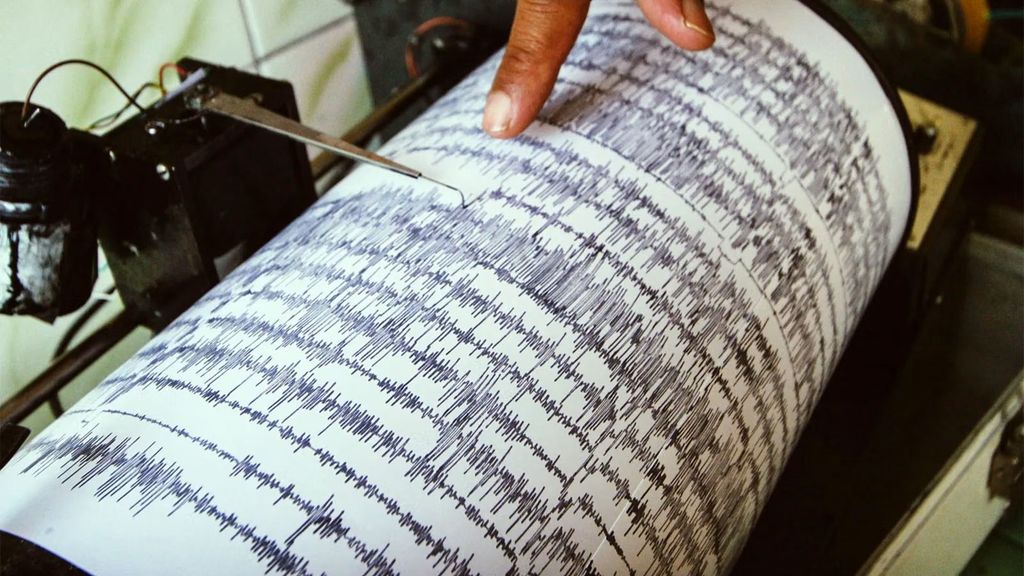
A surge in seismic activity across Trinidad and Tobago has heightened public concern after two earthquakes shook the country yesterday morning. However, seismologists are urging residents not to mistake the recent increase in tremors as evidence that a larger earthquake is imminent.
Data from the University of the West Indies Seismic Research Centre (UWI SRC) show 11 earthquakes measuring magnitude 3.5 or greater have been recorded in the past week, 113 over the last five months and 295 during the past year.
Yet UWI seismologist Dr Abayomi Gaius Osotuyi says the numbers reflect the reality of living in one of the Caribbean’s most tectonically active regions, not a sign that scientists can predict a major earthquake.
“We are located in a very active tectonic region,” Osotuyi said. “Earthquakes are expected because of where we are. They are typical of this environment.”
He cautioned against claims circulating online that the recent sequence is a precursor to “the big one.”
“With current technology, we can’t accurately predict where the next earthquake will occur or how large it will be,” he explained. “What we can say is that preparedness is very important.”
Yesterday’s first earthquake, measuring 5.1, struck at 5.45 am, about 24 kilometres northeast of Scarborough, at a depth of 59 kilometres.
Just over an hour later, a 5.0-magnitude earthquake occurred northwest of Trinidad at a depth of 80 kilometres.
Both were widely felt across Trinidad and Tobago because of their magnitude and depth.
The shaking prompted numerous reports from residents, although Tobago Emergency Management Agency (TEMA) Director Allan Stewart said there were no reports of injuries or structural damage.
Instead, emergency officials found themselves responding to another challenge: combatting misinformation.
Stewart said videos showing a house damaged in a landslide from the previous day were widely shared online as supposed earthquake damage.
“We had to dispel that rumour almost immediately,” Stewart said. “There was no association between that incident and the seismic event.”
He noted that yesterday’s earthquakes revived memories of Tobago’s significant 1997 earthquake sequence, but reminded residents that the nation has always existed within an active seismic zone.
For many Tobagonians, yesterday’s tremors also reignited questions about whether the island experiences more earthquakes than Trinidad.
Historically, Osotuyi said, Tobago has experienced more seismic activity than Trinidad, although yesterday’s earthquakes were not among the largest ever recorded near the island.
Scientists are also continuing to analyse whether there is any relationship between recent regional seismic activity, including a significant earthquake in Venezuela, and the latest events affecting T&T.
“We’re still studying the data before drawing conclusions,” Osotuyi said.
While researchers continue that work, both the UWI SRC and TEMA agree on one message for the public: ignore rumours and focus on preparedness.
Stewart urged residents to practise the “Drop, Cover and Hold On” technique during earthquakes, secure heavy furniture and household items, and support stronger enforcement of building standards to improve resilience against earthquakes, hurricanes and other natural hazards.
Osotuyi echoed that advice, encouraging families, schools and workplaces to develop emergency plans, conduct drills and identify safe assembly areas.
“People should prepare, practise and know what to do,” he said. “Preparedness, not panic, is the best response.”
Related News
UTT African Emancipation event features diverse activities but ...
Young, Griffith say Govt heads must roll over Hadeeds' PDO revocations
Following last weekend’s triple and double homicides: