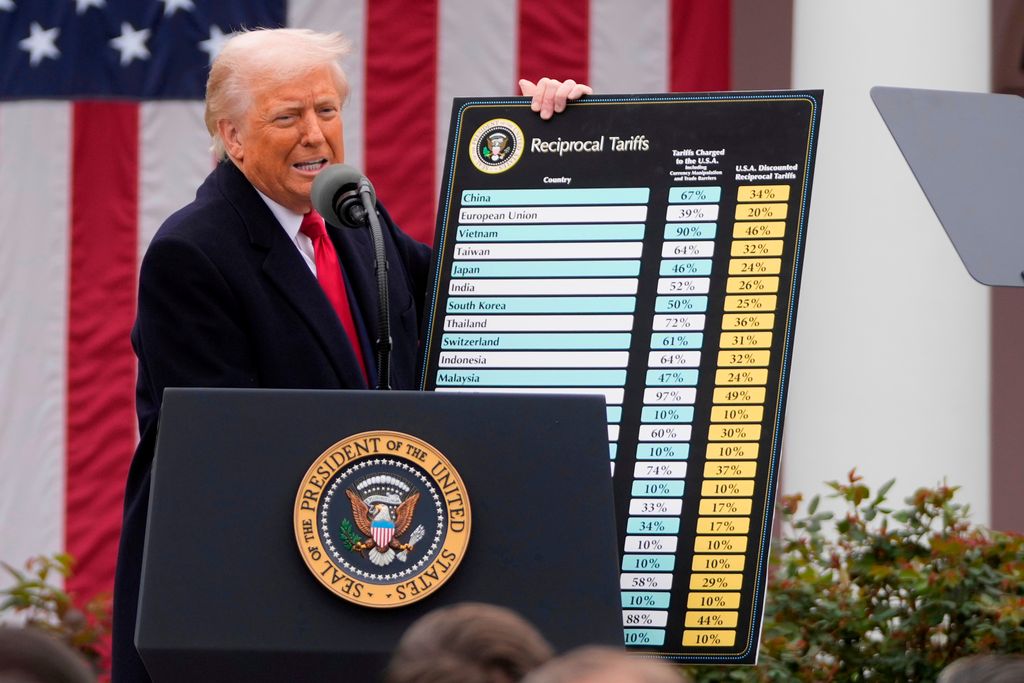

BANGKOK — US President Donald Trump’s latest set of tariffs drew immediate objections from America’s trading partners, including China and Japan, with Australia’s trade minister slamming them as “completely unjustified” yesterday.
The administration announced tariffs of 10% to 12.5% on 60 economies late Thursday, saying the countries had failed to adequately enforce a ban on goods made with forced labour.
The new tariffs took effect just as stopgap levies Trump imposed after a stinging defeat at the Supreme Court expired yesterday.
Australian Trade Minister Don Farrell rejected claims linking Australia, a major exporter of beef, gold and copper, to modern slavery and raising the tariff on its exports to the US to 12.5% from the 10% level imposed after Trump’s “Liberation Day” hikes last year.
“We believe that amongst all of the countries in the world Australia does take the issue of slavery, modern slavery, seriously, and will continue to do that,” Farrell told reporters in Adelaide.
“Australia believes the higher tariffs are “completely unjustified and we will continue to lobby the United States Trade Representative to remove all tariffs on Australian goods.”
New Zealand Prime Minister Christopher Luxon said 12.5% tariffs on his country were “extremely disappointing,” unjustified and harmful to trade.
A US investigation serving as the basis for the tariffs did not provide meaningful evidence to support allegations of forced labour.
European Union foreign policy chief Kaja Kallas questioned the US stance in comments on Channel News Asia.
“If you compare our labour laws to the ones of the United States, I mean we have, people have paid vacations, we have very good conditions, labour conditions for our employees, so it’s not really grounded,” Kallas said. (AP)