
AKASH SAMAROO
Lead Editor - Politics
For the second time in this nation’s history, Trinidad and Tobago will have a seat at the United Nations Security Council.
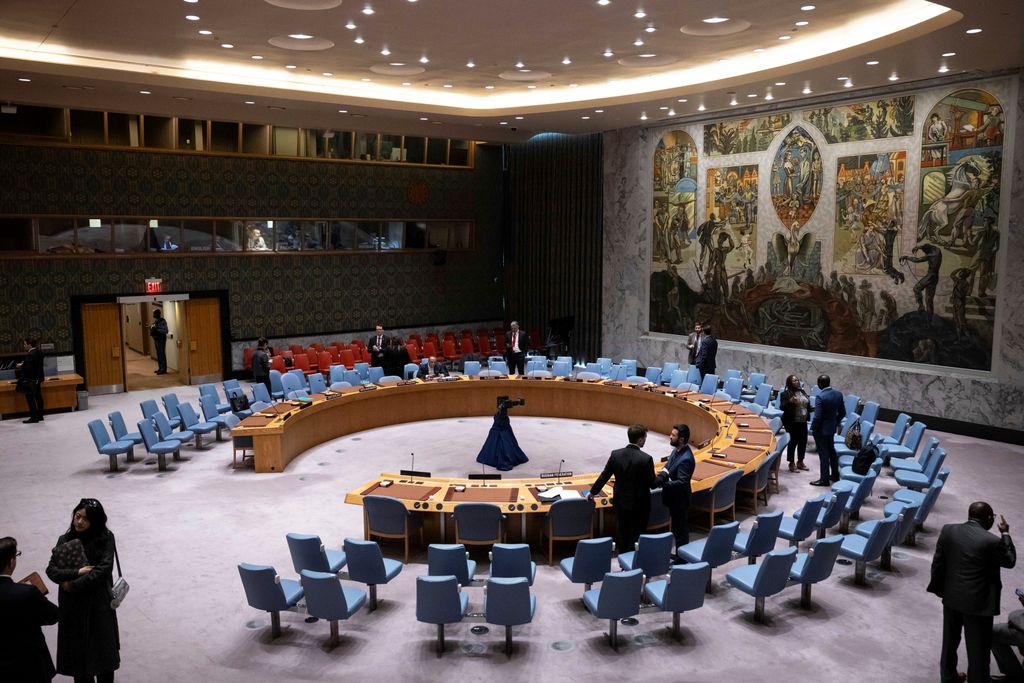
Today at the United Nations’ Headquarters in New York, T&T was elected as a non-permanent member for the 2027-2028 term.
The country ran unopposed for the single available seat allocated to the Latin American and Caribbean Group (GRULAC), positioned to succeed Panama.
T&T received 181 votes out of 191 countries. Nine countries abstained. T&T only needed 122 votes to secure victory.
To secure a non-permanent seat, a country must win a two-thirds majority of the member states present and voting via a secret ballot in the General Assembly.
T&T had previously served a two-year term as a non-permanent member forty years ago, spanning 1985 to 1986.
The vote was done by secret ballot in the General Assembly Hall.
Commenting immediately after the electoral victory, Foreign and Caricom Affairs Minister Sean Sobers put out a media release.
He credited Prime Minister Kamla Persad-Bissessar's leadership and diplomatic engagement for the successful bid, noting that the campaign was launched during her participation at the United Nations General Assembly in New York in September 2025.
"Since then, the Prime Minister has been in constant contact and personal dialogue with several world leaders to advance the country's bid," the ministry stated. It added that the victory was a testament to her "vision, dedication and steadfast leadership" in promoting Trinidad and Tobago's interests internationally.
He said the country's campaign was conducted under the theme, "Building Consensus for the Realization of Sustainable Peace and Security," and focused on three key areas: combating the illicit trafficking of small arms and light weapons, advancing the agenda of women and children in peace and security matters, and addressing the implications of artificial intelligence on global security.
The ministry noted that the Security Council is the most powerful body within the United Nations system and is primarily responsible for maintaining international peace and security.
It said Trinidad and Tobago's election would strengthen the country's diplomatic standing, elevate its voice on global issues and create new opportunities for international partnerships and engagement.
The United Nations Security Council (UNSC) is comprised of 15 members: five permanent members with veto power, the United States, the United Kingdom, France, Russia, and China, and ten non-permanent members elected for two-year terms by the UN General Assembly to ensure regional representation.
Under the UN Charter, its primary role and function is the maintenance of international peace and security. To achieve this, the Council is uniquely empowered to investigate global disputes, mediate conflicts, implement binding international sanctions, deploy UN peacekeeping forces, and, when diplomatic efforts fail, authorise collective military action to enforce its decisions and restore global stability.