
Senior Reporter
shane.su[email protected]
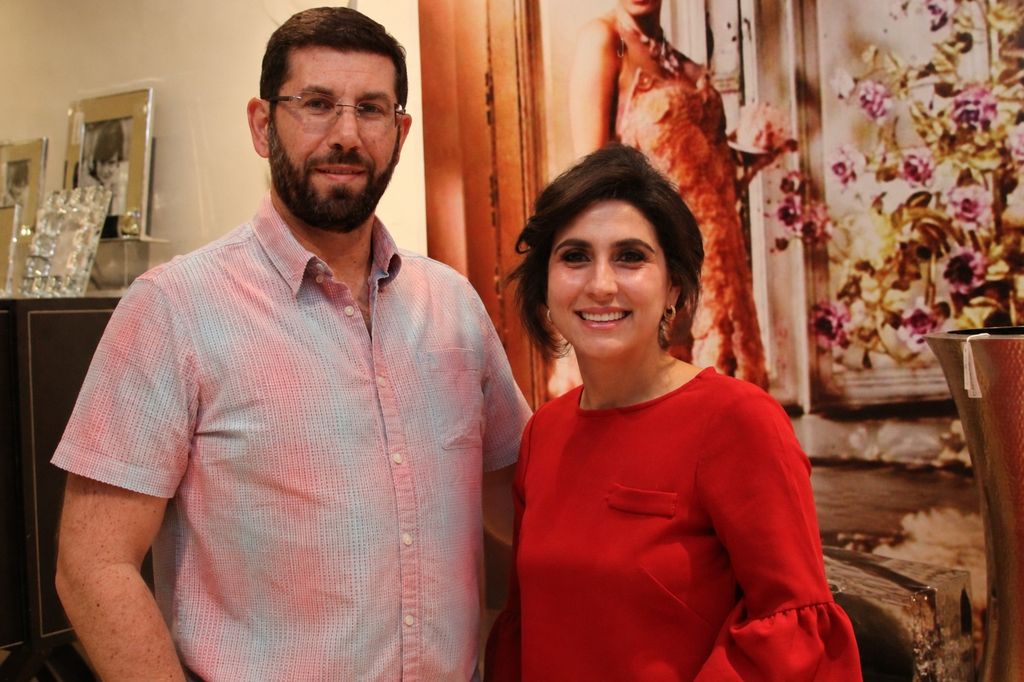
Close to one calendar month after they were arrested at their Bayshore, Westmoorings home, businessman Dominic Hadeed and his wife Genevieve yesterday walked out of the Golden Grove Prison, Arouca, where they were kept under Preventive Detention Orders (PDOs) while being investigated in an alleged plot to assassinate high-ranking Government officials.
However, their relative, 72-year-old Star Sabga, detained with them under the same allegations, remained in custody. Her matter is expected to be heard today.
The Hadeeds were released after the PDOs against them were revoked by Homeland Security Minister Roger Alexander earlier in the day.
According to a media release from the ministry, Alexander’s decision to revoke the PDOs came after a “comprehensive review” of legal, medical and public interest considerations, including the recommendations of the Constitution Review Tribunal and ongoing assessments performed under the Emergency Powers Regulations 2026 existing during the ongoing State of Emergency (SoE).
The release noted that while the Hadeeds’ PDOs were revoked, they were still the subject of an active criminal investigation.
Despite this, the Hadeeds’ attorney, Faris Al-Rawi, SC, said the revocation of the PDOs meant they were not under home detention and did not have to seek the permission of the Police Commissioner for movement and visitors.
He, however, maintained that several elements of the allegations against his clients, including the intelligence that prompted their detention in the first place, remain unresolved before the courts.
Speaking during a media briefing at his Altus Chambers on Abercomby Street, Port-of-Spain, hours after the Hadeeds were released, Al-Rawi outlined the legal challenges which unfolded since their arrest on June 24. He said his clients had co-operated with investigating officers at all times during their detention.
Asked about the physical and psychiatric well-being of the couple, he said while he preferred not to provide such personal details, the circumstances, including the allegations of serious criminal conspiracy, were distressing.
“When you’re put into a position of being detained by the State on the type of allegations that have been made, needless to say it’s a shocking experience,” Al-Rawi said.
“It was out of the blue, it was nothing we could have predicted and it is certainly something we would say is not true.
“To speak to their mental state, I am very careful about reflecting on people’s personal appreciations for my own part, I would no doubt say it is extremely difficult and it is something that impacts the whole family.” (See pages 6, 7 & 8)
Al-Rawi said he was careful about his comments regarding the matter, however, pointing out he had taken note of comments from social media users whom he said were not sympathetic to the circumstances behind his clients’ detention.
In focusing on the legal mechanics of how PDOs can be used, Al-Rawi reported that the Appeal Court had reiterated the role of the courts in having oversight on the merit of the grounds for which a PDO can be issued.
He said this was particularly significant for the Hadeeds and other matters, as it dispelled the notion that legal redress was not possible under the SoE.
“There was the common belief out there that once the SoE is on and once the habeas corpus is suspended and the right to bail refused because we are under a State of Emergency, that you could not access the courts,’ Al-Rawi said.
“Mr Justice Frank Seepersad and the Justice of Appeal in both panels and today again all recognise, and we endorse the propriety that the State is subject to the supervisory jurisdiction of the court, so that is an advancement of the jurisprudence of T&T that helps us to get to where we are.”
Referring to the legal basis of the matter currently before the Privy Council, Al-Rawi explained that questions persist over the veracity of the police intelligence that led his clients’ detentions, as he raised concerns over what the legal threshold would be to justify someone being kept in custody.
He argued that even with the need to preserve the integrity of criminal investigations, the State was still required to disclose some details behind a purported plot.
“When a PDO is issued, it is done by the Ministry of Homeland Security and it is largely done on the basis of intelligence. There is a public interest immunity which says that you ought not to disclose your intelligence publicly,” he said
“That is not to say that you are not obliged to put a certain objectiveness in the grounds before the minister and certainly before the courts.
“So, the main point for us was under the liberty of a citizen with the supervisory jurisdiction of the court, what is adequate by way of objective grounds to make a determination of a preventative detention order?”
Al-Rawi said the matter pertaining to the investigation and detention of the Hadeeds was not the only SoE case engaging the legal team, as he said the details behind their detentions were similar to others whose circumstances were compiled and submitted to the court for consideration.
He noted that given the scope of the matter, it could also affect the operations of how PDOs are issued.
Earlier this week, a letter, sent by attorneys representing Homeland Security Alexander to SoE tribunal chair David Alexander, sought to challenge the tribunal’s preliminary recommendations for the Hadeeds and their relative Star Sabga to be released from custody.
The attorneys, led by Anand Ramlogan, SC, had argued that the minister’s right to be heard was breached because the tribunal broke the rules of procedural fairness.
When asked about this development yesterday, Al-Rawi said he was aware of the correspondence but declined to comment further.
“Quite peculiarly, the State is suing the State on the workings of the tribunal. This is not the first time the tribunal has been in existence under the State of Emergency. I will leave the State to figure itself out. I have no comment in relation to them at this point,” he said.
He also declined to state directly whether the Hadeeds were considering additional legal action against the State for damages relating to their detentions.
However, he did relay what his clients’ intentions were.
“They wish to clear their names, move on with their lives, they are upstanding members of society, they are strong corporate participants,” he said.
“They are not against any government in Trinidad and Tobago, let me make that absolutely clear and we will let the courts work that out. There is nothing other than that.”