
Senior Reporter
otto.carring[email protected]
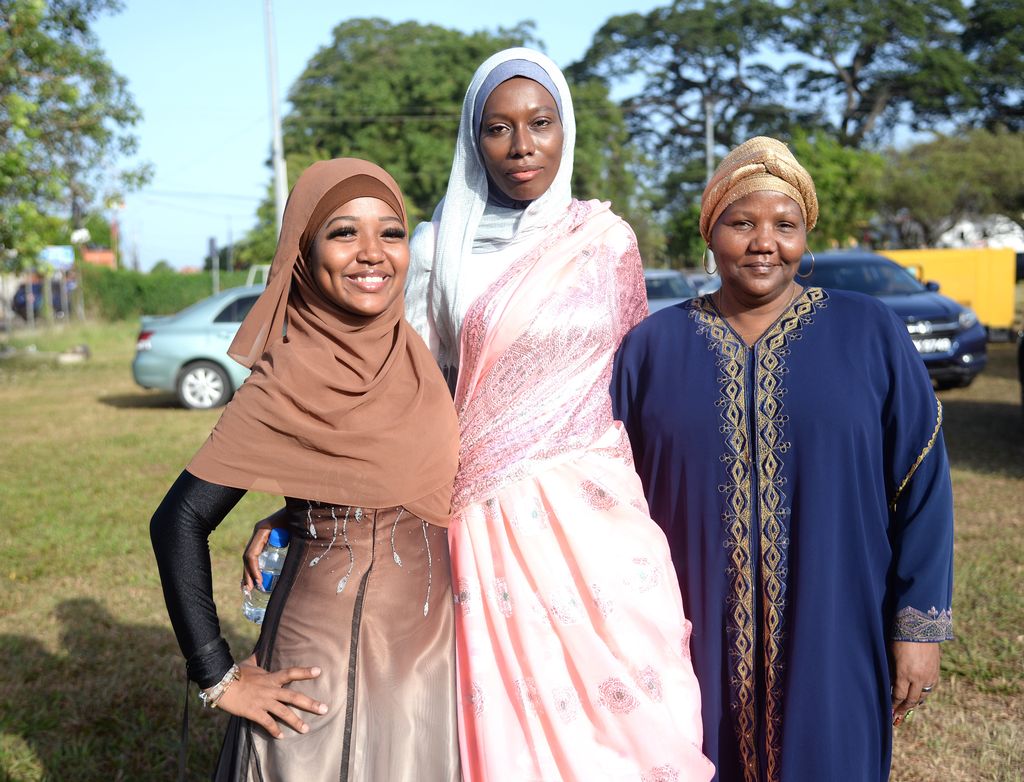
Muslims across Trinidad and Tobago joined the global Islamic community yesterday to celebrate Eid ul-Adha with prayers, charity and reflection on faith, gratitude and obedience to God.
Prime Minister Kamla Persad-Bissessar called on citizens to embrace selflessness, compassion and community solidarity during one of Islam’s holiest observances.
In an official statement, the Prime Minister extended greetings to the Muslim community, describing the festival as a period of reflection, faith and renewal.
She noted that Eid ul-Adha is regarded as the greater of Islam’s two major festivals and marks the culmination of the annual Hajj pilgrimage to Mecca.
“At the heart of Eid ul-Adha is the story of the Prophet Ibrahim and his willingness to sacrifice his son, Prophet Ismael, in obedience to Almighty Allah’s command,” the Prime Minister said.
“That powerful example of faith and devotion continues to inspire believers across generations.”
Persad-Bissessar also cited the Holy Qur’an (22:37), emphasising that “it is neither their meat nor their blood that reaches Allah, but it is piety from you that reaches Him.”
She said the spirit of Eid is reflected in the sharing of food and support with relatives, neighbours and vulnerable citizens, describing it as part of the nation’s social fabric.
Speaking on the significance of the holy occasion, Imam Mirza Ali Mohammed said Eid ul-Adha, also known as the Festival of Sacrifice, represents one of the most sacred observances in Islam.
“There are two Eids in Islam. Everybody knows the Eid after the month of Ramadan, which is Eid-ul-Fitr. This Eid is the bigger of the Eids. This is called Eid ul-Adha, and it is the commemoration of the sacrifices of Prophet Abraham and his family,” he said.
Across T&T, worshippers gathered at mosques early in the morning for Eid prayers, before spending time with relatives and sharing meals with family and neighbours.
In keeping with Islamic tradition, many families also sacrificed livestock, with portions distributed to the poor and vulnerable.
Mohammed said the spirit of Eid ul-Adha extends beyond ritual sacrifice and centres on compassion, generosity and gratitude.
“It’s a day of glorifying God Almighty. It’s a day of sanctity. It’s a day of blessing. It’s a day of praise. It’s a day of remembering God Almighty frequently,” he said.
He urged Muslims to use the occasion to reflect spiritually and renew their faith.
Meanwhile, Imam Sheraz Ali renewed calls for Eid ul-Adha to be recognised as a public holiday in T&T, saying many Muslims are forced to rush between worship and work obligations during one of the busiest days on the Islamic calendar.
“I think it would definitely be a great thing if we can get Eid ul-Adha as a public holiday,” Ali said during a television interview.
“This is a very busy day for us. We have to come to the Eid prayers early in the morning, and then people go off to slaughter their animals, prepare meals, distribute meat and visit family and friends.”
Ali said the absence of a public holiday makes it difficult for worshippers to fully observe the traditions of Eid ul-Adha.
He also addressed misconceptions surrounding the practice of animal sacrifice, saying it is rooted in faith, obedience and compassion.
“That’s the misunderstanding. It’s not just about killing animals. It’s about commemorating the obedience and sacrifice of Prophet Abraham and his son Ishmael,” he said.
He added that Islamic teachings require humane treatment of animals and the meat is distributed among family, neighbours and the less fortunate both locally and abroad.
Ali said any formal push for holiday status should be accompanied by greater public education on the meaning of Eid ul-Adha.