
Derek Achong
The Court of Appeal has ordered the release of a man whose murder conviction was based on the evidence of his cousin.
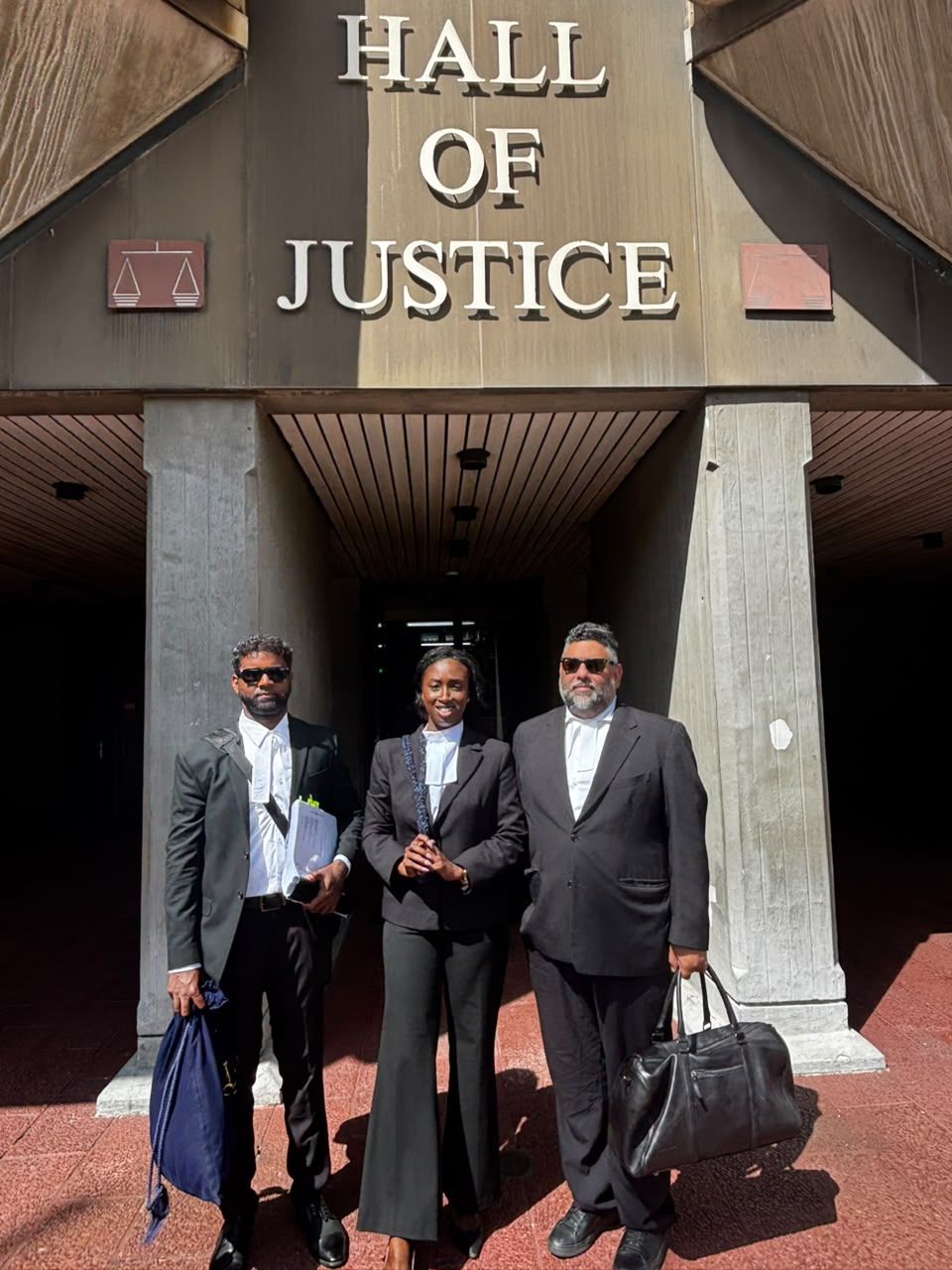
Delivering an oral judgment after hearing submissions at the Hall of Justice in Port of Spain yesterday, Appellate Justices Mark Mohammed, Gillian Lucky and Ricky Rahim upheld Adim "Psycho" Reece's appeal against his conviction.
The panel declined to order a retrial because Reece's cousin, Sherman Lambkin, whose evidence formed the basis of the case against him, was murdered during a home invasion in April.
Reece was convicted of murdering Devon Poptee on December 26, 2005.
Lambkin testified that Reece visited him and other relatives in Valencia and asked him and a friend to identify a group of men who had stabbed him a little over a week earlier.
He said they subsequently met Poptee, whom he described as a friend, near a bridge.
According to Lambkin, Reece asked Poptee to help identify his attackers, and Poptee led them along a track towards a river.
Lambkin said Reece instructed him and his friend to walk ahead while he remained behind with Poptee.
He claimed he saw Poptee stooping down before hearing a gunshot. Lambkin also alleged that Reece threatened him and his friend, warning them against speaking about what they had witnessed before they left the area.
Residents found Poptee's body the following morning. An autopsy revealed that he had been shot in the head.
Lambkin was eventually arrested by police but was released after implicating his cousin.
Homicide detectives obtained a warrant for Reece's arrest, which was executed more than a year and a half later.
Reece was convicted in September 2022 following a judge-alone trial before former High Court judge, now Appellate Justice, Carla Brown-Antoine.
During the appeal, Reece's lawyer Daniel Khan, of Justitia Omnibus Chambers, successfully argued that the trial judge had failed to properly consider whether Lambkin had an interest to serve when he implicated his cousin.
Justice Mohammed found that the judge had placed undue reliance on police officers' evidence that Lambkin had been cleared as a suspect, as well as the fact that he was not questioned about fabricating the case against Reece during the trial.
He also found that the judge should have considered Lambkin's connection to Reece's alleged efforts to find the men who had attacked him. The judge should also have taken into account that Lambkin only cooperated with police after he was detained as a suspect.
"There was a sufficient evidential foundation that Sherman Lambkin may have possessed an improper motive," Justice Mohammed said.
In considering whether a retrial was appropriate, the panel agreed with Reece's other lawyer, Michelle Gonzales, who questioned the State's ability to successfully prosecute the case without Lambkin.
While Gonzales accepted Assistant Director of Public Prosecutions Anju Bhola's submission that the State could rely on transcripts of Lambkin's testimony from the first trial, she pointed out that Lambkin could no longer answer pertinent questions about the truthfulness of his allegations against Reece, which arose during the appeal.
Justice Mohammed said: "There would be a grave disadvantage that would skew the fairness of a retrial."
The decision meant Reece was to be released immediately. He participated in the appeal from prison via video conference.
The panel also expressed disappointment that the defence attorneys who represented Reece at his trial had opted not to make submissions at an Enzor hearing, before the judge considered the evidence and delivered her verdict.
While Justice Lucky acknowledged that defence attorneys were not traditionally required to actively participate in such hearings, during which judges invite submissions on important issues to be considered, she said the need for their involvement had increased.
"The Enzor hearing is about seeking to get it right. The Enzor is to ensure justice," Justice Lucky said.
Reece was also represented by attorney Harrynarine Singh.