Minister insists seabridge operational; groups call for permanent solution
 07 February 2026

Senior Reporter
geisha.kow[email protected]
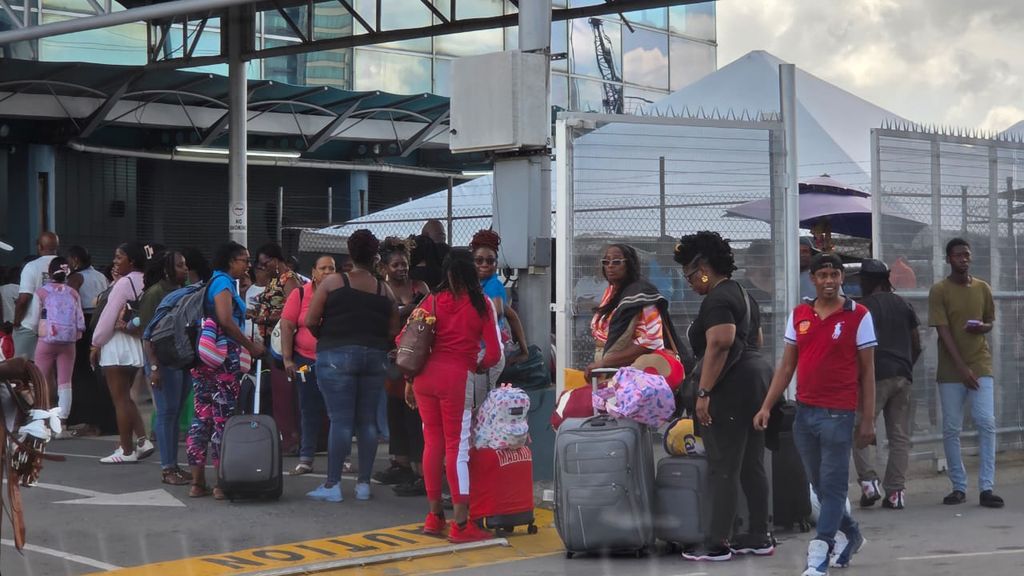
As Tobago’s transportation woes once again dominate national attention, Minister of Works and Infrastructure Jearlean John has stepped forward to defend the Government’s response to the latest disruptions. Her defence comes as the Tobago Hotel and Tourism Association (THTA) intensifies its call to end what it describes as a decades-long “economic and social embargo” on the island caused by what it calls unreliable air and seabridge services.
In a release issued yesterday, the THTA argued that chronic instability in interisland transport has repeatedly crippled Tobago’s tourism-driven economy, undermined investor confidence, and eroded the quality of life for residents.
“Residents, workers, students, patients, and visitors are routinely burdened by the anxiety of not knowing whether they can travel, return home, attend medical appointments, or plan business activity with confidence. This uncertainty erodes quality of life, damages investor confidence, increases operational costs for tourism businesses, and suppresses economic growth.
“This situation is particularly troubling given that billions of dollars have been invested in national infrastructure over the years, including major airport development, yet no comprehensive, long-term solution appears to have been implemented to secure reliable air and sea connectivity for Tobago,” the THTA outlined.
However, in an interview with Guardian Media yesterday, John was adamant that the “seabridge did not collapse,” as she insisted that essential operations on the seabridge continued despite mechanical setbacks.
“We always had boats on the seabridge,” she said, stressing that the movement of food and essential products was never interrupted. “There was never no pile-up of foodstuffs or anything on the port. Those things were given priority.”
John acknowledged delays for certain categories of goods—including cement, oxygen, poultry, and hazardous materials—but noted that a barge had already been deployed and began operations this past week to ease cargo flow.
The minister also detailed the cause of the most recent disruption.
“The Spirit, the engine sucked in a piece of wood and some net. We had no control over that. It was extremely unfortunate,” John said as she also assured that the Blue Wave vessel encountered problems during a sea trial, but corrective measures were underway to restore full capacity.
“The Buccoo Reef is supposed to be back on the bridge by next week Tuesday… so that has a capacity of about 948 passengers and about 200 vehicles. And then the big bad Blue Wave will come out next week by Wednesday or Thursday. That will bring back the reliability on the bridge,” the minister added.
She also emphasised that the situation did not mirror the 2017 collapse of the seabridge under the People’s National Movement administration, stating, “It continued to work. We put on extra sailings. The Galleons Passage that carries over 900 passengers was carrying 1,800 passengers a day because both boats were doing two sailings per day.”
While acknowledging public worry, John assured that the matter would be resolved promptly. “I understand the anxiety, but that will be resolved by next week. The barge is on, and the barge is carrying a lot of stuff.”
Maenwhile, pertaining to interim cargo arrangements, the Port Authority of Trinidad and Tobago (PATT) explained that a barge has been secured as an interim measure, and it arrived in Scarborough yesterday morning carrying its first load of construction and heavy cargo (over 7,000 kgs).
The PATT said it prioritised the movement of perishable goods and essential supplies to minimise disruption to Tobago’s supply chain over the last three weeks.
The PATT further noted that the Buccoo Reef would be reintroduced to service from Monday, February 9, 2026, accommodating approximately 948 passengers and 160 vehicles. The Galleons Passage and APT James continue to operate on adjusted schedules.
The T&T Spirit remains out of service currently for repairs, as the PATT urges travellers to monitor the official channels.
On the broader concerns raised by the THTA, the PATT said the introduction of the Blue Wave Harmony, despite the setback during sea trials, forms part of the Government’s broader strategy to revitalise the inter-island ferry service.
This included strengthened coordination between the PATT, NIDCO, and the Ministry of Works and Infrastructure, with a focus on improving vessel availability, operational reliability, and overall service efficiency.
The PATT also noted the THTA’s call for engagement with tourism and private-sector stakeholders, assuring that it remains open to constructive dialogue as part of the ongoing reform effort, and recognises the value of input from the communities and industries that depend on the sea bridge.
The PATT advised the public that, beyond the immediate operational measures outlined above, the Government is actively pursuing a long-term solution to inter-island cargo transportation—one that moves the country away from its historical reliance on leased vessels toward national ownership.
The PATT added that NIDCO is currently advancing a phased approach to securing reliable, purpose-built cargo capacity for the sea bridge.
The THTA, however, maintained that Tobago requires a permanent, structurally sound transportation framework—not a series of short-term responses to recurring crises.
The association urged the central Government and the Tobago House of Assembly to work collaboratively with private sector stakeholders to implement a long-term, resilient solution.
Meanwhile, the Tobago Division of the T&T Chamber of Industry and Commerce has voiced strong support for the THTA, echoing its concerns over the long-standing challenges affecting Tobago’s air and sea connectivity.
The chamber’s president, Curtis Williams, said the issues highlighted reflected “a structural weakness” that has hindered Tobago’s economic and social progress for decades.
“For decades, unreliable transportation links between Trinidad and Tobago have constrained business operations, disrupted supply chains, discouraged investment and placed undue strain on residents, workers, students and visitors alike. From a private-sector perspective, this uncertainty translates directly into higher operating costs, lost revenue opportunities, and diminished confidence in Tobago as a place to do business,” Williams stated.
While acknowledging that the Government and the Ministry of Works and Infrastructure have taken steps to mitigate recent transportation disruptions—through interim vessels and other contingency measures—Williams stressed that such interventions remain reactive.
Related News

Haiti’s presidential council dissolves after rocky tenure as unelected US-backed ruler r...
TCL set to raise prices; Young blames UNC

Winair launch turns first landing into family reunion