
SOURCE: Caribbean Media Corporation (CMC)
Britain’s King Charles Tuesday described the Atlantic slave trade as a “shameful chapter” in history, even as he acknowledged that “none of us, of course, would be here today were it not for our history, which has shaped us in myriad ways.
“History is not ours to choose or to change. It is bequeathed to us in complex synthesis by forebears we can never know. Our inheritance includes both their achievements and their failures, the good they did as well as the wrongs,” the head of the British monarch told the opening ceremony of the 28th Commonwealth heads of Government Meeting (CHOGM), a grouping of 56 former colonies of the British empire.
In his long anticipated address in which delegates had been told that King Charles would speak about slavery with “unflinching honesty” and “sincere sorrow”, the head of the Commonwealth said history can be hard to compass, viewed as it is through the prism of time, which can be both clarifying and distorting “and yet its consequences resonate with contemporary force.
“Our history inspires us, can appall us, yet it can always teach us. We cannot change the actions of those who came before us. We can, however, learn from the past. The transatlantic trade and enslaved persons still cast a shadow over these islands and other members of our Commonwealth.” King Charles said.
He said as he had noted previously, slavery “that shameful chapter of history is one that fills my heart with horror and my soul with the most profound personal sorrow.
“And yet, history also teaches us that evil need not have the last word, that character and courage can combine to overcome the most monstrous injustice, as they did with the determination to end international trade and enslaved people, in which the Royal Navy played such a leading role.”
King Charles said that the more he has furthered his own understanding of the issues ”through listening, learning, and looking, the more committed I have become to finding ways for us to work in modern partnership to address the wrongs of the past with action for the future”.
He said that this could be accomplished through improving access to education, investing in jobs and opportunities, encouraging intra-Commonwealth trade, and inspiring vital climate resilience measures across the world.
“I have always felt that there is so much that could be done to help lift up those who struggle against hardship and disadvantage. I have always tried to play my part in doing just that, for as any sailor navigating the seas knows, we cannot command the winds, least of all where the winds of yesterday have delivered us, but we can choose how we set our sails.
“The Commonwealth of today is not merely a product of the past, it is a response to the world of today. Its vocation is more compelling than ever. In fact, in a desperately troubled world, the Commonwealth has welcomed new members who see the unique value of this organisation and have chosen to be part of its future,”King Charles added.
Antigua and Barbuda’s Prime Minister Gaston Browne, who is taking over the chairmanship of the grouping for the next two years, told the opening ceremony that fairness also requires an “honest engagement with our shared history.
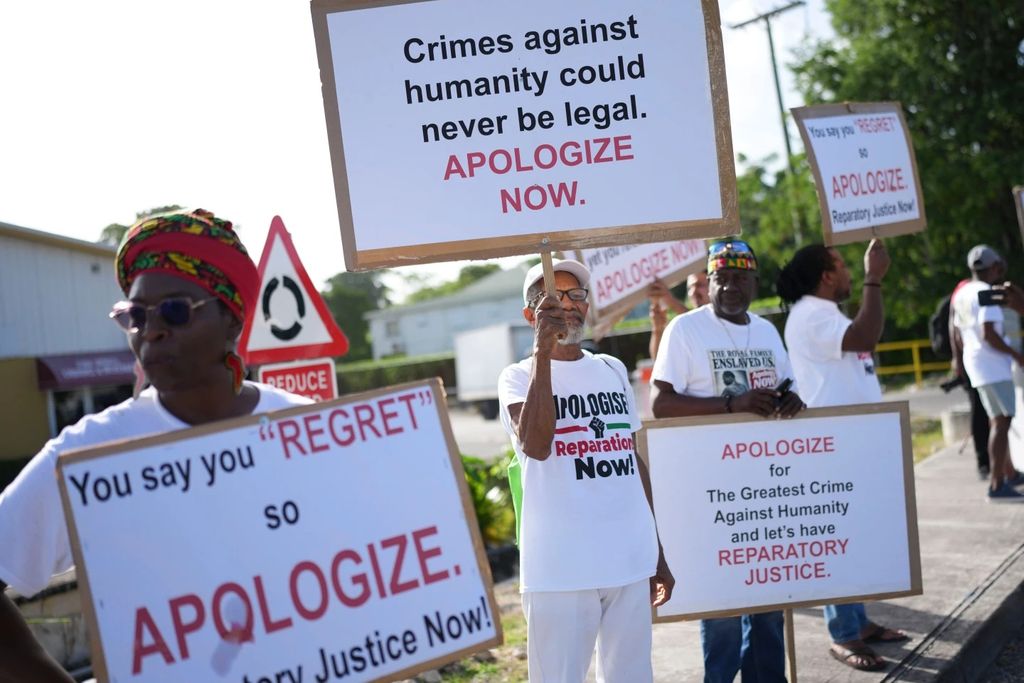
“…we agree that the time had come for a meaningful, truthful, and respectful conversation on reparatory justice.We must now carry that commitment forward through structured, inclusive dialogue on the enduring consequences of slavery and colonialism, with a determination to make progress and a willingness to build consensus,” he said.
British Prime Minister Andy Burnham has expressed sorrow and regret over slavery and his openness to considering a formal apology. In an article in the UK Guardian newspaper, he wrote that he was “open” to the possibility of the United Kingdom formally apologising for its role in slavery – a change in the government’s stance.
Chairman of the Caribbean Community (CARICOM) Reparations Commission (CRC), Professor Sir Hilary Beckles, in a statement prior to the opening of CHOGM, described as “a very critical moment in the development of the reparations movement” the visit to the Caribbean by King Charles and Prime Minister Burnham to the “ancestral site of where this chattel model was established”.
Sir Hilary said that the entire Caribbean, including the CRC, welcomes the decision by The United Kingdom leaders eight months after the United Nations had already determined that chattel slavery was the gravest crime against humanity.
“So this is historic, this is a very critical moment in the development of the reparations movement that the King and Prime Minister of Great Britain are coming to the Caribbean, the ancestral site of where this chattel model was established.
“We know that chattel slavery was invented by the British, this was their concept. The world had never seen any kind of slavery like this. The British enslavers in the Caribbean, beginning in Barbados, created this concept of chattel like cattle, this new and innovative form of slavery,” said Sir Hilary, who is also the Pro Vice Chancellor of the University of the West Indies (UWI). —ST. JOHN’S, Antigua (CMC)
Related News
National Trust seeks access to Whitehall amid heritage concerns
Opposition protests missed chance to question police spending
Young performers shine at More Than Just Talent finals