
In yesterday’s Sunday Guardian, history enthusiast Patricia Bissessar called for Whitehall and the other buildings comprising the Magnificent Seven around the Queen’s Park Savannah in Port-of-Spain to be preserved and repurposed as heritage attractions.
She argued that using Whitehall as the Office of the Prime Minister had placed a strain on the ageing structure, contributing to problems with moisture and mould. Bissessar proposed transforming it into a national museum, opening it to visitors for tours and cultural events, and establishing a maintenance fund to help preserve the country’s historic buildings.
As we continue on, we hear from the National Trust, which is in charge of preserving this country’s historical sites.
Under the National Trust of Trinidad and Tobago Act (Chap. 40:52), the National Trust holds legal oversight for the preservation of listed historical sites. Section 4 of the act tasks the body with “identifying, documenting, and protecting property of natural beauty and property of national, historic, architectural or artistic interest,” while ensuring “the preservation of buildings and lands of national, historic, architectural or artistic interest ... and their surroundings.”
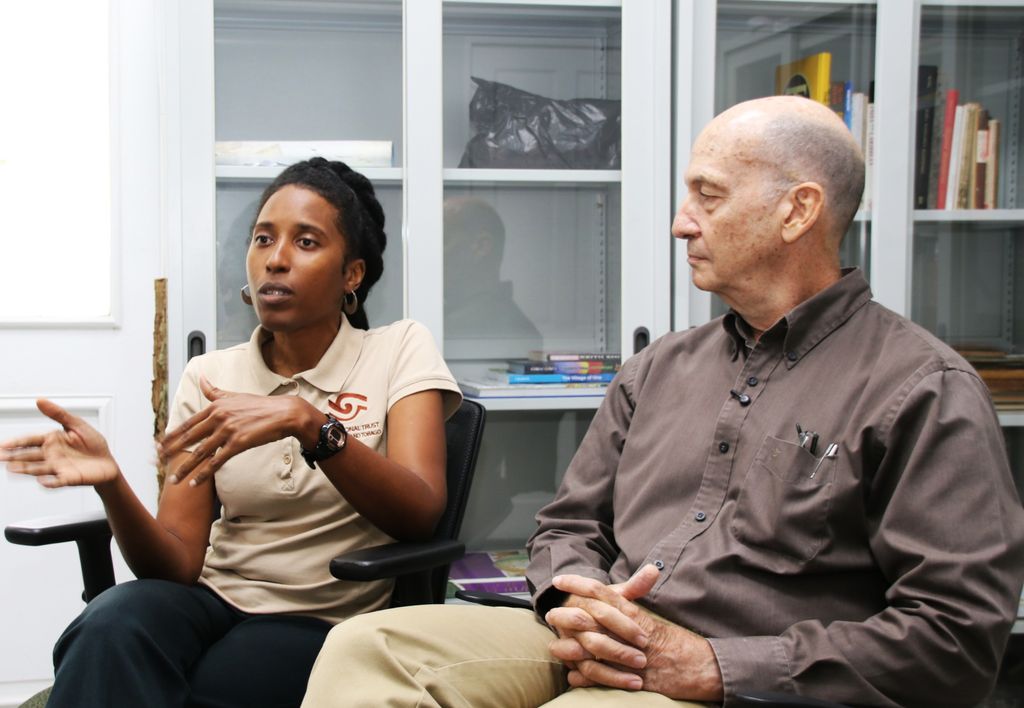
In an interview with Guardian Media at their Mille Fleurs, Port-of-Spain headquarters on October 28, council member Mark Franco and senior Heritage Preservation and Research Officer Nesyamn Ranut spoke about the trust’s responsibilities under the act.
Those include assessing possible heritage properties, including buildings, creating dossiers on those buildings and conducting yearly monitoring visits once sites are listed.
Currently, there are over 400 properties of interest and 59 listed properties of interest across Trinidad and Tobago.
“So once properties are listed, under the act, we are required to do yearly monitoring of them. And, of course, we can only do that with permission from the property owners so we can gain access,” Franco said.
“We don’t have the authority to just walk in and show up and walk in and say, we are here to walk around and inside your property or to look at it and make assessments.”
Franco said the trust actively requests permission from property owners — whether the property is state-owned or privately owned—for monitoring visits.
Both declined to go into details about any singular property.
“When we do monitorings and so on, we try to talk to them (owners) and it’s a relatively private affair unless they want to, for example, bring to attention to the members of the public certain issues that they may be experiencing and it is their right to do so, but it’s not our responsibility or we would not want to overstep our bounds in that respect,” Ranut said.
Asked about the trust’s last visit to Whitehall, Ranut said it was sometime in 2022, post-COVID-19.
She declined to share any details noted by the trust during that visit.
But both she and Franco said the trust has made numerous requests to the Government to visit Whitehall since then.
The access challenges faced by the National Trust also highlight an institutional dynamic: the statutory heritage body falls directly under the administrative portfolio of the Office of the Prime Minister. Consequently, the trust’s annual requests to inspect Whitehall require permission from its own line ministry, which occupies and manages the high-security facility.
Ranut said the requests are done yearly and sometimes with more frequency.
“We have been making requests regularly but we do understand that it’s an official building and access probably would not be as easy as, let’s say, a residence...for security and other reasons, so we do understand that,” Ranut said.
Franco explained that the trust’s work depends on relationships built with property owners to ensure continued communication and collaboration to protect heritage assets.
“We want them to be willing to continue to maintain the buildings as historic properties. If they have been listed, we consider they are very precious assets to Trinidad and Tobago.
“And our role really is to try and ensure that they remain as these important assets and that they remain in a good condition and that is done through a lot of relationship building that we that we have to do,” Franco said.
Asked whether the trust was concerned about the state of Whitehall, as shared by Public Utilities Minister Barry Padarath, Ranut said, “We are concerned with all properties that are considered heritage assets.
“This is our job, this is our life, protection of all heritage assets so anything that happens that could potentially be an issue, we are concerned.”
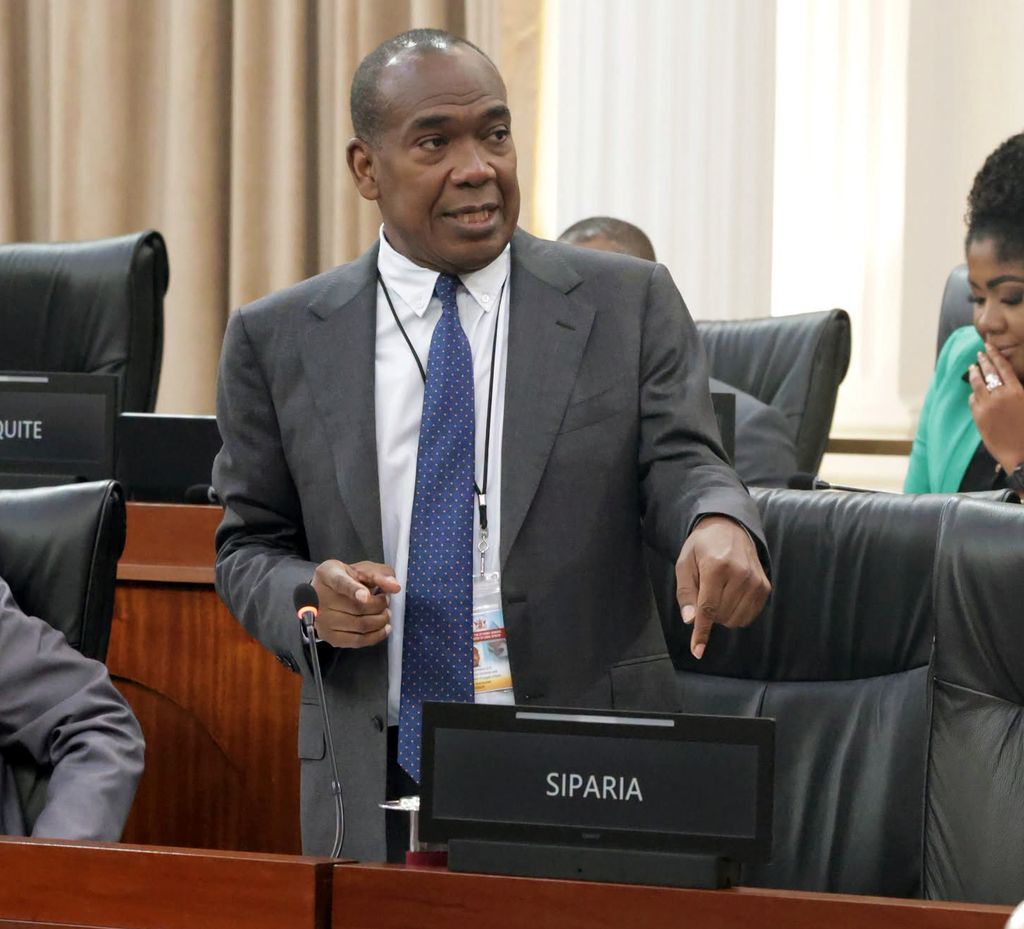
Public Utilities Minister Barry Padarath, who is also a Minister in the Office of the Prime Minister, has repeatedly said that the Office of the Prime Minister (OPM) at Whitehall is unsuitable for modern government operations and, in its current state, is unfit for use by Prime Minister Kamla Persad-Bissessar.
Among his main criticisms are:
• ↓Parts of Whitehall were affected by flooding and mould, creating health and operational concerns.
• ↓He has described the 120-year-old building as“not functional” and not conducive to the effective operation of the Prime Minister’s office.
• ↓He has revealed that the Cabinet Secretariat, which he called the Government’s “engine room,” had already been relocated after flooding affected the basement area where it had been housed.
• ↓He has argued that Whitehall is“an old colonial home” and is not really conducive to a modern office environment, making it difficult to accommodate several OPM units.
• ↓He has said the building remains ill-suited to the needs of a modern government, prompting officials to explore alternative accommodation for OPM departments.
Because of these concerns, Padarath says Prime Minister Persad-Bissessar was advised against using Whitehall when she assumed office in 2025 and initially began working from her private residence in San Fernando.
More recently, he has indicated that the Government is pursuing a “companion building” for Whitehall which will be used to house staff. He said Government is considering the refurbishment of a former Ministry of Education building in St Clair to house OPM operations.
However, Padarath’s assessment was disputed by former public administration minister Allyson West, who has maintained that while Whitehall had experienced drainage and water infiltration problems, the building remained structurally sound and operational when the last administration left office.