
Senior Reporter
elizabeth.gonza[email protected]
Human rights advocates are warning that the State could face serious consequences if a detainee held under a Preventive Detention Order (PDO) dies in custody during the current State of Emergency, as concerns grow over the use of extraordinary detention powers.
Businessman Dominic Hadeed has argued that his continued detention is already affecting his health.
“The conditions of detention have prevented him from receiving the long-standing medical care which he had been prescribed and has been receiving prior to detention and which he requires, with the result that there is a real possibility of long-term permanent damage to his health and a real risk to his life,” his first application had stated which explained that Hadeed suffers from “serious and in some respects life-threatening medical conditions” that cannot be adequately managed while he remains in custody.
Among his ailments are chronic illness, a progressive neurological disorder, blood cancer and a chronic bleeding disorder, sleep apnea and an orthopaedic injury.
On Friday, as the Court of Appeal stayed his release from detention, State attorney Gerald Ramdeen said that arrangements would be made to facilitate treatment by Hadeed’s doctors.
But Hadeed’s health had brought into sharp focus the status of other inmates and the broader application of human rights of people being held under the SOE.
Guardian Media also found that while more than 400 people have been detained under intelligence-based PDOs during the current SoE, there is still no complete public record showing how many have been charged, how many have been released or whether any publicly recorded convictions have resulted from those detentions.
According to Guardian Media’s own review, approximately 600 PDO notices have been published in the Gazette since T&T entered three separate States of Emergency (SoE) beginning in December 2024 under two different administrations.
Of that sum, Guardian Media counted 572 under the UNC administration—138 during the July 2025 to January 2026 SoE and 434 during the current SoE.
The figure does not line up with statements made by Homeland Security Minister Roger Alexander in Parliament in June that 465 PDOs had been approved during the current SoE and that of Deputy Commissioner of Police Junior Benjamin, who said that police executed 449 PDOs during an interview last Friday.
A deeper look at the gazetted PDO notices under the current SoE shows 413 males and 21 females from communities across the country, with the highest numbers coming from Port-of-Spain, Belmont, Laventille and Penal. Four notices linked detainees from Signal Hill, Tobago.
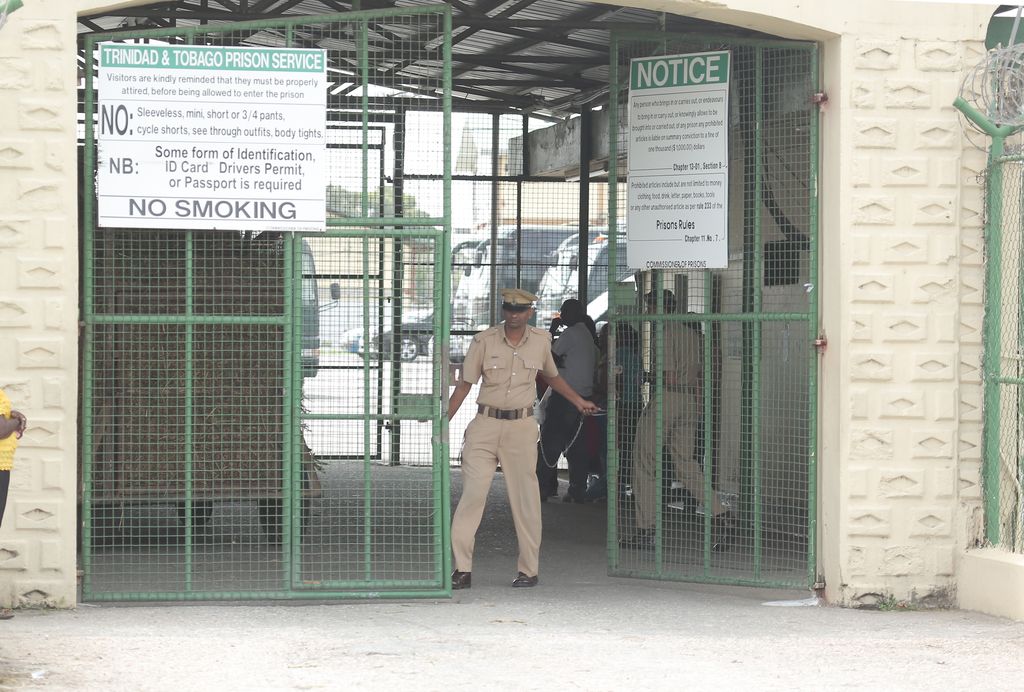
At least 349 people are detained in centres and prisons over allegations of violence or threats of violence in the current SoE. The orders directed that 296 of these detainees be kept at Eastern Correctional Rehabilitation Centre, 23 at Remand Prison, 15 at the Women’s Prison, 13 at the Youth Training and Rehabilitation Centre and two at Teteron Barracks.
Protest-related activity was the least common allegation. Just six people were detained.
The extraordinary powers under the SoE allow the State to detain people without laying criminal charges, relying instead on intelligence suggesting they pose a threat to public safety or national security.
Gazette notices showed that a large number of detainees were accused of involvement in gangs or organised criminal activity. Hundreds of the orders also alleged involvement with firearms, ammunition, violence or threats of violence. Many contained several allegations against the same person.
Guardian Media could not find any publicly available database tracking what became of every detainee after a PDO was executed.
While police announced charges in some cases and publicly reported the release of others, no complete breakdown has been published showing the final outcome for every person detained.
That lack of information has become one of the main concerns raised by human-rights advocates, lawyers and relatives of detainees.
Former head of the Trinidad and Tobago Human Rights Commission, Denise Pitcher, said concerns begin the moment a SoE is declared because extraordinary powers automatically affect fundamental rights.
“So right away, that’s a human rights issue,” she said.
She said PDOs go even further because people are detained on suspicion rather than on evidence presented before a court.
“The rule of law dictates that a person must be charged for an offence for prolonged detention,” she said.
“If the final decision rests with the executive, there are no checks and balances,” she said, referring to the review tribunal process, under which the minister may reject recommendations for a detainee’s release.
She also questioned the lack of publicly available information about what happened after hundreds of people were detained.
“It’s the right of the public to have this information,” she said.
One of the biggest concerns raised by human-rights advocates and lawyers is what happens when people become seriously ill while being held without charge.
Gang or organised criminal activity — 399 mentions
Firearms or ammunition — 385 mentions
Violence or threats — 349 mentions
Robbery, burglary or home invasion — 228 mentions
Drug activity — 205 mentions
Murder or attempted murder — 137 mentions
Extortion, kidnapping or trafficking — 118 mentions
Prison-linked activity — 28 mentions
Financial crime or money laundering — 23 mentions
Protest, public-order or expression-related activity — 6 mentions
Several detainees or their families have publicly raised concerns about deteriorating health while in custody during the current SoE, including Dominic Hadeed and detainee Johann Harry.
For Harry, a GoFundMe campaign was launched on June 20 by his family to raise money for legal representation and specialised medical care. The family said Harry is being held under a 90-day PDO without criminal charges and suffers from sickle cell anaemia. They said he was recently hospitalised with acute chest syndrome and fear his condition is worsening in custody. As of last Friday, the campaign had raised £671 of its £2,000 target from 21 donations. Harry was detained for allegedly disseminating hate speech against Prime Minister Kamla Persad-Bissessar, Indo-Trinidadians and Hindus, among others, on social media. The content is considered prejudicial to public safety.
Pitcher said the State has a legal and moral responsibility to protect every person once they are taken into custody and that even during a SoE, some rights cannot be suspended.
She said the right to health is also a fundamental right and forms part of the minimum standards for people held in detention.
“God forbid that someone dies within the custody of the State during a SoE due to the conditions in places of detention. That’s something that should concern us.”
Pitcher said the issue also draws attention to longstanding complaints about prison conditions.
“No one, not even an animal, should be subjected to the conditions that exist in the places of detention in Trinidad and Tobago.”
She said the country also lacks independent oversight of detention facilities.
“We don’t have any monitoring of places of detention in Trinidad and Tobago,” she said, adding that there is no independent body regularly inspecting conditions or reporting publicly on the treatment of detainees.
Former independent senator, co-founder of the Caribbean Centre for Human Rights, veteran human rights and women’s rights activist, Diana Mahabir-Wyatt, said T&T risked damaging its democratic reputation and international standing if the treatment of PDO detainees continued.
Mahabir-Wyatt said, “We don’t seem to be a democracy anymore,” arguing that the country was moving away from the freedoms it once respected. She also warned that if a detainee died in State custody, “this is declaring to the world that we violate the human rights of people who are born and who are citizens of this country.”
Those concerns were echoed by Attorney and constitutional law specialist Subhas Panday, who has visited clients detained under PDOs.
He described conditions at one detention facility as inhumane, claiming that detainees are kept in warehouses and containers with little ventilation.
He said the lighting was poor and temperatures inside became unbearable.
“The day I went, it was about three o’clock…it was so hot, he was just sitting there, and beads of perspiration flowing on his body.”
Panday claimed prison officers themselves complained about the conditions.
He questioned whether people who had not been charged with any offence should be kept in those circumstances.
“They are not convicted for anything. They are not even deemed to be guilty of anything.
“If that is so, they are merely detainees based upon some intelligence.”
He argued that if the State intended to detain hundreds of people under emergency powers, it also had a responsibility to provide suitable accommodation.
“If they knew that they were going to have a state of emergency, they should have created more space for them.”
Panday warned that if a detainee died while in State custody, the consequences could be serious.
“The State will be liable.”
Mahabir-Wyatt, Pitcher and Panday all questioned whether the review tribunal provides an effective safeguard.
Under the current system, detainees may ask for their detention to be reviewed by a tribunal. However, the minister, in this case the Minister of Homeland Security, is not bound to accept the tribunal’s recommendation.
Pitcher believes that this weakens one of the few protections available to detainees.
“If the final decision rests with the executive, there are no checks and balances.”
Panday was equally critical.
“If the minister rejects it…the tribunal is basically ineffective.”
He said many detainees may never be able to challenge their detention because they simply cannot afford legal representation.
“Most of the detainees are poor people…They cannot afford it.”
The concerns raised are not unique to T&T.
Jamaica also faced criticism after using emergency powers to detain thousands of people. Courts there later examined cases involving prolonged detention without charge. Barbados also required regular reporting to Parliament on emergency detentions.
Jamaica detained 2,729 people during the 2018 SoE in St James, while Belize detained nearly 100 people during its 2024 gang-related emergency and about 126 people during another emergency in May 2026.
Pitcher said transparency is essential whenever governments exercise extraordinary powers.
“The State is accountable to the citizens of Trinidad and Tobago.”
Last month, during the debate on the Government’s move to extend the SoE, Homeland Security Minister Roger Alexander told the Parliament there were 7,174 police-led operations; 3,211 people arrested; 698 persons charged (as of Wednesday, June 12); 465 PDOs approved; and 184 firearms removed from the nation’s streets.
The minister also defended the use of PDOs during the SoE.
“That order is an executive or administrative directive that authorises the arrest, the confinement of an individual without a formal trial or conviction based on a belief that a person would be detained, or detaining that person is necessary to protect public safety or to prevent an imminent crime.
“So, it’s not like every time you’re going to get charged. One of the duties of a police officer is to prevent crime, and that is exactly what is happening here. You’re preventing something from happening before it happens.”
Alexander also said that 698 people have been charged under recent previous SoEs.
A total of 40 PDOs were approved and executed by the Ministry of Homeland Security for the SoE between March 3, 2026, and late May 2026.
Before that, 117 detainees were released from the Eastern Correctional and Rehabilitation Centre when the SoE, declared on July 18, 2025, ended on January 31, 2026. Police reported that while 151 PDOs were executed during this specific SoE, the revocation of the orders triggered the mass release of those held. Approximately 30 people who were held were charged. The exact figure has varied.
T&T remains a party to six major United Nations human rights agreements during the current SoE.
The agreements are the International Covenant on Civil and Political Rights, joined in 1978; the International Covenant on Economic, Social and Cultural Rights, also joined in 1978; the Convention against Racial Discrimination, joined in 1973; the Convention against Discrimination against Women, joined in 1990; the Convention on the Rights of the Child, joined in 1991; and the Convention on the Rights of Persons with Disabilities, joined in 2015.
The International Covenant on Civil and Political Rights contains protections related to arrest, detention, access to the courts and criminal proceedings.
On April 10, 2026, T&T’s Permanent Mission to the United Nations informed the UN Secretary-General that the Government was temporarily limiting specific parts of Article 9 and Article 14 of the agreement.
The information is contained in the UN Depositary Notification labelled C.N.145.2026 online.
The Government said the SoE, which took effect on March 3, 2026, required the temporary measures.
Article 9 deals with arrest and detention. It includes protection against arbitrary detention, the right to be brought before a judge and the right to challenge detention.
Article 14 deals with court proceedings and the rights of people facing criminal charges.
The notification did not remove T&T from the agreement. The country remains bound by the other parts of the treaty.
Under the agreement, emergency measures must be connected to the emergency and what the situation requires.
The UN Human Rights Committee has said that some protections, including the ban on torture and cruel treatment, cannot be suspended during an emergency.
People who believe their rights were breached can challenge their detention in the local courts. They may seek release, medical treatment or compensation, depending on the circumstances.
Complaints may also be submitted to the UN Working Group on Arbitrary Detention or the Inter-American Commission on Human Rights.
These bodies can examine complaints, publish findings and recommend release, compensation or changes to laws and procedures.