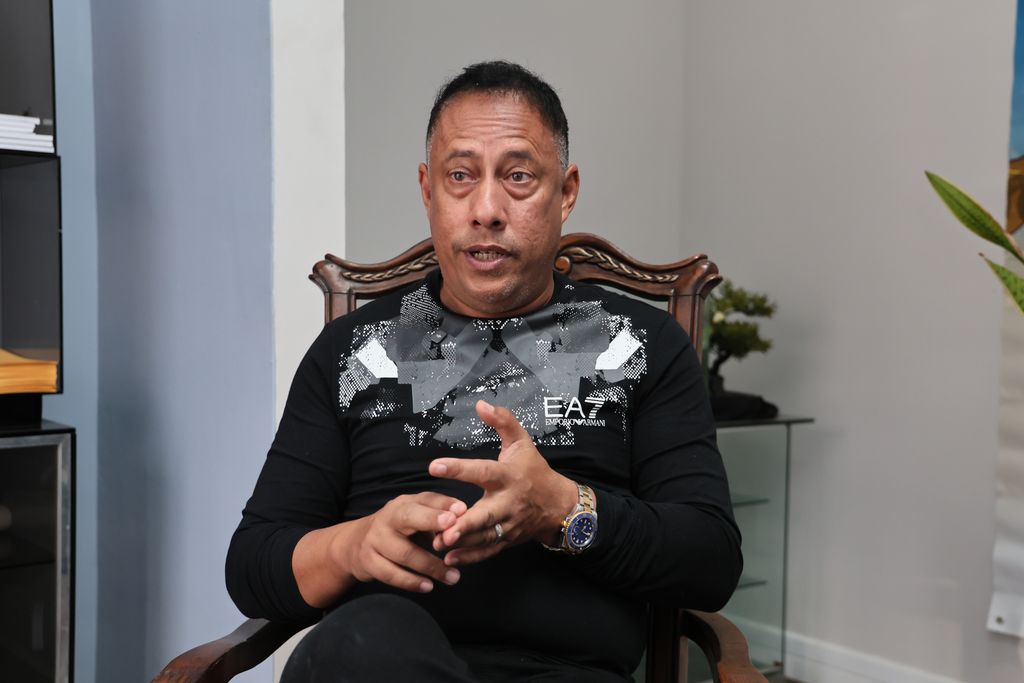

Former Police Commissioner and National Security Minister Gary Griffith has described the extension of Trinidad and Tobago’s State of Emergency (SOE) as a clear admission of failure by the country’s law enforcement leadership.
Griffith argued that Prime Minister Kamla Persad-Bissessar had “no choice” but to prolong the SOE because of the inability of the Trinidad and Tobago Police Service (TTPS) hierarchy to control crime, despite already having constitutional authority and powers. He contrasted the current situation with the period between 2013 and 2015, when the then administration implemented a series of initiatives that, he said, reduced serious crime without resorting to emergency powers.
According to Griffith, measures such as the Community Comfort Patrol, the acquisition of Damen vessels, the Rapid Response Unit, the Highway Patrol, and the National Security Special Operations Group contributed to the “highest reduction in serious crime in 31 years.” He highlighted the role of the National Operations Centre, which was later shut down, as a key factor in ensuring deterrence, visibility, and rapid response. Griffith noted that murders in 2014 were nearly identical to last year’s figures - achieved without an SOE.
He warned that relying on emergency powers undermines public trust and sends damaging signals internationally. “For law enforcement to ask the Government to extend a State of Emergency is, in itself, an admission of failure. It is an admission that they are unable to do their damn job,” Griffith declared.
The former commissioner cautioned that prolonged states of emergency project instability, prompting foreign governments to escalate travel advisories. This, he said, directly harms investment, trade, and tourism, while eroding economic confidence. The ripple effects, Griffith added, include inflation, unemployment, and ultimately more crime.
Griffith criticised the TTPS leadership for failing to introduce new crime‑fighting initiatives, noting that the only recent policy was one aimed at protecting diplomats. While supportive of that measure, he said it reinforced the perception that citizens were left unprotected.
“A State of Emergency affects everyone,” Griffith concluded. “It affects the economy, your pocket, and the future of this country.”