
Gail Alexander
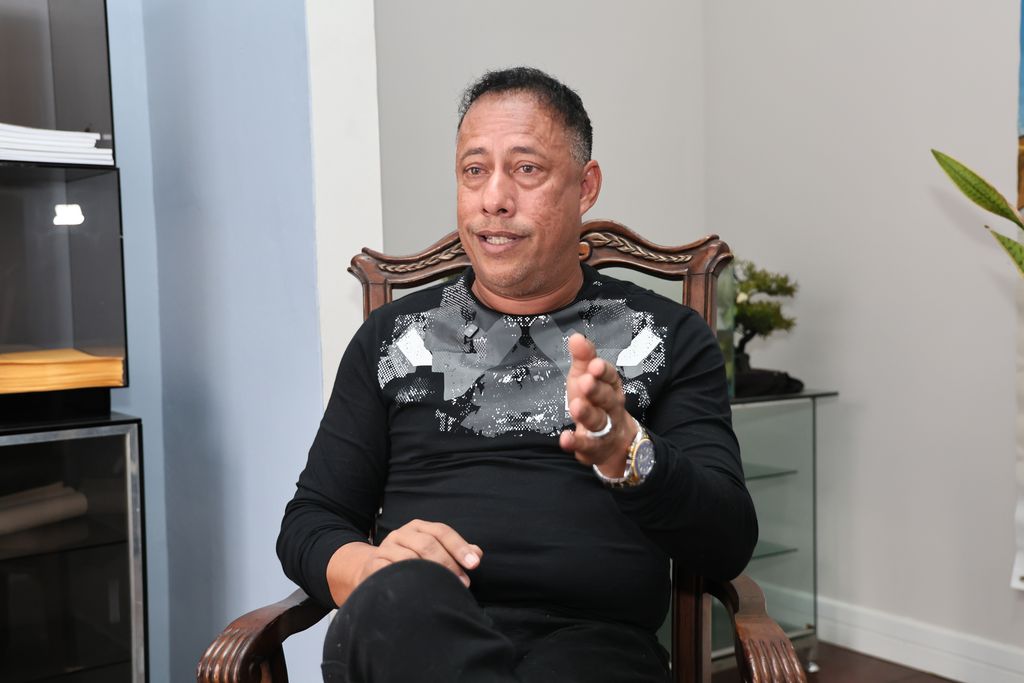
Some 36 years after the July 27, 1990 coup attempt, intelligence gathering is “not one step better” and Trinidad and Tobago is at a “democratic crossroads” under the current UNC Government.
Those were the respective views of former Police Commissioner Gary Griffith on intelligence gathering and PNM deputy political leader Sanjiv Boodhu, who spoke about “undemocratic acts against the people” by the Government.
Griffith, who said he was one of the youngest soldiers serving Trinidad and Tobago during the 1990 events, said the coup occurred largely because of poor intelligence gathering.
“And 36 years later, we’re not one step better.
“In 1990, I witnessed first-hand the mistakes, irregularities and serious shortcomings within our national security apparatus. On the night of the coup, I was assigned responsibility within my company for securing Camp Ogden, which had become the main operational base.
“The following morning, I worked alongside Special Forces units conducting patrols throughout Port of Spain and surrounding areas. To my shock, we discovered several police stations wide open and completely abandoned, with no officers in attendance. That left many of us to fend for ourselves while defending the country during the most critical period of the incident.”
Griffith said the TTPS’ increased professionalism, discipline and operational approach would not permit police stations to be abandoned in that manner today.
“However, intelligence remains the issue.”
He expressed concern that the recommendations of the Commission of Enquiry into the events of 1990 were left virtually untouched for more than a decade.
He said that, as National Security Minister, he implemented 13 of the 34 recommendations.
“Since then, there have been several National Security Ministers, Prime Ministers, Commissioners of Police and National Security Councils. No one has lifted a finger to reopen the file, examine the outstanding concerns and continue implementing the recommendations intended to prevent a recurrence of the events of 1990,” he added.
Griffith said the main recommendation was the establishment of a National Operations Centre because, in 1990, the different arms of intelligence did not work together. He said he established the NOC.
“The system worked. In 2014, Trinidad and Tobago recorded the largest reduction in serious crime in 31 years without the use of a State of Emergency, which allows an administration to lock up persons to prevent them from committing crimes, then blow a trumpet claiming crime has declined.
“Sadly, the present administration, through a Homeland Security Minister whose knowledge is limited primarily to policing, has reduced this highly advanced system to a dispatch centre working alongside E-999. Even more concerning, it’s headed by an individual whose understanding of modern technology appears closer to the Betamax and eight-track tape era.”
Griffith said, “We may have corrected some of the operational failures witnessed during the coup attempt, including the abandonment of police stations. However, the central intelligence failure that allowed those events to unfold has still not been adequately addressed.
“The failure to implement the Commission of Enquiry’s remaining recommendations, combined with the failure to utilise the NOC as intended, has left Trinidad and Tobago exposed.
“Thirty-six years later, we’re not one step closer to ensuring that what happened in 1990 will never happen again.”
Undemocratic acts against the people — Boodhu
Deputy PNM political leader Boodhu, who walked with NAR/COP member Wendell Eversley to Arouca during Eversley’s annual July 27 trek to the Red House yesterday, said:
“Today we should reflect on an enduring truth: a nation is strongest not when power is exercised without restraint, but when every citizen, institution and government remains committed to the Constitution, the rule of law and the peaceful resolution of differences.
“As a people, we’re again at a democratic crossroads. The current Government attempts to convince the population that the infringement of fundamental rights and freedoms is a justifiable sacrifice on the altar of national security. This is not so. Rights and national security are not mutually exclusive and are not constitutional enemies.
“The exercise of singular and arbitrary power by one Minister to effect the detention of citizens without charge and due process of law is not right. Breaching citizens’ rights to privacy without a warrant is not right. The injection of fear into the minds of the people is not right. These are all undemocratic acts carried out by the State against the people, inconsistent with the spirit of our constitutional foundations as a republic.
“The legacy of July 27 is not one of fear. It is one of resilience. I’m confident my country and people will always stand against injustice, unconstitutionality and undemocratic conduct, regardless of who perpetrates same,” Boodhu added.