
Akash Samaroo
Lead Editor-Politics
akash.sama[email protected]
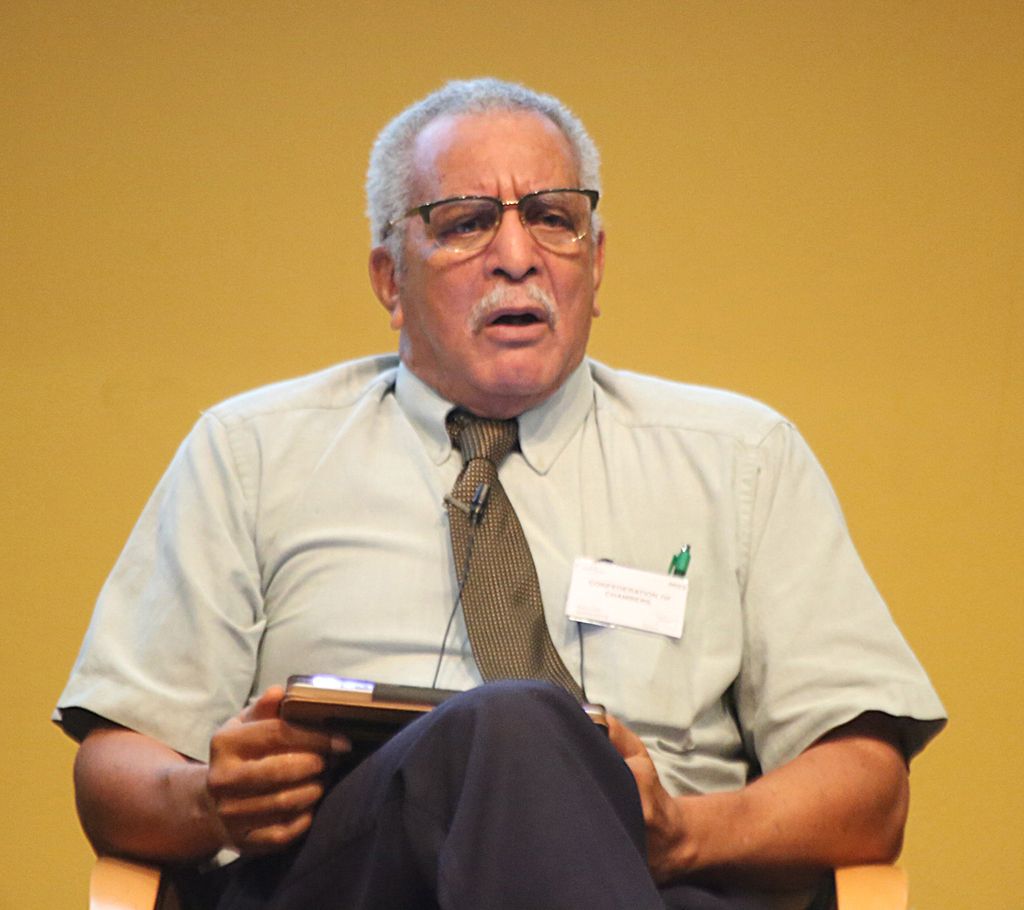
International affairs expert Dr Anthony Gonzales says Foreign and Caricom Affairs Minister Sean Sobers’ recent meeting with his Venezuelan counterpart is an encouraging sign that relations between Trinidad and Tobago and Venezuela are beginning to improve, and he believes a meeting between the leaders of both countries could eventually follow.
However, Gonzales is urging Prime Minister Kamla Persad-Bissessar to adopt a more measured approach when commenting publicly on Venezuela, warning that unnecessary criticism could undermine efforts to rebuild ties at a time when both countries have shared interests.
“Yes, it’s a positive sign. I think they are trying to patch up relations,” Gonzales told Guardian Media yesterday.
“The Venezuelans seem to desire to somehow repair the relationship, but they’re taking it gradually over time.”
Sobers met with Venezuelan Foreign Minister Félix Plasencia at Casa Amarilla, the headquarters of Venezuela’s Foreign Ministry in Caracas, for bilateral discussions yesterday.
Gonzales believes the engagement could lay the groundwork for talks between Persad-Bissessar and Venezuela’s acting President Delcy Rodríguez.
“Certainly, I think a meeting at the top between their president and our prime minister would be something that we should be seeing,” he said.
He noted that Rodríguez has already held high-level discussions with other Caribbean leaders and argued that T&T has even stronger reasons to maintain direct dialogue with Caracas.
According to Gonzales, the absence of a meeting between Persad-Bissessar and Rodríguez so far may indicate lingering resentment in Caracas stemming from previous diplomatic tensions.
“I think the Venezuelan government still has some scars from what transpired before. But they want to have some kind of better relationship with us,” he said.
“There’s some kind of healing taking place.”
Gonzales believes the push to repair relations is driven largely by mutual interests rather than pressure from Washington.
He said both countries face several issues that require cooperation, including energy, migration, human trafficking, contraband and criminal activity in the Gulf of Paria.
“We have a lot more in common and we have a lot more to do with Venezuela than Grenada and Barbados,” he said.
“We have the Gulf of Paria here with all the human trafficking and the contraband and all of that. And we need to work with the Venezuelans to kind of control what’s happening here.”
Energy remains one of the strongest areas for collaboration, Gonzales added.
He noted that Venezuela possesses vast natural gas reserves that it needs to monetise, while Trinidad and Tobago has the infrastructure necessary to process additional gas supplies.
“We are sitting right next to Venezuela. We have the infrastructure. We have the companies that can use the gas,” he said.
“It’s of mutual benefit.”
Gonzales said geography alone makes cooperation unavoidable and cautioned against allowing political grievances to obstruct practical collaboration.
“We are neighbours and we are, in a sense, forced to work together to deal with these problems. You can’t solve it by yourselves,” he said.
“You can’t keep holding on to grievances as a state because eventually it may cut off your own nose.”
At the same time, he said the Prime Minister must avoid comments that could generate fresh diplomatic tensions.
Pointing to Persad-Bissessar’s previous criticism of Rodríguez, Gonzales said such remarks do little to advance Trinidad and Tobago’s national interests.
“The prime minister has to realise that sometimes it doesn’t make sense talking. What’s the sense of talking about that for? How does that help us?” he asked.
“Do we get anything by saying that Venezuela is not democratic? That doesn’t help us here.”
He argued that Trinidad and Tobago must maintain a working relationship with whichever government is in power in Venezuela because of the countries’ geographic proximity and shared security and economic concerns.
“We have to deal with Venezuela, whoever is there,” Gonzales said.
“We’re right next to them. We have to fix whatever is here in the Gulf. They’re the ones that we have to collaborate with to do that.”
Despite the challenges, Gonzales believes relations are gradually returning to normal, although rebuilding trust will take time.
“My sense is that things are turning around slowly, but they’re coming back to normal. Maybe, I don’t know how long it will take, six months, a year or whatever, but it’s coming back,” he said.
His hope, he added, is that both governments remain committed to that path.
“Let’s hope she won’t go and make another statement and say something again,” Gonzales said.
“It’s softening up. It’s coming back. We’re trying to overcome this strained relationship.”