
Senior Reporter
elizabeth.gonza[email protected]
In the digital space, an individual with a large following can incite thought, anger, resonance or inspire.
Social media has transformed how people engage with public issues.
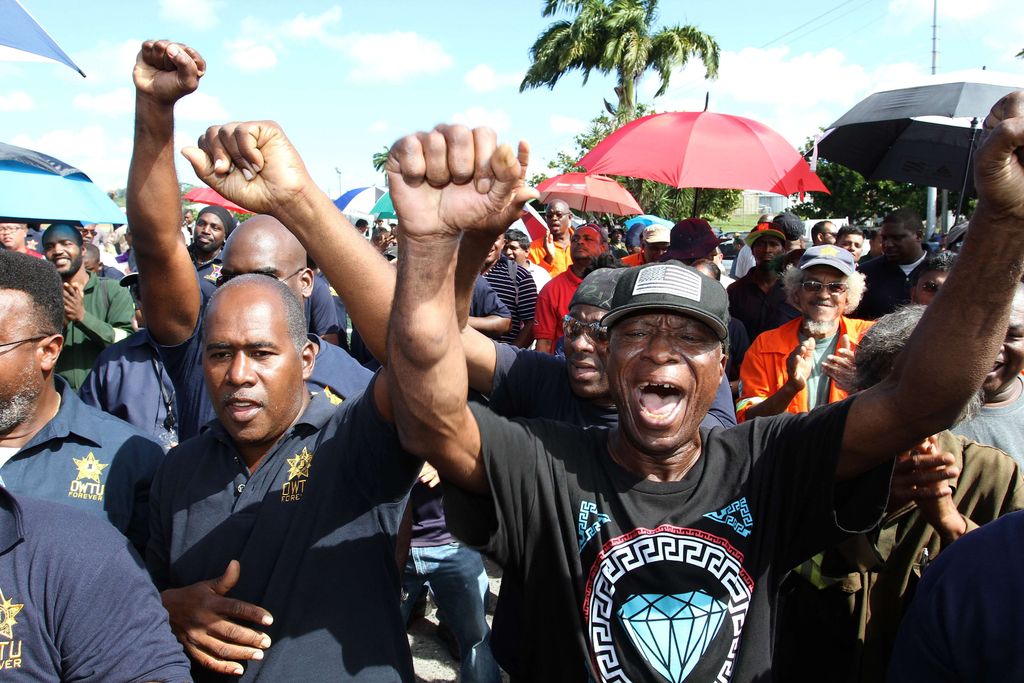
In 1970, tens of thousands of people filled the streets during the Black Power Revolution.
In 2005, an estimated 12,000 to 15,000 people marched through Port-of-Spain demanding action on crime.
Today, protests continue across Trinidad and Tobago. Nurses have marched. Trade unions have demonstrated. Over the years, citizens have protested over police shootings.
But protests have ebbed.
Citizens can now express support, criticism and outrage online without leaving home.
One of the most visible examples has been the response to the case involving Joshua Samaroo and Kaia Sealy, which started with calls for justice on social media.
Joshua Samaroo was killed in a police-involved shooting on January 20 in St Augustine. Kaia Sealy, his partner, was also shot in the same incident.
Sealy’s friend, Alyssa Phillip, became one of the most visible organisers of several intense protests that followed over the past month.
Starting on social media, Phillip helped mobilise demonstrations linked to the case, including a series of actions referred to by supporters as “19 protests for 19 bullets,” calling for accountability and transparency. Phillip, her mother and another protester were arrested during one of the demonstrations in Port-of-Spain and released on bail.
Historian, former soldier and trade unionist Raffique Shah questioned whether that shift has reduced the incentive for physical participation.
“People will wonder why do they have to go and subject themselves to all the elements, the weather, traffic, day work and things like that, when they could stay from their homes.”
Former politician Stephen Cadiz also drew a distinction between online activism and public demonstrations.
“Go on the ground, go on a street corner, and do the same thing.”
The comments come as several recent protests have generated significant public discussion but relatively modest physical turnout.
Cadiz believes another factor may be influencing participation.
He said some citizens may hesitate to attend demonstrations if they fear consequences.
“An ordinary person would say, ‘Let me just back off from that,’ because next thing you know, I’m going to find myself in jail.”
Still, neither man believes protest is disappearing.
“Once you have human beings, you’re going to have protests,” Cadiz said.
And for Shah, the lesson of 1970 is not simply that protests can work. It is that successful movements are built on credibility and public trust, and that is why some picket actions flop.
“The important thing is that to remain valid, and to remain alive and kicking, they must be true, based on the truth.”
What happened to the mass mobilisation that once brought thousands of people onto the streets?
Shah does not believe the protests taking place today can be compared to the movement that emerged in 1970.
“No, not yet,” Shah said when asked whether he saw parallels between the Black Power Movement and more recent protests.
The Black Power Revolution remains one of the most significant protest movements in the country’s history. The movement emerged amid calls for greater economic opportunity, racial empowerment and political change. Demonstrations attracted thousands of people and became a defining moment in post-Independence Trinidad and Tobago.
Shah believes the movement succeeded because it was driven by something larger than the demonstrations themselves.
“The idea would have been the main driver, I think, but the protest was important.”
According to Shah, protest has historically been one of the most important tools available to ordinary citizens.
“I think that protest has always been, throughout history, it has been a tool that the poorer classes could use.”
He said demonstrations gave people the opportunity to voice concerns, challenge authority and push for change.
“It has worked in many instances.”
But Shah said large-scale mobilisation depends on several factors.
“A lot has to do with what the issue is, and what the people who are leading it, their capabilities as leaders, and how they manoeuvre themselves and promote the issues.”
Those same themes emerged in the experience of Cadiz.
Cadiz became a leading public voice against crime after the murder of his employee and friend, Keith Noel, in 2005.
The killing led to the formation of the Keith Noel 136 Committee, which organised a national petition campaign and later the Death March through Port-of-Spain.
Cadiz said the committee collected more than 127,000 signatures. The march itself drew between 12,000 and 15,000 participants.
“We got upwards of 12,000 people on the streets of Port-of-Spain. And that was unheard of.”
At the time, violent crime had become a major national concern.
Cadiz said people joined because they believed they could make a difference.
“People bought into the whole idea that you don’t have to sit and complain and stay home and complain.”
For him, public participation remains one of the clearest ways citizens can send a message to those in power.
“One thing that scares any administration, boots on the ground.”
“When a politician sees boots on the ground and sees people actually taking a stand, it sends a very, very clear message.”
“Did it (crime) stop? The answer to that is no.”
But he believes the message was sent.
Related News
Puerto Rico’s development agency chief resigns after claiming government interference
Fire destroys abandoned St Margaret’s Village building
PM posts praise and blessings for law enforcement officers