
A nearly 10-year battle for gay rights in Trinidad and Tobago could end on Wednesday at a final appeals court in England.
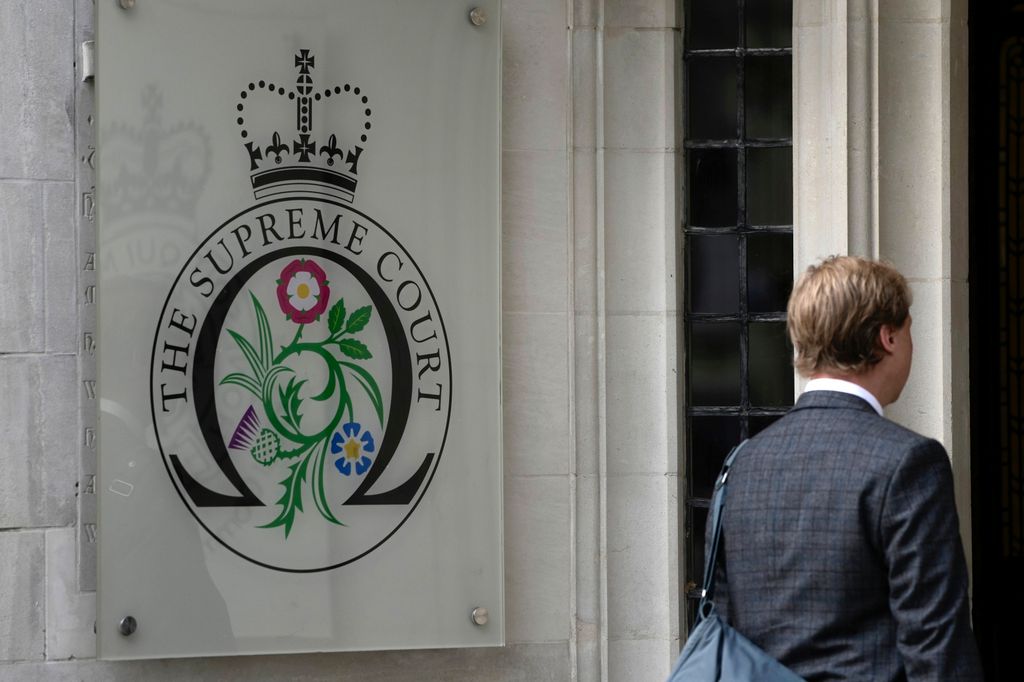
Supreme Court judges in London held a hearing on a landmark human rights case that could decriminalize gay sex in the eastern Caribbean nation, potentially setting a precedent for the largely conservative Caribbean region.
The case was filed in February 2017 by Jason Jones, who argues that so-called “buggery” laws in the twin-island nation that prohibit gay sex, dating from when the country was a British colony, are unconstitutional. Those found guilty could receive up to five years in prison.
Jones is represented by lawyers including Anand Ramlogan, the former attorney general of Trinidad and Tobago.
“Who are we to volunteer that gay people should starve because we don’t like the meat that they eat?” Ramlogan told the panel of judges.
“Constitutional rights exist precisely because majorities are not always right. They ensure that the dignity and equality of every citizen are not left to the changing tides of public opinion.”
Opposing Jones are Trinidad and Tobago’s government, backed by the country’s Council of Evangelical Churches and its largest Hindu organization, Sanatan Dharma Maha Sabha.
The case has wound its way through several courts. In April 2018, Trinidad’s High Court found the laws unconstitutional, but a local appeals court partially reversed that ruling in March 2025. Four months later, Trinidad’s Court of Appeals allowed Jones to seek a ruling from the final court of appeal in England.
The case, which is now before the Judicial Committee of the Privy Council in London, is being closely watched by activists across the Caribbean.
Trinidad and Tobago is an independent country but also a republic within the British Commonwealth, so the Privy Council is its final court of appeals. The country has pushed for the Trinidad-based Caribbean Court of Justice to replace the Privy Council.
In 1991, the Bahamas decriminalized homosexuality, while the U.K. government repealed such laws in 2001 in Anguilla, the British Virgin Islands, the Cayman Islands, Montserrat and the Turks and Caicos Islands. Elsewhere in the Caribbean, judges have recently struck down similar laws in Barbados, Dominica, St. Lucia and Antigua and Barbuda.
Gay sex remains a crime in Grenada, Jamaica, Trinidad and Tobago and St. Vincent and the Grenadines — all former British colonies. In the U.K., gay sex was decriminalized in 1967, more than 400 years after buggery laws were passed during the reign of King Henry VIII, with the last executions associated with the crime occurring in 1835.
“Jason Jones asks for no special privilege. He asks that the Constitution protects him as it does every other citizen,” Ramlogan said.
Jones, 61, who has been openly gay since age 16, left Trinidad and Tobago in 1996 because of what he described as homophobic violence and discrimination.
“His experience is part of a wider picture,” LGBTQ groups supporting Jones said in a recent court filing. “(He) is unable to fully express his sexuality without being branded a criminal.”
Jones argues that criminalizing gay sex is a moral stance, asserting that “Trinidad and Tobago is a secular society and a multiracial one. Christian morality is neither universal nor superior.”
While the country’s so-called buggery laws have not been enforced in recent history, attorneys and activists say they still send a message.
“A law of this kind operates not only through arrest and conviction, but through the stigma, fear, concealment and exclusion,” according to a recently filed written argument by activists in favor of Jones.
It asserted that criminalizing gay sex “compounds stigma at precisely the stage at which young people may be forming identity, seeking support, accessing education and healthcare, and deciding whether it is safe to disclose abuse, bullying or self-harm risks.”
The Privy Council panel of five judges could issue a ruling as soon as Wednesday’s hearing ends, although they don’t have a deadline to do so. —SAN JUAN, Puerto Rico (AP)
_________
Story by DÁNICA COTO | Associated Press