Dozens of Commonwealth leaders descend on Antigua at time of global political turbulence
 02 November 2026
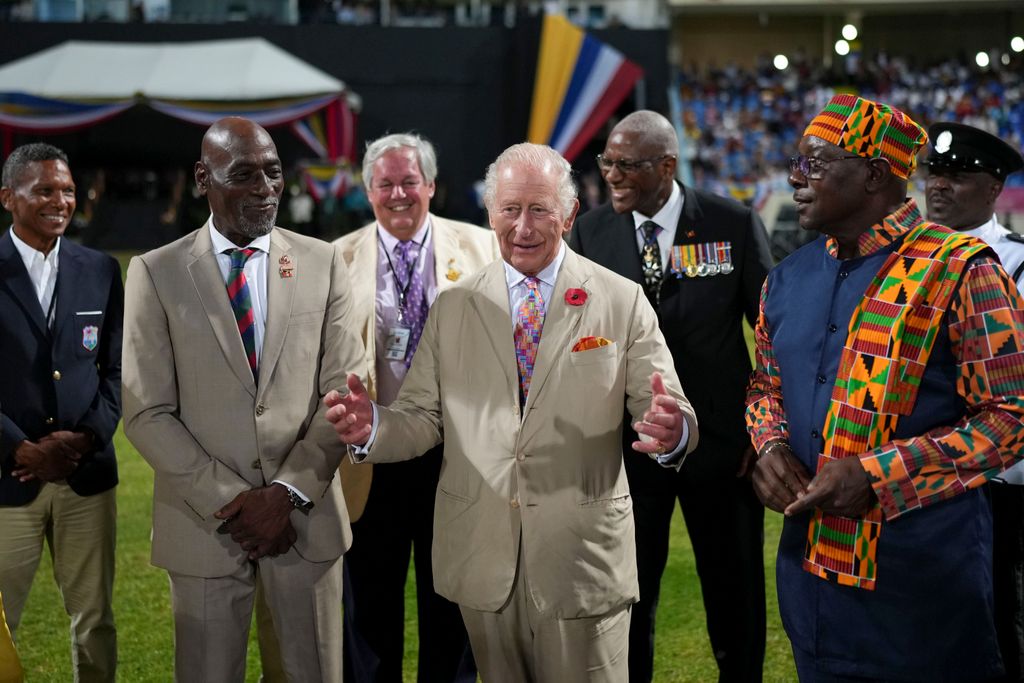

Leaders representing nearly a third of the world’s population are meeting on the tiny Caribbean island of Antigua this week to strengthen ties during a time of global political upheaval.
New deals and pledges are expected to emerge from the Commonwealth Heads of Government Meeting, which is held every two years.
The Commonwealth is made up of 56 nations spanning Africa, Asia, the Americas, Europe and the Pacific, most of which were once part of the British Empire. Their leaders are scheduled to attend, along with officials from Qatar, Kuwait, Bahrain, Brazil and the United Arab Emirates.
“To deal with what to expect in Antigua, I think we need … to look at the world in which we find ourselves today,” Commonwealth Secretary-General Shirley Botchwey told The Associated Press ahead of the meeting.
“We’re looking at issues like conflict, economic shocks, rising costs, climate change, trade, weaponization of tariffs; and all of this hitting directly the pockets of our people.”
Botchwey said Commonwealth leaders representing 2.7 billion people will look at how to attract investment and reduce barriers to intra-Commonwealth trade.
“For us, this is extremely important,” she said. “All the countries woke up one day and were slapped with tariffs. If we are trading more among ourselves, whatever happens outside the Commonwealth will not affect countries too much.”
U.S. President Donald Trump has imposed the highest import duties on U.S. trading partners since the Great Depression, although rates have fluctuated amid legal challenges.
Botchwey said that creating stronger economies is essential given the trade wars: “It’s an opportunity we cannot miss.”
The multi-day summit began with cultural events on the weekend, while the formal opening ceremony is slated for Tuesday morning.
It comes days after British Prime Minister Andy Burnham said he is open to making a formal apology for Britain’s role in the trans-Atlantic slave trade. Burnham, among leaders attending the meeting, has rejected calls for the U.K. to pay reparations, but has proposed leading a program of debt restructuring to help the Commonwealth’s poorest countries.
Some Caribbean leaders have called for slavery reparations to be discussed at the meeting, which King Charles III is also attending after visiting the Bahamas and Guyana last week. Queen Camilla has joined him.
Dorbrene O’Marde, head of the Antigua and Barbuda reparations support commission, told The Associated Press on Sunday that he welcomed Burnham’s comments but seeks more than an apology.
“An apology for us is essentially the agreement to repair the damage that you have. It’s simply not saying I am sorry and waving your hand and walking away,” O’Marde said.
The Commonwealth of Nations also seeks to create a fund to provide digital skills to about 10 million young adults, Botchwey said, adding that she hopes the private sector, foundations and philanthropies will contribute.
Officials are also expected to establish a fund to help nations transition from fossil fuels to renewable energy.
Climate will be a big talking point because 49 of the Commonwealth’s countries share a border with the ocean as concerns grow over rising sea levels.
“How are we going to prepare them and ensure that our ocean is healthy?” Botchwey said.
The four-day meeting also will host forums focusing on business, women and young people.
Richardo Aiken, a civil society governor who represents the Caribbean and Americas at the Commonwealth Foundation, said in a phone interview that climate justice, freedom of expression and empowering vulnerable groups will likely dominate the people’s forum in Antigua.
“We are actually living in one of the most vulnerable regions in the world,” he said.
He expects the forum to propose specific initiatives to help civil organizations overcome various barriers, including not knowing how to write proposals, “which is the main vehicle to access financing.”
“We also have a large population of Indigenous people,” he said. “It’s about how do we bring these players, the first people, those who were before us, into the conversation?” —SAN JUAN, Puerto Rico (AP)
_________
Story by DÁNICA COTO | Associated Press
Associated Press journalist Juan Pablo Arráez in St. John’s, Antigua, contributed to this report.