
Akash Samaroo
The Lower House has passed major legislation allowing people with minor criminal convictions to have their records expunged after a period of good behaviour, effectively giving them a clean slate.
The Criminal Records (Rehabilitation of Offenders) Bill, 2026, was passed without amendments late yesterday evening.
Under the legislation, a person may qualify to have their criminal record expunged if they received either a non-custodial sentence or a prison term of no more than three years, followed by a crime-free rehabilitation period lasting between three and ten years.
However, people convicted of serious scheduled offences, including murder, kidnapping, sexual offences, wounding with intent, gang-related offences, major firearm offences and drug trafficking offences, as well as people who served prison sentences exceeding three years, will be excluded from benefiting under the law.
The process requires eligible applicants to apply to a specialised Criminal Records (Rehabilitation of Offenders) Board, which will assess their background, conduct and evidence of rehabilitation before officially marking the conviction as expunged from public-facing records.
Once a conviction is deemed “spent”, the individual will be legally treated as though they had never committed, been charged with, or been sentenced for the offence.
Contributing to the debate yesterday, Saddam Hosein said the legislation would help reduce the stigma faced by people with criminal convictions when trying to secure employment.
“This bill is telling you, okay, for a period of time you have behaved yourself. We understand you have a conviction, but you behaved yourself. You have rehabilitated yourself on your own, which means that your propensity to offend again may be very low. Measuring all of those factors, putting it into a piece of law now is saying that, listen, we will clear your record, go out and work,” Hosein said.
He added: “Because when the young man or the young woman who cannot get a job because they may have committed an offence in their earlier years, you leave them on the streets, you leave them idle. And what happens with idle hands? What happens?”
Opposition MP Colm Imbert raised concerns over the inclusion of the offence of “wounding with intent” among offences excluded from the legislation.
Imbert argued the offence covered a broad range of circumstances, including relatively minor injuries.
“Unlawful wounding is far too wide. It will range from very minor wounding to serious wounding,” Imbert said.
“What’s wounding? It is you’re breaking the dermis or the epidermis. That’s it. You’re breaking the skin. That’s what wounding is. And the whole point, the point that was made by my colleagues, is that if somebody is guilty of a very minor, very minor offence of wounding, this bill will exclude that person from seeking to have their record expunged.”
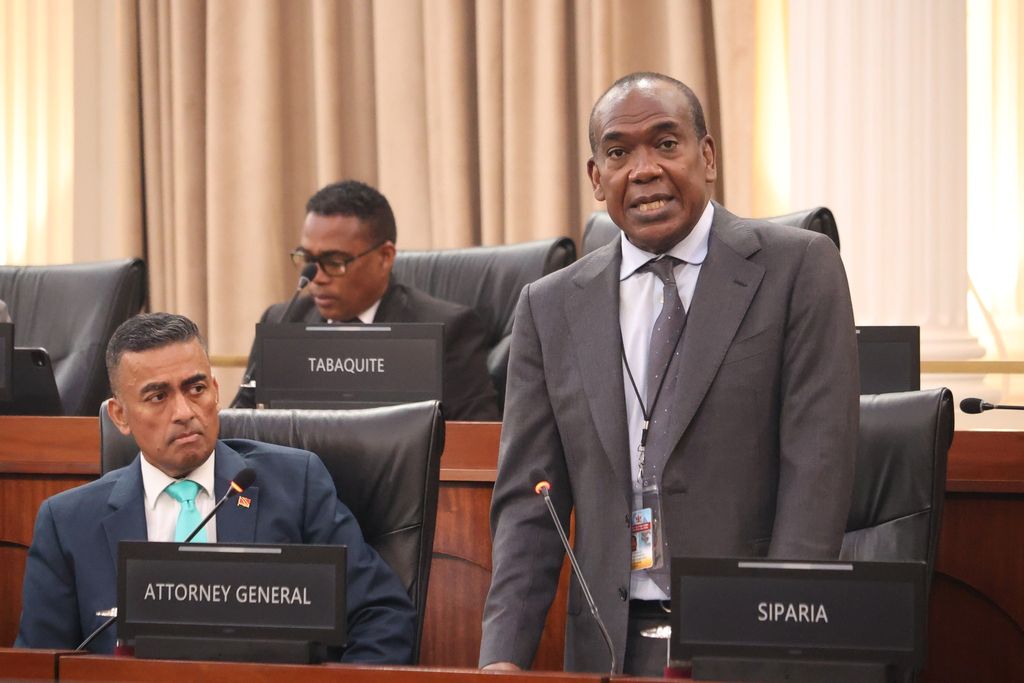
However, in winding up the debate, Attorney General John Jeremie defended the Government’s position and refused to alter the provision.
“The Offences Against Persons Act in Section 12, it provides for a definition of what is unlawful wounding. And this is what it says. Shooting wounded with intent, the offence is punishable by 15 years. Wounding itself, spectrum, it goes up to five years. No apologies for having this where it is in this piece of legislation,” Jeremie said.
The Criminal Records (Rehabilitation of Offenders) Board will be appointed by the President and comprise between seven and nine members drawn from a range of professional backgrounds, including the legal profession, mental health sector, law enforcement and civil society.
The board is expected to include a chairman with judicial or extensive legal experience, criminal law experts, a psychiatrist or psychologist, a criminology or social work specialist, a senior police representative and people involved in rehabilitation and human rights advocacy.
The Bill will now go to the Senate.