Argentina’s poverty rises to 32 percent under Milei with more pain forecast
 24 September 2026
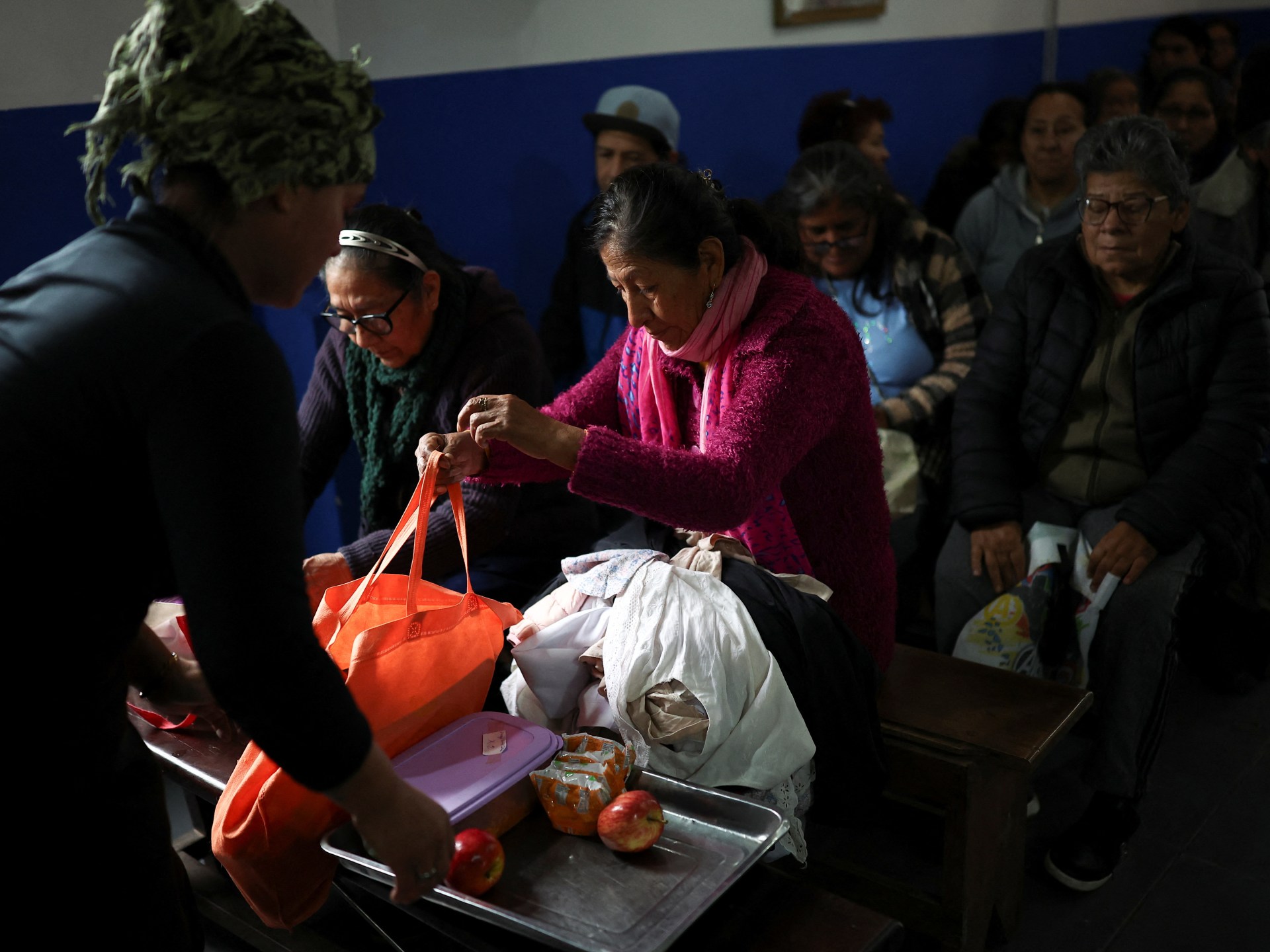

Argentina’s poverty rate has risen, hitting 32.3 percent in the first half of 2026 under President Javier Milei, partly erasing the country’s earlier gains.
According to figures released by the national statistics agency INDEC on Thursday, the poverty rate rose 4.1 percentage points between January and June compared with the last half of 2025, moving from 28.2 to 32.3 percent.
- list 1 of 3Is Trump making Latin America great again?
- list 2 of 3Argentina grain exports halt as maritime pilots strike over Milei decree
- list 3 of 3Argentina’s Left stages ‘March of Anger’ over Milei’s austerity measures
end of list
Extreme poverty — where households cannot afford basic food needs — also rose from 6.3 to 7.5 percent.
More Argentinians found themselves out of work in the second quarter after unemployment rose to 7.9 percent, the country’s highest level since 2021. For many who remain employed, their wages have struggled to keep up with the rising cost of basic goods and services.
Household income per person rose 11.5 percent in the first six months of the year, but the cost of necessities used to calculate the poverty line rose nearly 20 percent, according to INDEC.
The economic pain is expected to worsen.
Estimates from the Catholic University of Argentina (UCA), widely seen as an early indicator of official poverty trends, suggest the poverty rate could rise to 35 percent by the end of the year.
![Argentine President Javier Milei gestures as he speaks during a ceremony commemorating the 172nd anniversary of the Buenos Aires Stock Exchange in Buenos Aires, Argentina, July 16, 2026 [Mariana Nedelcu/Reuters]](https://www.aljazeera.com/wp-content/uploads/2026/09/2026-07-16T232504Z_1644221911_RC2AFMAOQ98N_RTRMADP_3_ARGENTINA-POLITICS-MILEI-1790289660.jpg?w=770&resize=770%2C513&quality=80)
The news comes after Milei, elected in 2023, repeatedly touted declining poverty as evidence that his free-market economic overhaul was bearing fruit.
Advertisement
Poverty surged to nearly 53 percent in the first half of 2024 after his government’s devaluation of the peso and sweeping spending cuts sharply reduced purchasing power. But the rate then fell rapidly as Milei’s austerity drive eased inflation, reaching 28.2 percent in the second half of 2025, the lowest level since early 2018.
Even with this year’s rise, the poverty rate remains below the level reached in the first half of 2024, Milei’s first year in office, when it exceeded 50 percent.
Analysts say it could signal that social gains driven by slowing inflation are losing momentum, with further progress increasingly dependent on stronger job creation and real wage growth.
Average salaries are still below where they stood in real terms when Milei took office in December 2023.
“A modest increase in poverty would not undo the large decline seen under Milei, but it would suggest that the easier part of the improvement has run its course,” Nicholas Watson, managing director for Latin America at consultancy Teneo, said.
![Workers, union members and social organization activists march toward Argentina's Economy Ministry during a protest against rising household debt levels, organisers say, in Buenos Aires, Argentina, August 20, 2026 [Antonio Becerra Pegoraro/Reuters]](https://www.aljazeera.com/wp-content/uploads/2026/09/2026-08-20T191819Z_987992062_RC2G2NAJC2ZM_RTRMADP_3_ARGENTINA-PROTEST-DEBT-1790289838.jpg?w=770&resize=770%2C513&quality=80)
Rising hardship appears to be damaging Milei’s support among lower-income voters as he seeks re-election in 2027.
The latest opinion polls suggest his approval rating has fallen sharply among poorer respondents surveyed, raising questions about whether he can retain a constituency that was central to his previous election victory.
A September AtlasIntel survey found disapproval among lower-income respondents, defined as those earning up to about $650 a month, had climbed to nearly 70 percent, while approval fell below 30 percent. A year earlier, those figures stood at 57 percent and 37 percent, respectively.
Related News
Four killed as Indonesia battles worst forest fires in more than a decade
Students continue to protest in France as hundreds of schools close

Iraq grants Iranian airlines 40 daily Najaf flights after US exemption