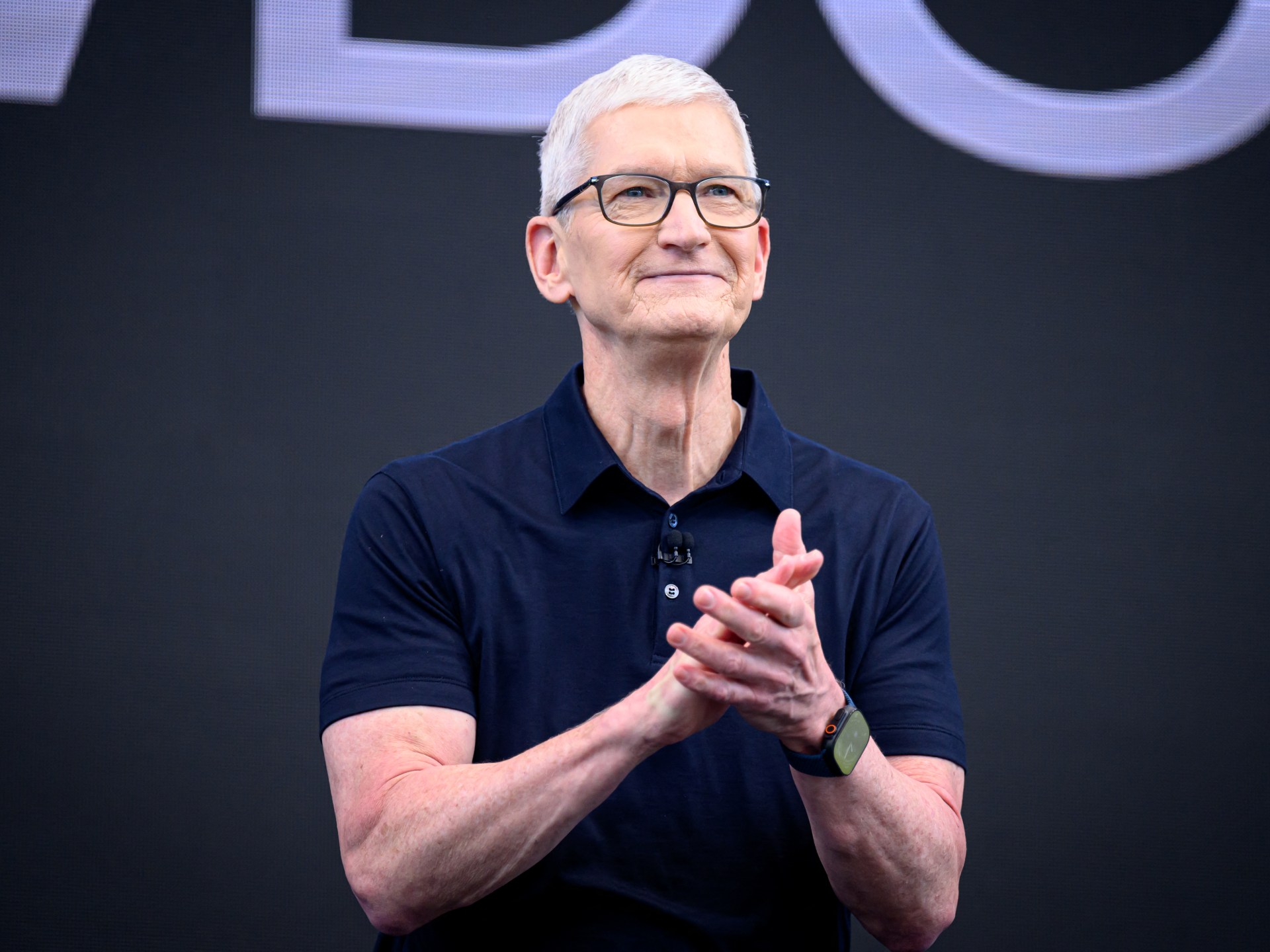

The prices of Apple products will have to increase due to the new demand for memory chips from the artificial intelligence boom, outgoing Apple CEO Tim Cook has told The Wall Street Journal.
“Unfortunately, price increases are unavoidable,” he told the newspaper on Wednesday, adding that his company has been “trying to shield customers from the increases” but that it had become “unsustainable.”
- list 1 of 4What caused Amazon’s AWS outage, and why did so many major apps go offline?
- list 2 of 4OpenAI restructures into public-benefit firm, Microsoft takes 27% stake
- list 3 of 4EU moves to ease AI, privacy rules amid pressure from Big Tech, Trump
- list 4 of 4Who are the US CEOs in China with Trump, and what’s in it for them?
end of list
Cook did not specify the timing of the increases or which devices would be affected. It is also unclear, for instance, how much the price of Apple’s iPhone 18, which is expected to launch in September, will be affected.
“There’s less supply at a time when consumers want devices and the memory guys are passing along huge price increases,” Cook said.
Citing an estimate from research firm TechInsights, the Journal reported that Apple would need to increase the price of its iPhone Pro model by $270 to maintain its current profit margin.
The rapid expansion of AI data centres has forced consumer electronics companies into fierce competition as supplies for key components are dwindling, driving prices sharply higher. Chips have undergone quarterly price increases of at least 50 percent since late 2025.
Cook has worked in tech electronic supply chains his whole career, including stints at IBM and Compaq before joining Apple, and said he has never experienced such an increase in prices, calling it a “hundred-year flood”.
Memory and storage costs are both concerns for Apple, with particular emphasis on the DRAM (dynamic random access memory) market due to AI infrastructure, Cook told the Journal. He said that more supply is being allocated to high-bandwidth memory, which is used a lot in AI servers.
Advertisement
China has leading memory and storage companies, but US firms would likely need specific licences to work with them under national security laws. Asked if restrictions should be eased, Cook said: “Everything needs to be on the table … I think we should look at all supplies.”
Related News

Giant crowds greet Pope Leo at public mass in Madrid, Spain
Iran war day 107: Washington, Tehran close to signing first stage of deal

‘Anything but normal’: Uncertainty as Iranians try to get by amid US war