
Senior Reporter
otto.carring[email protected]
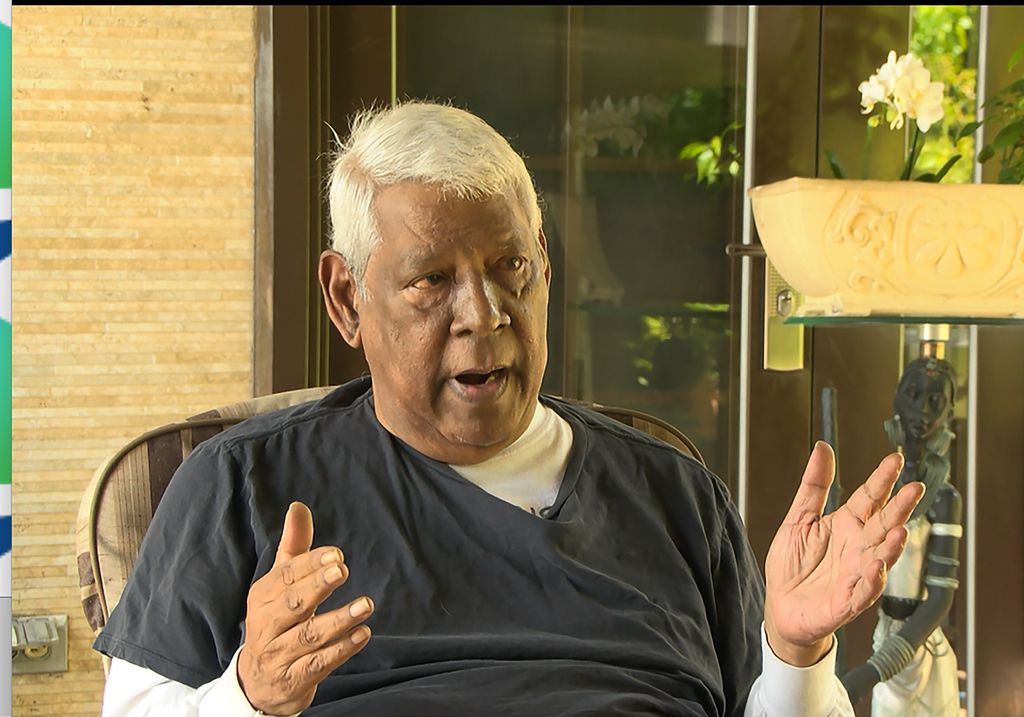
Former Industrial Court judge and chairman of the Essential Services Division, Lawrence Achong, is defending his judicial legacy amid accusations of political bias, warning that the powers and credibility of Trinidad and Tobago’s Industrial Court are being systematically weakened, while hinting at possible legal action against trade union leaders who publicly attacked him during his tenure.
In an exclusive interview with Guardian Media yesterday, Achong rejected claims from sections of the labour movement that his rulings were politically influenced, insisting his decisions were grounded strictly in law, evidence, and economic realities.
“To accuse me of being biased towards the People’s National Movement (PNM), I think that is foolishness,” he said.
“What I do is because I think it is right. I think it is the correct thing to do.”
He maintained that his record showed he ruled in favour of both workers and the State, depending on the evidence presented.
“It didn’t matter if it came from a PNM government or a UNC government,” Achong said.
“That didn’t matter.”
However, Achong said the criticism directed at him over time became intense, personal and, in his words, abusive in nature, particularly from sections of the trade union movement.
He said the backlash stemmed from dissatisfaction with rulings that unions did not agree with.
Despite the controversy, Achong said he remained firm in his belief that his decisions were made in good faith and without political direction.
“To accuse me of being biased towards the PNM is nonsense,” he said.
“I think it is the correct thing to do, and I stand by it.”
Achong said what made the experience more difficult was that criticism often ignored rulings that went in favour of workers and focused only on decisions they opposed.
“The most vociferous people were the Estate Police Association and OWTU,” he said.
He admitted that the attacks did affect him emotionally, even though he tried not to show it publicly or allow it to influence his judicial work.
Achong said much of the public criticism misunderstood how the court functioned and how decisions were assigned and delivered.
Despite the hostility, he insisted he remained focused on the law rather than public perception.
Addressing why he is speaking out now after almost a year of relative silence, Achong said he could no longer ignore what he sees as repeated misrepresentations of his work and character.
“When I see statements being made that are not true, and my name being dragged through the mud, I think it is necessary to respond,” he said.
“At some point, you have to correct the record.”
He added that the decision to remain silent for years was deliberate, but not permanent.
Achong accused some union leaders of deliberately misrepresenting court rulings to create a public perception of bias, particularly in relation to matters involving the Estate Police Association and the Special Tribunal.
He also took aim at the quality of leadership within parts of the labour movement.
“The quality of union leadership in this country has gone to zero,” Achong said.
“Nothing compared to when you had men like Errol McLeod and George Weekes. They fought for workers, but they were gentlemen and they knew their stuff.”
Achong reserved some of his harshest criticism for the state of the Industrial Court itself, claiming the institution suffered years of administrative decline and growing case backlogs.
“The scholarship has gone from the judiciary,” he said.
“The powers of the Industrial Court have been systematically whittled down.”
Achong also warned that ongoing attacks on his record were part of a broader misunderstanding of the Industrial Court’s role and pressures.
He further suggested that public attacks against him and recent controversies involving the court may form part of broader attempts to influence or reshape the institution’s leadership.
“All this thing happening now with these articles, I see it as a move to remove the president in a year’s time,” he claimed.
Now retired, Achong said he spends time with his family and has stepped away from public life but remains firm in defending his integrity.
Achong admitted he remains angered by attacks on his reputation and is considering legal action against some of his critics.
“Roget and them, for the most part, I’ll take them to court,” he said, referring to OWTU president Ancel Roget and other union figures.
“I have had my run,” he said.
“But I will not sit back and allow false narratives to stand unchallenged.”
Responding to the claims of the former Industrial Court judge, NATUC general secretary Michael Annisette said, “Time has a way of revealing the truth, and when it does, we will all see where it truly lies. That is all I have to say.”
Efforts to contact JTUM general secretary and OWTU chief education officer Ozzie Warwick on Achong’s comments were unsuccessful.