
Ryan Bachoo
Lead Editor – Newsgathering
ryan.ba[email protected]
Trinidad and Tobago must rethink how it structures its development priorities and strengthen collaboration with the private sector if it is to take full advantage of global funding opportunities, particularly for environmental and climate-related projects.
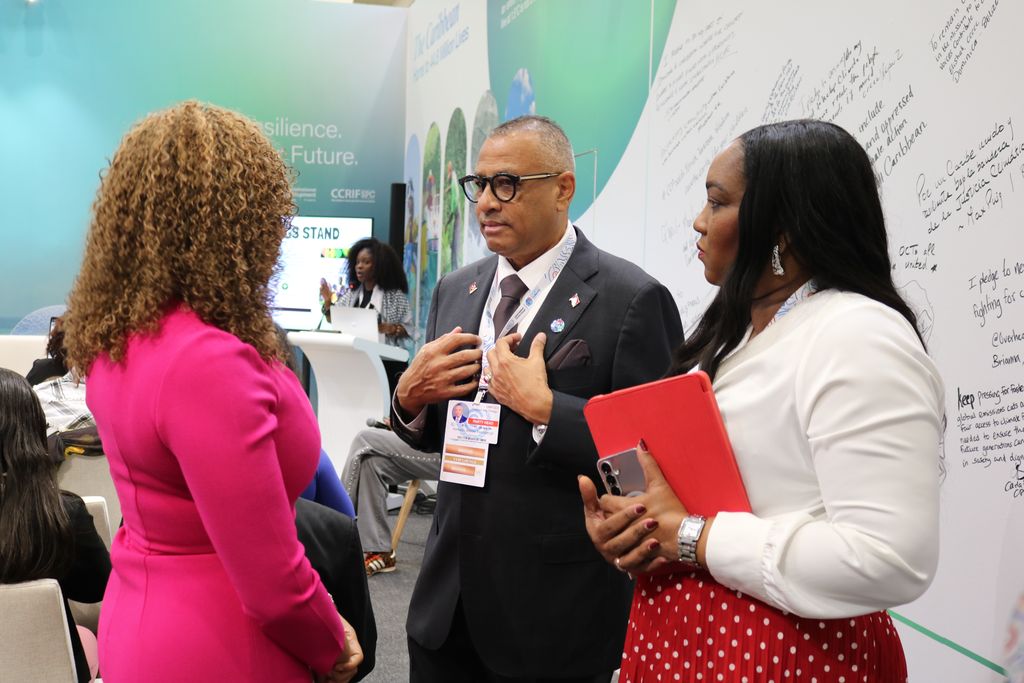
Minister of Planning, Economic Affairs and Development Dr Kennedy Swaratsingh made the call during a panel discussion at the 31st United Nations Climate Change Conference (COP31) in Antalya, Türkiye, on Tuesday.
Swaratsingh appeared on a panel discussing “From Island Vulnerability to Resilience: Mobilizing Green and Blue Investment for SIDS.” He said the Government recognised the importance of aligning planning and financing to ensure environmental priorities were not competing against other national development needs for funding.
He pointed to the decision by Prime Minister Kamla Persad-Bissessar to establish closer links between the Ministry of Planning and the Ministry of Finance as an example of the structural changes needed to improve the country’s ability to access international opportunities.
He said environmental funding and planning often had to compete with other national priorities, making it necessary for governments to reconsider how their institutions were organised.
“One of the things that, when we came into government last year, also my Prime Minister in Trinidad and Tobago, is that she made the Ministry of Planning, as well as Minister in the Ministry of Finance, and the Minister of Finance, Minister in the Ministry of Planning,” Swaratsingh said.
He argued that development could not be treated as the responsibility of government alone, calling for a whole-of-society approach that actively involved businesses and other stakeholders.
“Development is not just a government’s job. It’s a core of society approach,” he said.
Swaratsingh cautioned that governments sometimes dominated development discussions at the expense of other contributors, stressing that stronger partnerships with the private sector were necessary to unlock opportunities being made available internationally.
He also highlighted water security as an immediate priority for Trinidad and Tobago, noting that water scarcity was an increasingly important concern across the Caribbean.
The minister said the Government had prioritised water development in its latest planning cycle, recognising the country’s vulnerability to water shortages.
Beyond environmental priorities, Swaratsingh said Trinidad and Tobago needed to diversify its economy and develop additional sectors capable of generating significant export earnings.
He noted that the hydrocarbon sector still accounted for approximately 30 per cent of the country’s gross domestic product, but contributed about 80 per cent of its exports.
Swaratsingh said reducing the country’s dependence on hydrocarbons would require the development of other competitive sectors, with private sector investment and participation playing a critical role.
His comments come as countries at COP31 continue discussions on climate financing, energy transition and the resources needed to support climate resilience and sustainable development.