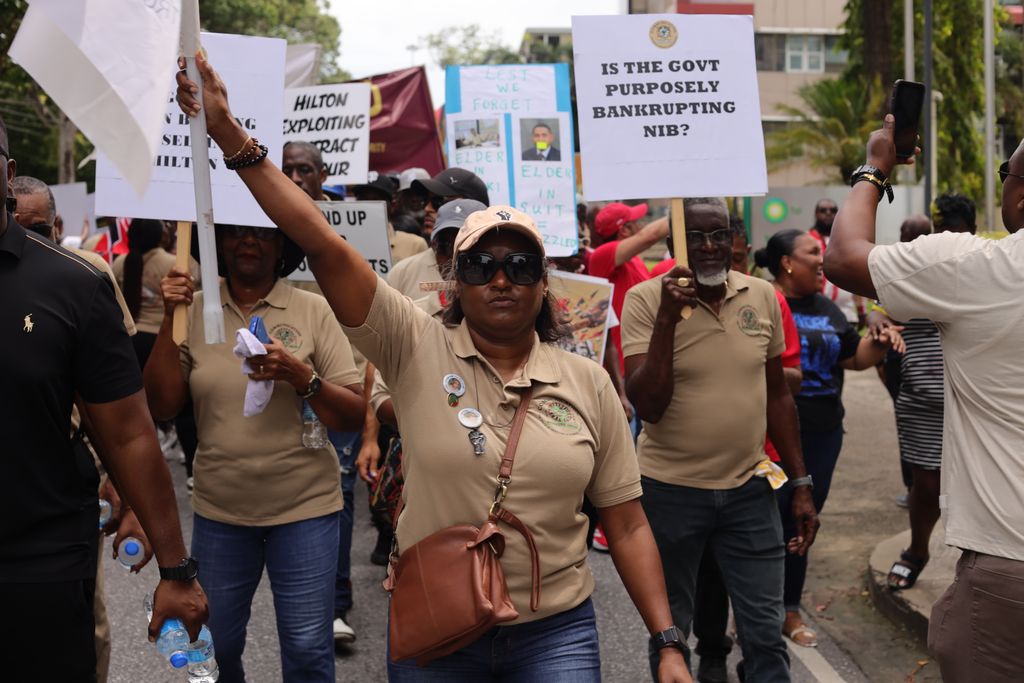

Ryan Bachoo in Antalya, Türkiye.
The Alliance of Small Island States (AOSIS) is refusing to abandon the 1.5-degree Celsius warming target, insisting that governments must accelerate climate action and ensure promised financing reaches vulnerable communities as negotiations continue at COP31.
AOSIS chair Ilana Seid said the latest scientific warnings about the likelihood of the world exceeding the 1.5-degree threshold must prompt an urgent response from governments, with greater ambition on emissions reductions and increased financing for implementation.
Speaking in an interview on the sidelines of the United Nations climate summit in Antalya, Türkiye, Seid said the negotiations were progressing largely as expected, with parties securing agreement on the agenda on the opening day.
However, she said the real test of COP31 would be whether governments could move beyond commitments and demonstrate how existing climate agreements would be implemented.
“COP so far is going as expected,” Seid said, noting that discussions were continuing around the cover decision, while negotiating positions and alliances remained largely consistent with previous climate conferences.
She said AOSIS was particularly concerned about a United Nations Environment Programme report warning that the world was likely to overshoot the 1.5-degree Celsius temperature limit.
“This COP needs to have a response to that,” she said.
Seid argued that the response must involve both increased mitigation ambition and the flow of climate finance to countries and communities already experiencing the consequences of climate change.
The COP31 presidencies have described the conference as an implementation COP, and Seid said that ambition must translate into tangible action on the ground.
Asked whether the 1.5-degree target was still achievable, particularly as some political leaders appear to have accepted that the threshold could be breached, she maintained that it remained the benchmark for global climate action under the Paris Agreement.
“Our position is that 1.5 is still the target, that is the legal agreement that's in the Paris Agreement,” she said. “And we need to accelerate efforts to bring it back.”
Seid pointed to the growing affordability of renewable energy technologies compared with fossil fuels as an opportunity governments should seize to accelerate the transition.
She also highlighted the rapid adoption of electric vehicles in some countries, citing Norway, where she said more than 99 per cent of new vehicles were electric.
She described such developments as examples of how technological adoption could move from gradual growth to exponential expansion, provided the necessary financing and policy support were available.
Seid also identified carbon capture technologies as part of the potential response should global temperatures overshoot the 1.5-degree threshold.
However, she acknowledged that it was too early in the negotiations to determine whether developed countries and other major negotiating blocs were demonstrating the willingness needed to address the financing demands of vulnerable nations.
She said some countries continued to resist greater mitigation ambition, while others were pushing to expand the pool of contributors to climate finance.
For AOSIS, the priority is to avoid reopening negotiations on agreements already reached, including the Paris Agreement and the New Collective Quantified Goal on Climate Finance (NCQG).
Instead, Seid said governments must concentrate on how those commitments could be delivered.
“We've negotiated NCQG. We don't want to do that again. We've also negotiated the Paris Agreement and we don't want to do that again,” she said.
A successful COP31, she added, would provide a clear roadmap for accelerating the delivery of climate finance, particularly funding for adaptation.
Last year's agreement to triple adaptation finance must now be translated into actual resources reaching vulnerable countries, she said.
“The devil's in the details,” Seid said, arguing that governments must establish how countries would be supported in fulfilling their climate obligations.
She also issued a message to Caribbean people following the negotiations, urging them to demonstrate solidarity with their political leaders as they advocate for the region's interests.
AOSIS represents 39 small island and low-lying coastal developing states, many of which face disproportionate threats from rising sea levels, extreme weather and other climate impacts.
Seid described the alliance as a moral compass in international climate negotiations, pointing to its role in securing the inclusion of the 1.5-degree target in the Paris Agreement.
“Please support your leaders and call them, message them, tell them, give them some solidarity,” she said.
“Our leaders need our help. They need our support.”
She said strong public backing was essential to ensuring Caribbean and other small island leaders could enter negotiations with the confidence and political support needed to defend their countries' interests.
Related News
Sobers dismisses concerns over possible US congressional scrutiny
Mottley: Global financial system driving vulnerable nations back into poverty

37 remand inmates baptised at Port-of-Spain Prison