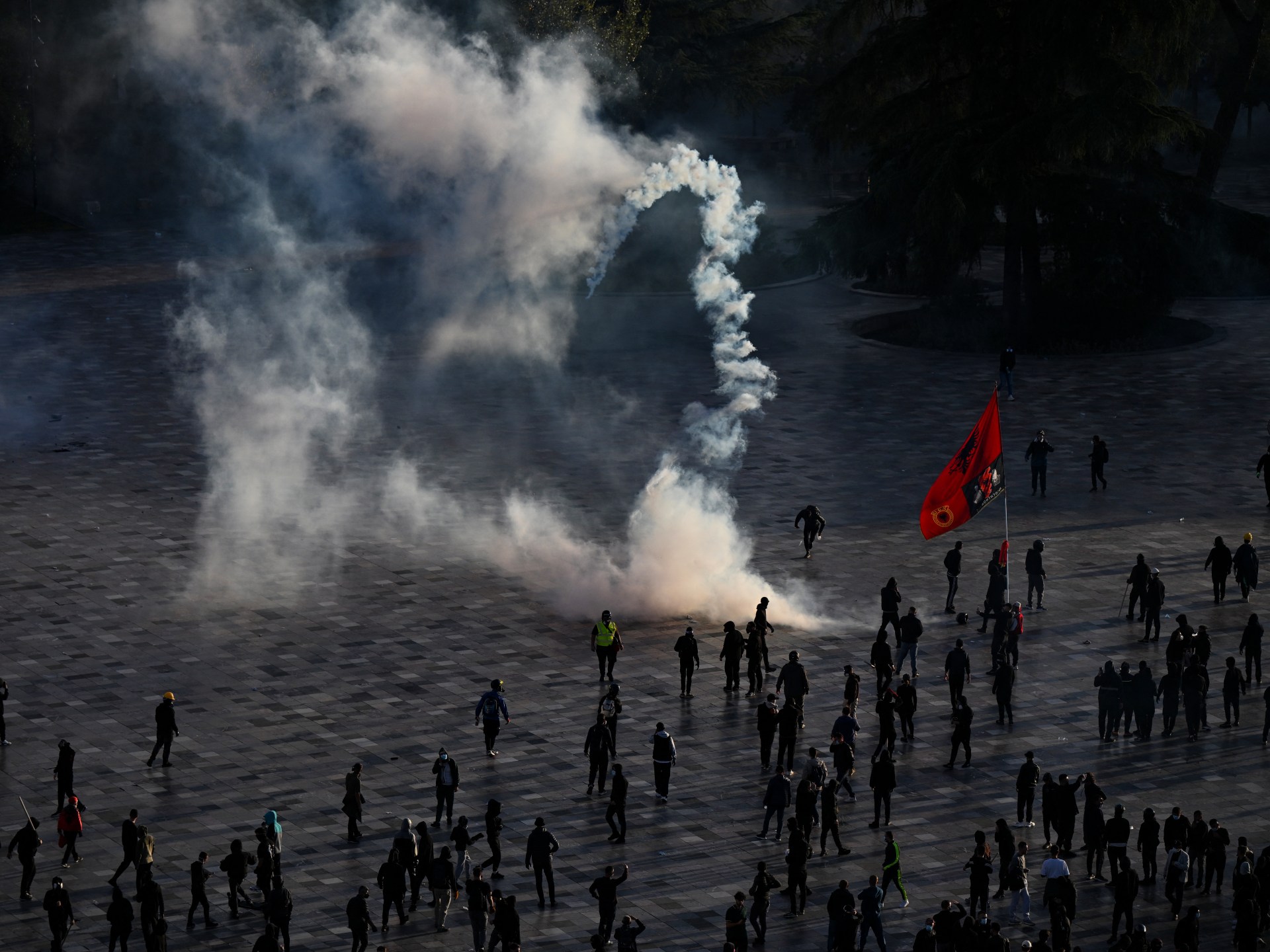

Protesters have clashed with police in rallies in the Albanian capital of Tirana, with police firing tear gas and water cannon to disperse crowds.
Several government buildings were attacked, dozens of demonstrators arrested, and more than 300 protesters and police injured, authorities said Saturday.
- list 1 of 3Albania’s protests explained
- list 2 of 3‘Horizontal revolt’: Why Albania’s young protesters want PM Rama to go
- list 3 of 3Can European leaders fix the cost-of-living crisis?
end of list
Protesters and police have routinely clashed since a significant wave of protests started in mid-October over poor conditions in schools and the cost of living in the small Balkan country.
While the protests in Tirana had calmed in recent days, Saturday’s demonstration escalated the situation again, with police deploying water cannon, tear gas and rubber bullets against crowds.
Thousands of people had heeded calls from organisers for students and others around Albania to attend the rally. Various groups, including university professors, artists and opposition parties, announced their support or attendance.
The country’s Ministry of Education has become a focal point of rallies, and Saturday’s gathering saw some in the crowd throwing stones and rolling burning bins at the building.
Police had introduced heightened security around the capital on Saturday, with checks being carried out on cars heading to the city, local media reported.
Albania has seen intermittent antigovernment protests since May, when news emerged of a luxury hotel project linked to United States President Donald Trump’s family.
Since then, public anger has turned into a broader push against corruption and the high cost of living, with protesters calling for the resignation of Socialist Prime Minister Edi Rama.
Advertisement
Rama has blamed “foreign actors” for the violence and accused both Russia and Iran of driving online misinformation.
The prime minister has called for dialogue, and on Saturday red cushions were laid outside the government headquarters in a symbolic gesture for talk and dialogue. Protesters later set the cushions on fire.
Protesters have blamed the entire political class for the crisis, with some also seen holding signs decrying Rama’s opposition, centre-right leader Sali Berisha.

Related News
Police detain leaders of India’s ‘cockroach’ movement at New Delhi protest
‘Still a lockdown’: Deadly floods hit Nepal tourism as peak season begins
Egyptian parliament delays vote on military support for Saudi Arabia