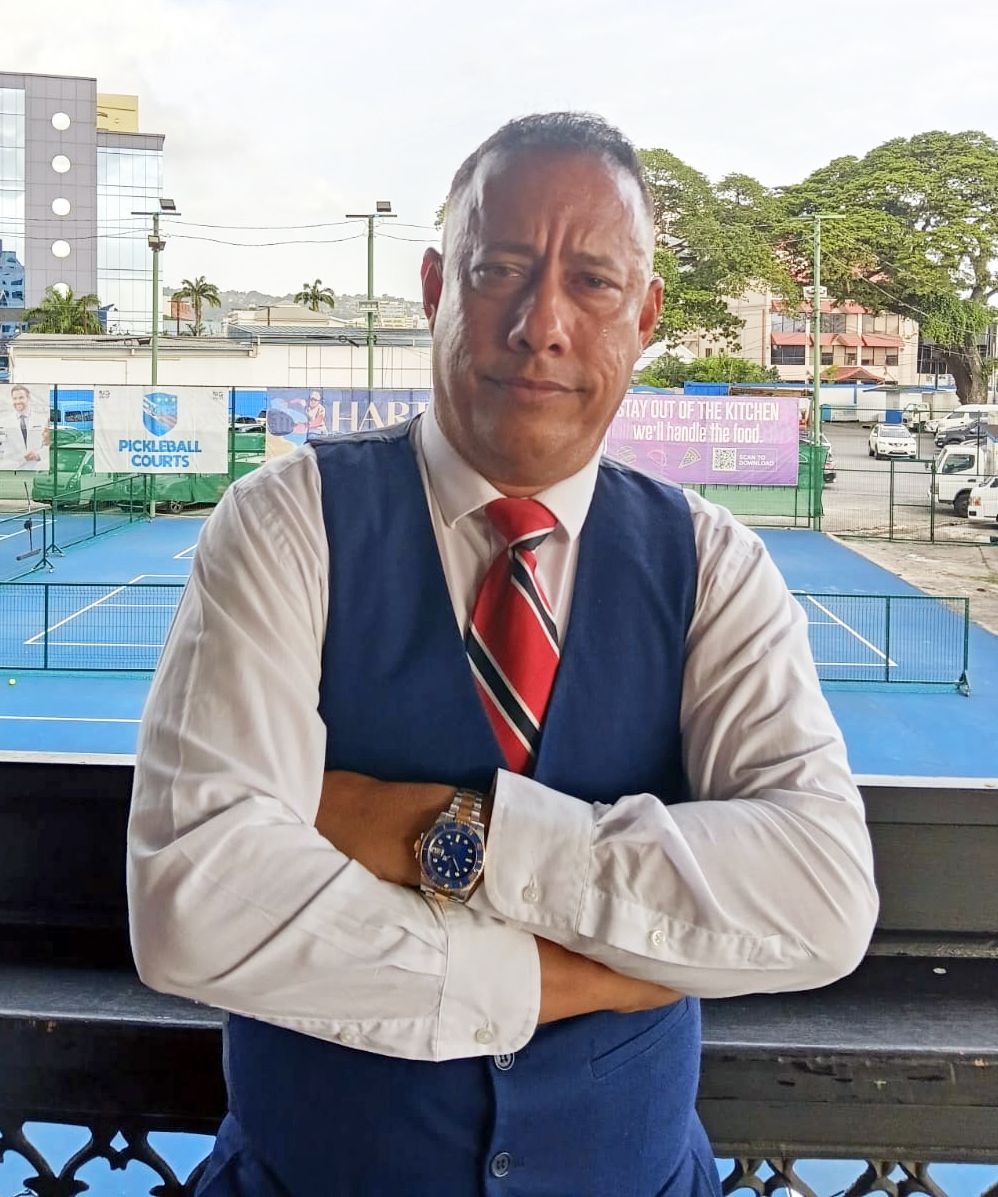

Former police commissioner Gary Griffith is urging the public to look beyond the proposed $6 million allocation for repairs to the Commissioner of Police’s official residence in St James, and instead examine whether public assets are being managed with sound judgement.
Referring to the historic property at the Police Academy, Griffith said, “I would caution against making the $6 million allocation for the refurbishment of the Commissioner of Police’s official residence into a major controversy without first understanding the nature, history and structural requirements of the building.”
While acknowledging that $6 million is a substantial sum, particularly given the many needs within the Trinidad and Tobago Police Service (TTPS), Griffith said the service typically receives an annual budget of about $3 billion.
However, he stressed that the residence is no ordinary government building.
“The commissioner’s residence at St James Barracks is a historic building, over 150 years old, which can be regarded as an important part of our national heritage,” he said.
He explained that restoring a building of such age and historical significance is far more complex than carrying out repairs on a conventional structure.
“It is not simply a matter of replacing plumbing, upgrading electrical systems or repainting walls. Any major refurbishment must take into consideration the preservation of the building’s original architecture, structural integrity and historical character.”
Having lived at the residence during his tenure as commissioner, Griffith defended the proposed allocation, noting that heritage preservation requirements often make restoration projects technically demanding and costly.
“For that reason, I do not consider the allocation of $6 million, in itself, to be unreasonable, provided that the expenditure is justified by the actual scope of works, supported by a proper tendering process and subjected to the necessary financial oversight.”
Griffith said only a few thousand dollars were spent on basic maintenance during his tenure.
“This was a deliberate decision,” he said.
“At the time, there were numerous operational deficiencies and longstanding requirements within the Police Service that demanded immediate attention. I was therefore unwilling to commit substantial resources to a major restoration project while those more pressing needs remained outstanding.”
According to Griffith, one of the main reasons for the property’s deterioration has been its prolonged lack of occupancy.
“To the best of my knowledge, apart from my period as commissioner, the residence has been largely unoccupied by successive commissioners over approximately the last 21 years,” he said.
He suggested that many commissioners opted to remain in their private homes while continuing to receive a housing allowance, rather than occupy the official residence.
Griffith also questioned comments by Homeland Security Minister Roger Alexander regarding the condition of the property’s swimming pool.
“Anyone familiar with swimming pool maintenance would recognise that treating algae and restoring the clarity of pool water can ordinarily cost just a few hundred dollars, certainly less than $1,000 in routine circumstances,” Griffith said.
“The condition of the pool water is therefore a very poor example to use when attempting to justify a $6 million refurbishment.”
Another former commissioner, Stephen Williams, said the official residence was already unoccupied when he assumed office in 2012 because of its deteriorated condition. Williams said his predecessor, the late Dwayne Gibbs, had also chosen not to live at the residence after taking office in 2010 because of its state.
“An assessment was made by Udecott and they estimated the cost of repairs to be in excess of $10 million,” Williams said.
However, he noted that no significant budgetary allocation was ever made to undertake the work.
Williams explained that, because of funding constraints, the TTPS was forced to undertake repairs incrementally over several years using small annual allocations.
“While it is not acceptable practice to effect repairs under the Development Programme in small broken-up projects, we were forced to use the small annual allocations over several years and complete the repairs around 2018.”
He welcomed Alexander’s announcement, describing it as good news for the TTPS.
Historian Dr Jerome Teelucksingh also said he was not surprised by the proposed repair cost, arguing that T&T has a history of allowing public buildings to deteriorate.
“Here in T&T, we allow public buildings to be neglected and degenerate,” he said.
Teelucksingh recalled that millions had been spent over the past decade restoring major historic buildings, including Whitehall, President’s House, the Red House and Stollmeyer’s Castle.
He also claimed that historic buildings outside north Trinidad often receive less attention, citing the deteriorated state of the Lion House in Chaguanas.
While recognising the historical significance of the commissioner’s residence, Teelucksingh questioned whether funds spent on restoring heritage buildings could be better directed elsewhere.
“I need to ask citizens - could some of that money for repairs of these buildings have been better used to build more hospitals or buy dialysis machines for our hospitals?
“Or could that money be used to repair the many potholes? Or help build hospices in central and south Trinidad? Yes.”
Nevertheless, Teelucksingh maintained that the proposed $6 million allocation appeared relatively modest. He suggested the creation of a dedicated repair fund financed through deductions from parliamentarians’ salaries to help preserve historic public buildings and reduce the burden on taxpayers.