
Akash Samaroo
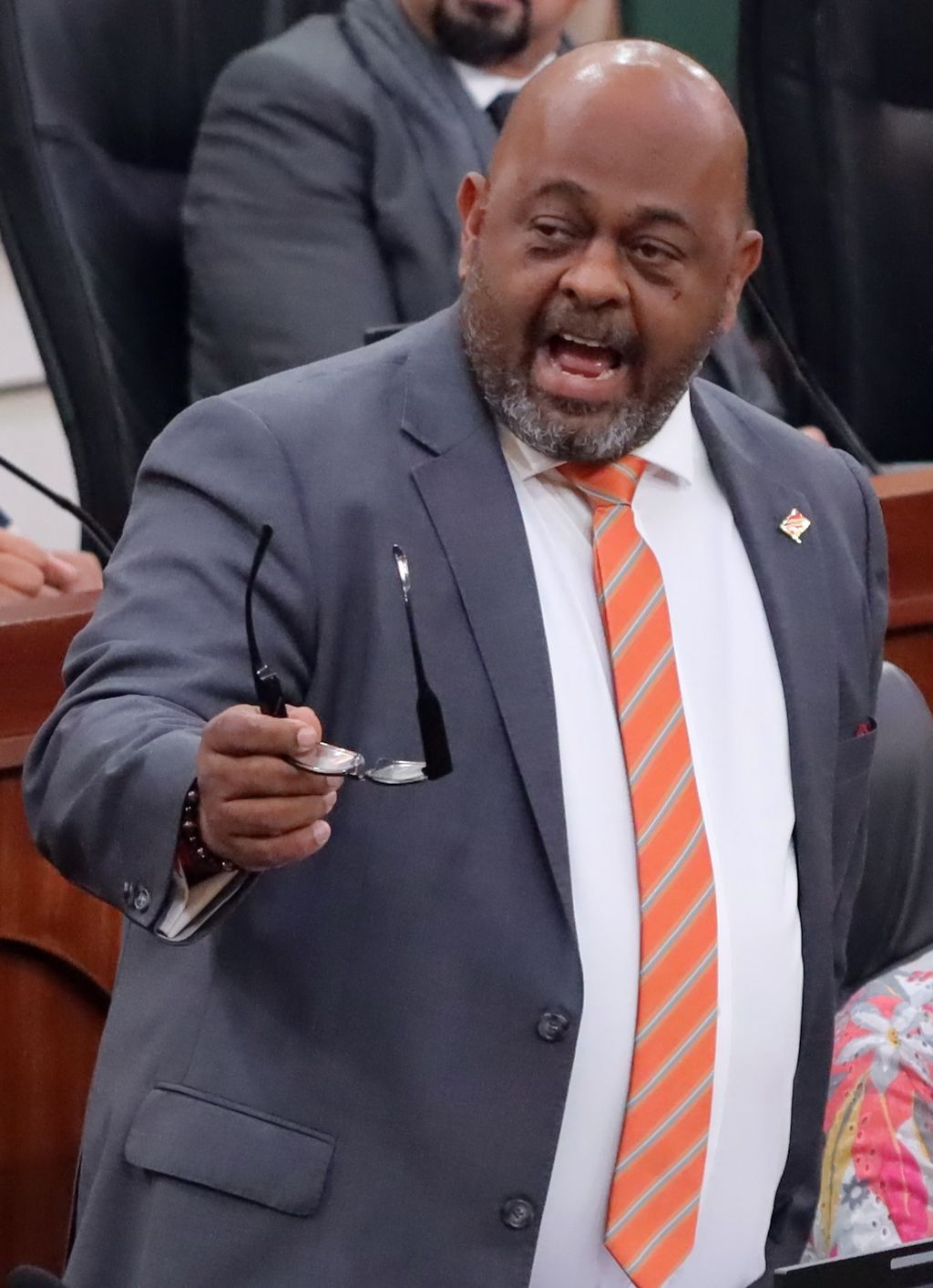
Defence Minister Wayne Sturge has accused business groups of putting profits ahead of the welfare of young people as he defended the Government’s contentious move to raise the legal ages for alcohol, tobacco, cannabis and gambling.
Speaking during debate on the Miscellaneous Provisions (Alcohol, Cannabis, Dangerous Drugs, Gambling and Tobacco) Bill, 2026, in the House of Representatives earlier today, Sturge took particular aim at the Chambers of Commerce over concerns raised about the legislation.
“The Chambers of Commerce don't care that they're destroying young people. They want more customers. That's what they want,” Sturge said.
“We have to protect the young people from the Chambers of Commerce because all they're studying about is their right to make money.”
Sturge argued that the consequences of alcohol and drug use extend beyond the individual and can eventually become a burden on families, the healthcare system and taxpayers.
He pointed to illnesses associated with substance abuse and argued that when people become unable to work, the State and their families are often left to support them.
“That's all well and good, you know, as long as your poison doesn't affect me. Or as long as your poison doesn't affect the taxpayer,” he said.
The Defence Minister described the legislation as “bitter medicine” and “tough love”, arguing that the Government has a responsibility to protect young people even if some of those affected oppose the measures.
Under the legislation, the permissible age for alcohol and tobacco would move from 18 to 21, while the thresholds for cannabis and gambling would be set at 25.
Sturge said some young people may object now but could eventually appreciate the restrictions.
“This bitter medicine is what many young men and women in my constituency so desperately need,” he said, describing the legislation as a manifestation of parental love.
Sturge argued that parents sometimes have to make decisions their children dislike because they believe those decisions are in their best interests.
“Now is the time, Mr Speaker, for tough love,” he said.
He also rejected Opposition arguments that young people could face severe $50,000 fines under the legislation, accusing MPs of using the maximum penalty to frighten the public.
Sturge stressed that a $50,000 penalty would not automatically be imposed on someone convicted of an offence.
“Fifty thousand dollars is the maximum,” he said.
He argued that courts have discretion when sentencing and would take the circumstances of the offender and the offence into account rather than automatically imposing the maximum punishment.
Sturge said the legislation also creates a distinction between those facilitating prohibited activities and the young people the Government considers the intended victims.
He said young people issued with fixed penalty notices would have options before reaching the point of conviction.
A person could challenge the notice if they believed they had been wrongly charged, while someone accepting responsibility could instead pursue rehabilitation.
Sturge said rehabilitation could involve religious counselling or psychological intervention.
Once the required rehabilitation was successfully completed, he said, the young person would not be convicted.
“The short point is, we are about protecting young people,” Sturge said.
He maintained that the legislation forms part of a wider Government effort to address social problems affecting young people, including substance abuse and gang involvement.
Sturge said education alone would not be sufficient to change behaviour and legislation was therefore necessary as an additional deterrent.
“We do educate. But the point is some people, no matter how much you drum it into their head, it wouldn't work. So you have to have a backup plan,” he said.
Invoking a saying from his grandmother, Sturge added: “Who don't hear does feel. That's what the law is for.”