Rubio says US is working with allies to counter drugs but will ‘still blow up ships if need be’
 09 September 2026
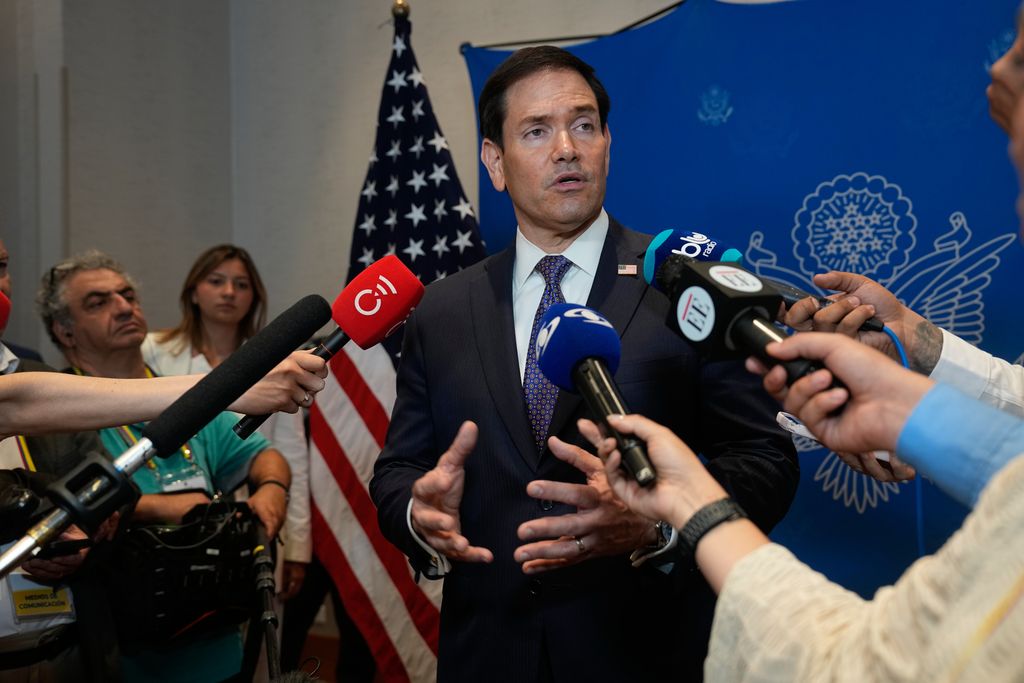

U.S. Secretary of State Marco Rubio gave new clarity Wednesday on the U.S. approach toward combating drug trafficking in Latin American waters, saying the Trump administration is now focused on working with allied countries and aligning with their laws but insisting that the military will “still blow up ships if need be.”
The public acknowledgment of a shift in U.S. strategy comes a year after Washington began a campaign of unilateral deadly strikes against those it calls “narcoterrorists” operating boats in international waters. The latest attack last month brought the number of people who have been killed in boat strikes by the U.S. military to at least 227 in 68 strikes.
Now, the Trump administration is focused on building agreements for joint operations with allied countries in the region, including Colombia and Ecuador, that comply with their laws in their waters.
“I think its an incredible advance for the first time to have countries that are willing to participate in these efforts in their territorial waters,” Rubio told reporters on a trip to the Ecuadorian capital, Quito.
“The important point is that these routes are being disrupted. These routes are being ended,” he added.
He said the decision is “a strike-by-strike or operation-by-operation determination” that depends on the threat and location of the boat.
The US military has recently been stopping vessels and removing people before strikes
Recent U.S. interdictions in Latin American waters are unlike the Trump administration’s initial strikes on alleged drug-trafficking boats that began in September 2025. Lately, people aboard floating refuelling stations said to be supporting drug trafficking have been removed and transferred to Ecuadorian authorities. Then the U.S. military blows up the vessels.
The shift comes after a series of strikes on boats over the year on people the Trump administration accused of being “narcoterrorists” without providing evidence.
Rubio’s comments came during a three-nation tour of South America aimed at boosting security cooperation with conservative leaders who have cozied up to President Donald Trump.
In Ecuador on Wednesday, he hailed it as the most “aggressive” partner in the Trump administration’s push to target transnational criminal groups in the Western Hemisphere. Rubio met with Ecuadorian President Daniel Noboa, who has rapidly embraced Trump’s get-tough stance on counternarcotics operations and illegal immigration.
Rubio said “elite forces” from both countries “are working jointly on a day-to-day basis in a way that has no precedent in order to try to dismantle these terrorist organizations.”
But he singled out Mexico, calling it “an even graver challenge” than other countries in the region because of cartels’ power there and saying the “ideal” scenario would be for the two countries to address the situation jointly.
“Eventually that threat will have to be confronted one way or the other,” Rubio told reporters in Ecuador. “But our hope is to do it cooperatively with Mexican authorities.”
Rubio said Mexican authorities have done “more than they’ve ever done before to go after these groups, but it is still not nearly enough.”
Ecuador touted as a key Trump administration ally on combating drug trafficking
He also announced his latest foreign terrorist organization designation of a Latin American drug trafficking ring: Ecuador’s Los Tiguerones. It was among 22 criminal gangs designated as “terrorists” by Ecuador in 2024 after it declared an internal armed conflict during a surge in violence that included gunmen storming a television station during a live broadcast.
Under the Trump administration’s counternarcotics strategy, it could make the group a target for military action.
Ecuador has been helping the U.S. as it intercepts and sinks vessels, including one Tuesday that Washington said had links to the Ecuadorian criminal group Los Choneros. It was the sixth such operation in less than two weeks and the second in as many days.
Ecuadorian Foreign Minister Roberto Kury called his country “a loyal ally, an active ally and a decisive ally to be able to build a safer hemisphere, free hemisphere and prosperous hemisphere.”
Rubio said he would be asking Congress for $45 million to keep funding the effort of “dismantling these terrorist groups,” although he did not specify what the funds would be for.
Ecuador has struggled to contain drug violence since 2021 as rival cartels partner with local gangs and battle for control of routes and coastal ports used to smuggle cocaine. The country is wedged between Colombia and Peru, the world’s top cocaine-producing countries.
Under Noboa, Ecuador has become a strong U.S. partner in counterdrug efforts in the region.
On Wednesday, Rubio was presented with Ecuador’s second-highest national honor, the National Order of Merit in the degree of Grand Cross, for his service in improving U.S.-Ecuador ties. Noboa said Rubio was helping bring peace to the U.S. and the region by traveling between countries to strengthen security and ties.
Rubio will head next to Lima to meet new Peruvian President Keiko Fujimori, another leader aligned with Trump’s tough positions on the drug trade and migration. On Tuesday, he met with new conservative firebrand President Abelardo de la Espriella in Barranquilla on Colombia’s Caribbean coast. —QUITO, Ecuador (AP)
_______
Story by MATTHEW LEE | Associated Press
Associated Press writers Gonzalo Solano in Quito, Farnoush Amiri in New York and Meg Kinnard in Columbia, South Carolina, contributed to this report.
Related News
PM’s UNC message criticised for deepening racial divisions
Boodhu: Government becoming a ‘government by threat’
Beckles questions what T&T actually gained from Venezuela trip?