
Lead Editor – Politics
akash.sama[email protected]
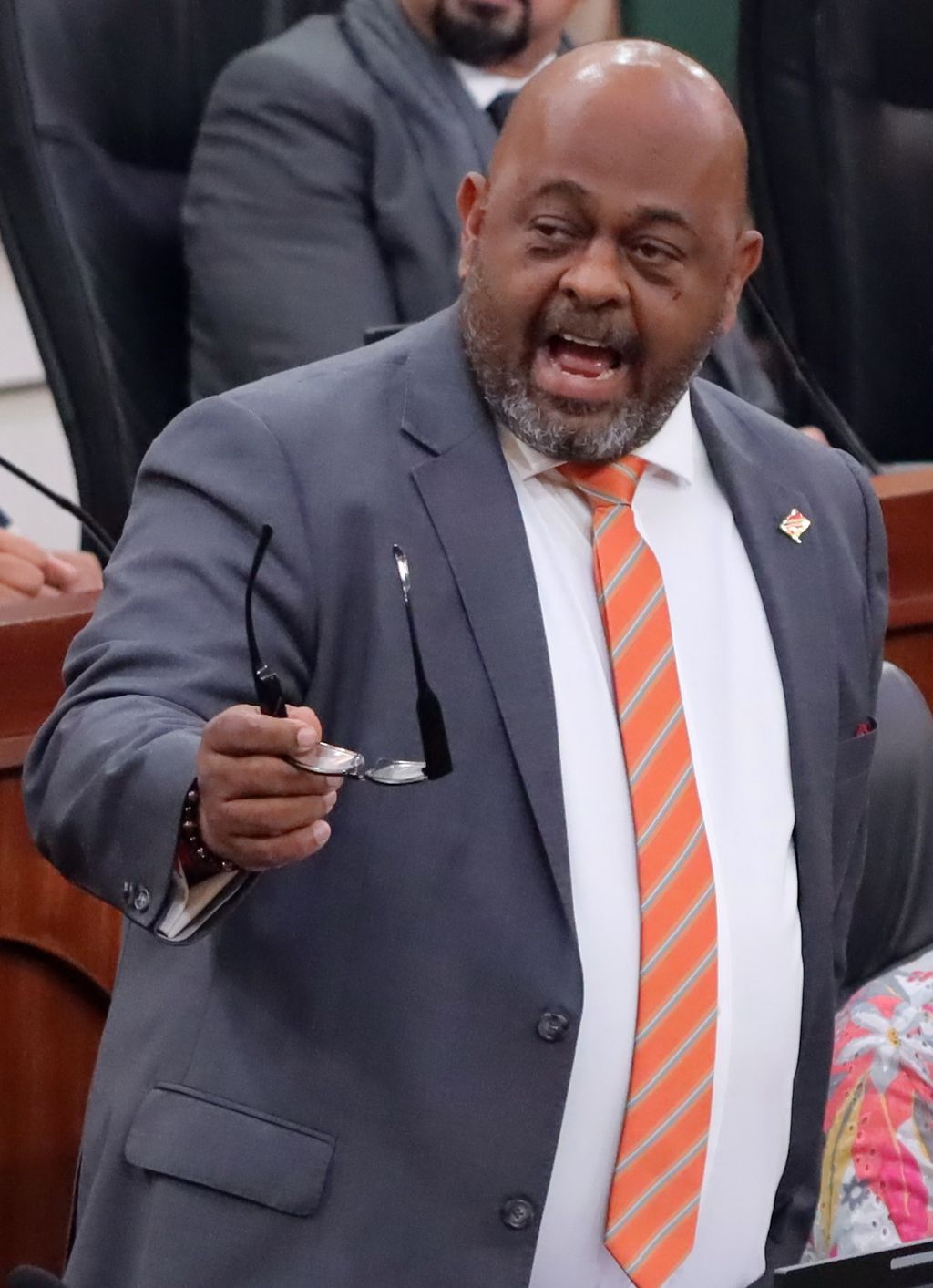
Defence Minister Wayne Sturge is hailing the United States-led Operation Southern Spear as a major success for Trinidad and Tobago, even as a Washington Post investigation concludes the military campaign has failed to curb the flow of cocaine into the United States.
According to the newspaper, Drug Enforcement Agency (DEA) analysts concluded the strikes had failed to affect either the supply or price of cocaine in the United States.
Instead, it reported traffickers adapted by abandoning high-speed “go-fast” boats in favour of larger vessels, hugging coastlines where US forces were less likely to strike, and increasingly relying on aircraft departing clandestine airstrips along the Colombian-Venezuelan border for Guyana and Suriname.
Guardian Media contacted Sturge seeking the Government’s assessment of whether the US military operation had reduced the flow of illegal drugs into T&T, whether Operation Southern Spear remained active following the apparent absence of recent military strikes, and whether he considered the mission a success for this country.
In response, Sturge said the operation had delivered significant benefits by giving the Trinidad and Tobago Defence Force time to restore its naval capabilities.
“From the daily updates I receive from the Chief of Defence Staff (CDS) and Military Intelligence, I can say with certitude that interception rates of suspected vessels entering our territorial waters is near 100 per cent,” Sturge said.
He added that the operation had created the space needed to strengthen the Coast Guard’s operational readiness.
“Operation Southern Spear gave us much-needed breathing room to get our naval assets up to 75 per cent capacity so as to improve interception rates.”
Sturge, however, acknowledged that maritime interdiction alone would not solve the country’s long-standing trafficking problem.
“We, however, remain fully cognisant of the fact that for the past two decades, most of our illegal firearms and narcotics enter through ports of legal entry and in that regard we are working assiduously to address this.”
Asked whether the operation had resulted in a reduction in the availability of illegal drugs locally, Sturge did not provide figures, instead referring Guardian Media to the Trinidad and Tobago Police Service.
On whether Operation Southern Spear was continuing, Sturge also declined to comment, directing questions on its status to US officials.
The minister’s comments come after The Washington Post reported that internal assessments by the DEA found the military strikes had not reduced the amount of cocaine entering the United States, despite repeated public claims by US President Donald Trump that maritime drug trafficking had fallen by as much as 98 per cent.
One DEA official compared the situation to squeezing a balloon.
“When you squeeze the balloon on one side, it always expands on the other side. They always find the weak spots and exploit them.”
Despite those findings, Pentagon spokesman Sean Parnell defended the campaign, saying Operation Southern Spear was accomplishing exactly what it had been designed to do by detecting, disrupting and dismantling organisations involved in narcotics trafficking and imposing “systemic friction” on their operations.