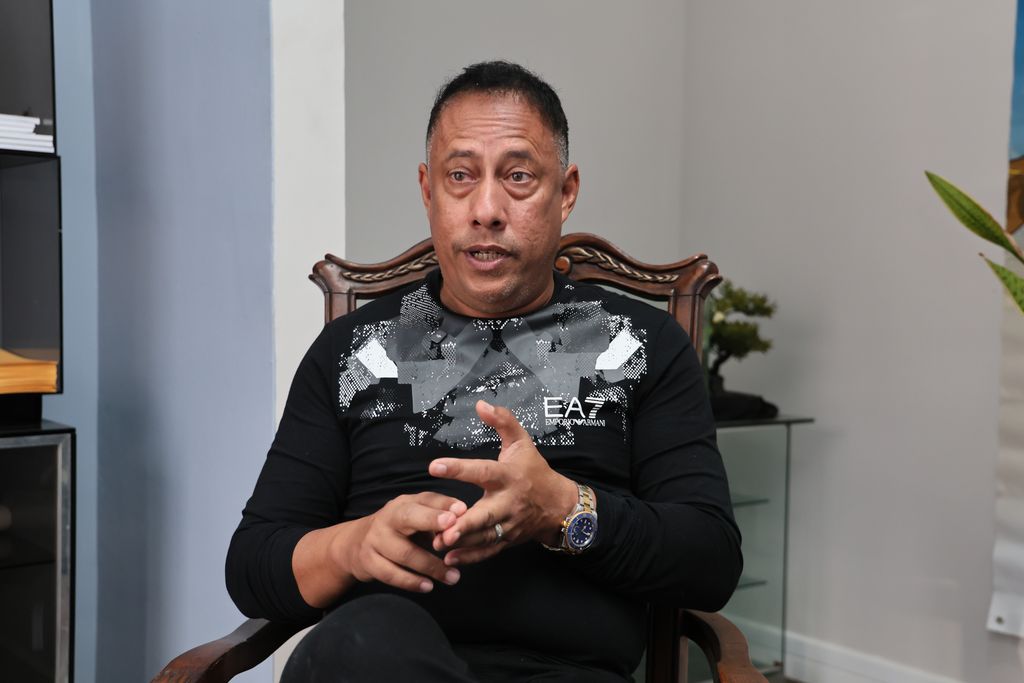

Former commissioner of police Gary Griffith is warning that Trinidad and Tobago’s Preventive Detention Order (PDO) legislation gives too much unchecked power to the Minister of Homeland Security and could be abused by future governments.
In a statement on Monday, Griffith said his concerns were not directed at the current holder of the office or any recent decision involving the use of a PDO, but at what he described as a fundamental flaw in the legislation.
He argued that the law allows a minister to authorise the detention of a person for months without bail or any meaningful right of appeal based on what the minister considers to be “credible intelligence”, even where there is insufficient evidence to lay criminal charges.
Griffith said this means police can be directed to arrest and detain someone without evidence being presented in court, without witness statements and without enough proof to support a criminal charge.
He urged the public to consider how the law could be used if a future government appointed a minister willing to abuse those powers.
Griffith said laws should not be judged solely on the integrity of the person currently holding office but on how they could be used by someone with less regard for democratic principles.
He also questioned whether Trinidad and Tobago’s Constitution contains sufficient safeguards to prevent abuse of such authority.
According to Griffith, the law could theoretically be used against holders of the country’s highest offices, including the President, the Prime Minister, the Chief Justice or the Director of Public Prosecutions, if a minister claimed to possess credible intelligence against them.
He argued that such powers could be used to threaten political opponents or even Cabinet colleagues, describing the scenario as unlikely but possible under what he considers to be defective legislation.
Griffith maintained that the issue was not the present Security Minister or the current Government, but the concentration of power in the hands of a single political officeholder.
“The issue is not who holds the power today. The issue is that no politician should ever be given such unchecked power,” Griffith said.