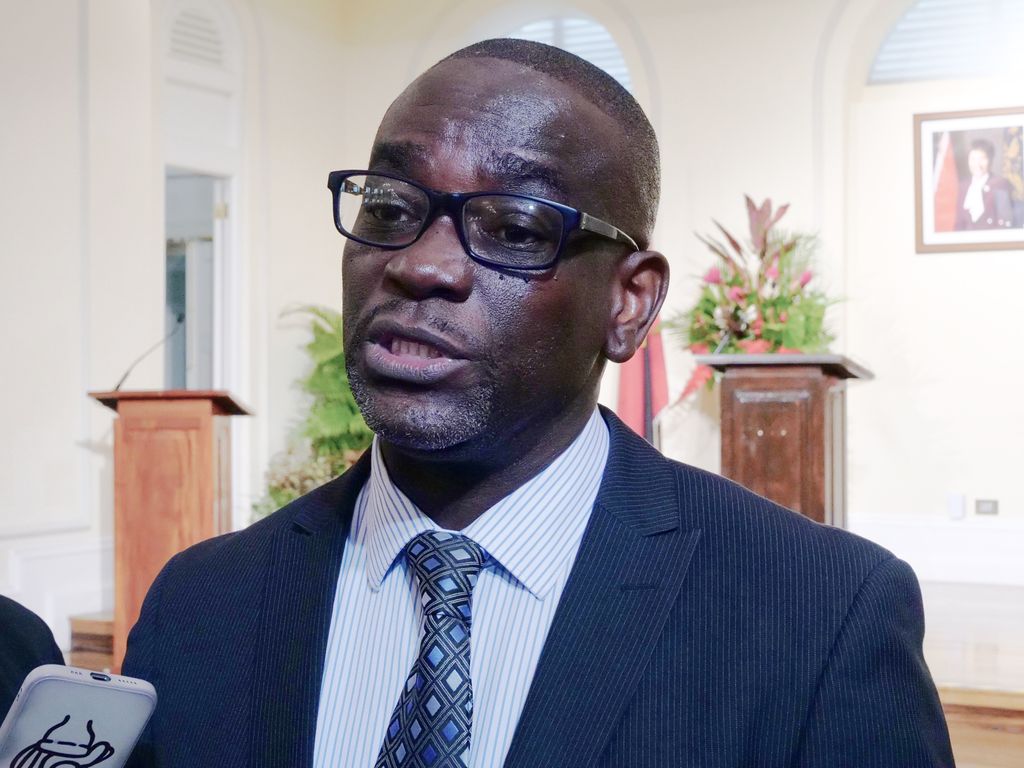

The Police Service Commission (PolSC) is expecting to give its report on Police Commissioner Allister Guevarro soon, says chairman Dr Wendell Wallace.
In a brief interview with Guardian Media yesterday, Wallace said “all questions” pertaining to the commission’s rating of Guevarro would be answered in a media release but did not say when the release will be issued.
Guevarro celebrated his first anniversary on June 18. He was appointed as CoP on June 17, with his role taking effect from June 18, 2025. The appointment followed the completion of a recruitment and selection process conducted by the PSC that began in April 2024.
The PolSC gave Guevarro a 12-month probation period, at the end of which he was to be assessed and once approved, he will be confirmed until his retirement at age 60. The CoP is now 50. Guevarro, unlike his predecessors Erla Harewood-Christopher and Gary Griffith, was promoted to the rank of CoP and not appointed.
Contacted yesterday, Griffith said the major issue on which to judge Guevarro’s performance is the public trust and confidence in the police service.
“I would not want to give a grade for the commissioner. I think that is for the public to do so. I recall when I left as commissioner of police, public trust and confidence was almost 60 per cent. How the public measures the performance and the grade of a commissioner of police is the important thing, not the view of the prime minister, not the view of previous commissioners, not the view of politicians, but the view of the public.”
Also contacted, former PolSC member Courtney Mc Nish said he agreed with Griffith.
“I’m not sure what the current key performance indicators are, so I don’t know what’s measured. I agree with the former CoP that a key measurable would be public trust and confidence. However, given our current environment, I also hold the view that strategic, objective and independent decision making will be just as important.”
A month after assuming office, Guevarro advised the Government to call an SoE to address what he said was credible information of a crime syndicate operating from within the prison system, who were planning coordinated attacks on Government, judicial and law enforcement officials. This led to inmates at the Maximum Security Prison in Arouca being relocated to Teteron Barracks and Staubles Bay, which were later legally converted to prisons.
Related News

FIFA lifts US star striker Balogun’s red card suspension at World Cup after Trump calls ...

Silver Stars members arrested after alleged clash with TTPS officers at TRIBE band launch

Rodney Charles warns of backlash if US political tide turns against Trump