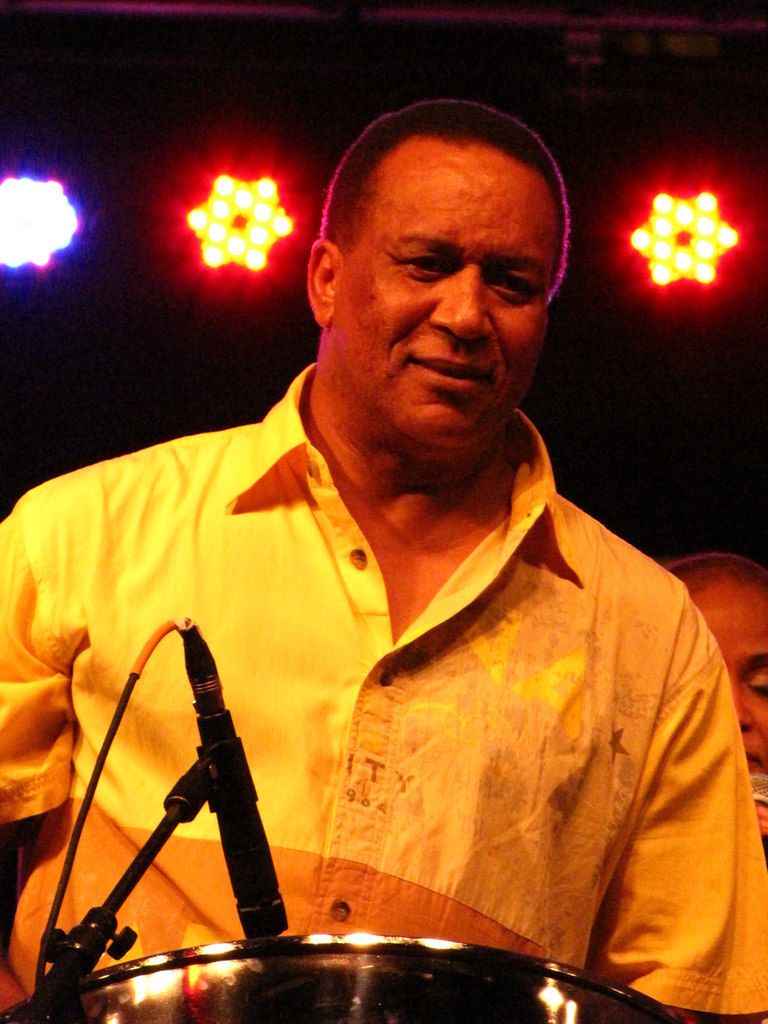

Robert Greenidge, the internationally acclaimed steelpan virtuoso, arranger and composer whose artistry helped elevate Trinidad and Tobago’s national instrument to global recognition, died today after a prolonged illness. He was 76.
For more than half a century, Greenidge stood as one of the steelpan’s most influential ambassadors—an artiste whose technical brilliance, musical imagination and versatility connected panyards with prestigious concert halls, recording studios and festival stages.
Born on April 28, 1950, in Success Village, Laventille, Greenidge grew up in a working-class community where pan, Carnival and cultural resilience formed the fabric of daily life. He was introduced to the instrument at the age of eight under the guidance of his uncle, Carl Greenidge, and started an informal apprenticeship in the Savoy Steel Orchestra before joining Desperadoes Steel Orchestra in his late teens.
By the age of 18, Greenidge was performing in cultural showcases across Africa, Europe and North America, with appearances at the First Negro Arts Festival in Dakar, the Montreal Expo, and performances in London and New York.
In 1971, Greenidge migrated to the United States, where he pursued formal studies in composition and arrangement at the Third Street Music School in New York.
His professional breakthrough came through a series of collaborations. Throughout the 1970s and 1980s, Greenidge recorded and performed with an array of international artistes, including John Lennon and Yoko Ono, Ringo Starr, Carly Simon, Earth, Wind and Fire, Grover Washington Jr. and Taj Mahal.
Among the highlights of his career was his appearance at the Montreux Jazz Festival, where he shared the stage with jazz luminaries, including Stan Getz and Jimmy Smith. His contribution to Grover Washington Jr.’s Grammy-winning hit Just the Two of Us further cemented his place in contemporary music history, demonstrating the steelpan’s capacity to sit comfortably within mainstream jazz and pop frameworks.
However, it was his long association with Jimmy Buffett’s Coral Reefer Band—beginning in 1983—that made Greenidge a globally recognisable figure. For four decades, his steelpan lines became central to Buffett’s signature “tropical rock” sound. His work on classics such as One Particular Harbour and Margaritaville was both commercially successful and unmistakably Caribbean in character.
Throughout the years, Greenidge maintained deep ties to the steelband movement. As musical director and arranger for Desperadoes, he led the band to multiple Panorama victories, including landmark wins in 1991 and 1994. In 1993, he was awarded the Hummingbird Medal (Silver) in recognition of his contribution to national culture.
Greenidge also built an extensive solo and collaborative recording career, releasing albums such as Mad Music, Jubilee, Heat and From the Heart, and co-founding the project Club Trini with Michael Utley, further expanding the steelpan’s reach into jazz, pop and island fusion.
In later years, he remained active as a performer, educator and mentor, conducting workshops and continuing to tour and record, including tribute performances following Buffett’s death in 2023.