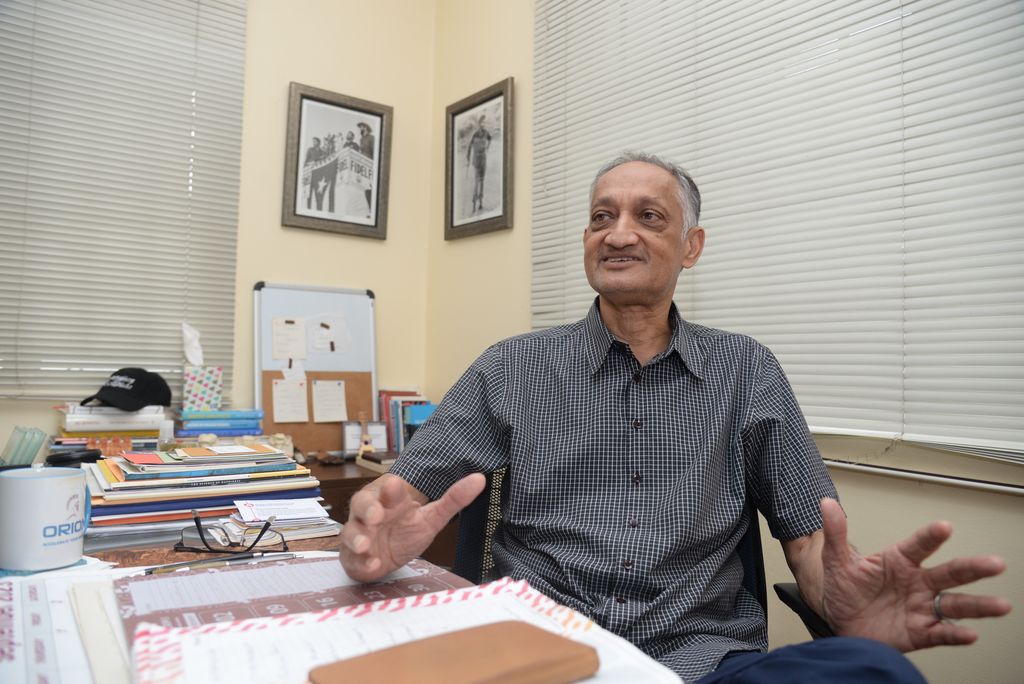

Director of Public Prosecutions (DPP) Roger Gaspard has issued a warning to media organisations and social media users against publishing material that could prejudice ongoing criminal proceedings arising from the killing of Joshua Samaroo.
Gaspard broke his silence on the matter in a statement last night, acknowledging that the fatal shooting of Samaroo and the serious wounding of his girlfriend Kaia Sealy on January 20, 2026, had generated “huge public interest,” fuelled by extensive coverage across electronic, print and social media platforms.
He noted that much of the public reaction had been shaped by the widely circulated video footage of the incident.
Gaspard said the footage contributed to a criminal investigation conducted by the Trinidad and Tobago Police Service (TTPS), and also prompted an inquiry by the Police Complaints Authority (PCA).
He said he had met and spoken with the PCA regarding the matter, adding that following the completion of the police investigation and his review of the evidence collected—including forensic evidence from the Forensic Science Centre - he advised the police to lay several criminal charges.
However, he stressed that the filing of charges should not be interpreted as proof of guilt.
“The presumption of innocence remains,” Gaspard said, noting that any determination of guilt lies solely within the jurisdiction of the courts.
He added that, constitutionally, his office does not conduct criminal investigations, nor does it select the evidence gathered by police investigators.
He said: “Nonetheless, the preferment of criminal charges in this matter has led to expressions of concern by members of the public, public protests and the urge to have these charges tried in the public domain rather than in the correct legal forum, which is the court.”
“In the circumstances, I am duty-bound to warn you that you are not to publish any material which has the potential to prejudice the right of the State or the right of any person charged in this matter, to a fair trial,” he added.
“Further, I am mandated to do all in my power to ensure that the springs of justice remain undefiled and to curtail any prospect of objectionable publicity.”
Gaspard said he remained mindful of the competing public interest considerations underpinning democracy, including freedom of the press, freedom of thought and expression, freedom of conscience and the right to a fair hearing before an independent tribunal.
“In this country, the rule of law is a priceless asset and a foundation of our Constitution. A related hallmark and safeguard is open justice, which contemplates that criminal trials be conducted in public and only in the courts of the land, rather than in the media. See Privy Council case of Boodram v The Attorney General of Trinidad and Tobago 1996 2 WLR 464,” he said.
He said these legal considerations prevented him from publicly discussing the evidence uncovered during the police investigation.
“Accordingly, I trust that the media, inclusive of social media, will act responsibly and with the required dose of circumspection. A failure to be guided by this warning may render the media and those involved liable to contempt proceedings, since such conduct would constitute an unwelcome interference with the due administration of justice,” Gaspard said.