
Senior Reporter
kay-marie.fletch[email protected]
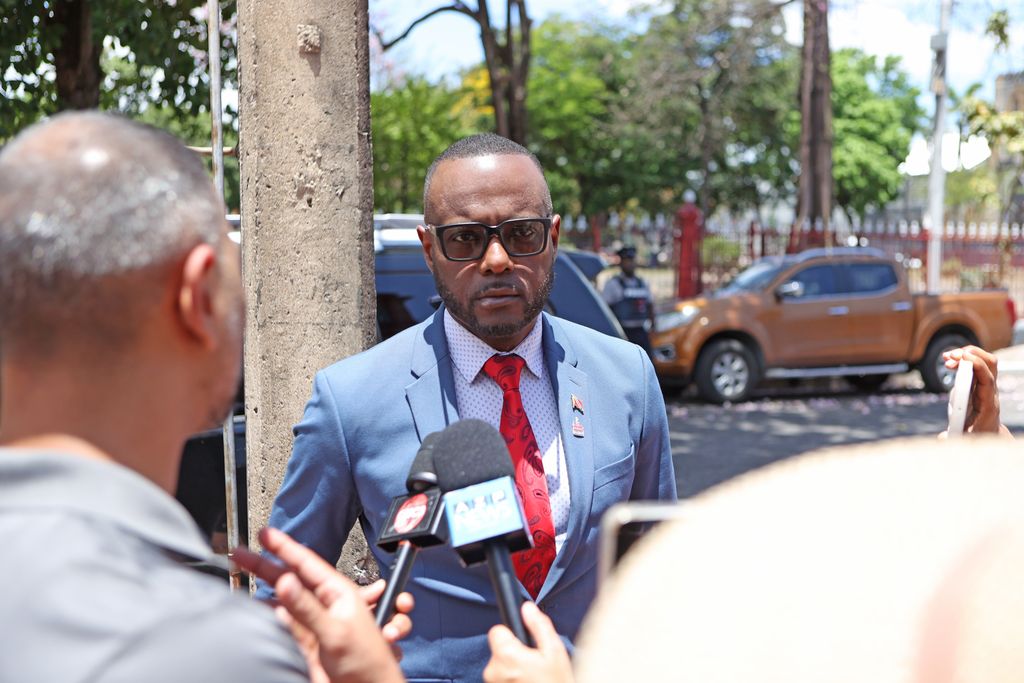
Opposition Chief Whip Marvin Gonzales has accused the Trinidad and Tobago Police Service (TTPS) of further eroding public confidence in the justice system amid controversy surrounding the Joshua Samaroo and Kaia Sealy matter.
Speaking on the issue yesterday, Gonzales criticised Criston J Williams, the attorney representing the Samaroo family, for urging citizens to “trust the process” despite widespread public scrutiny over the police handling of the matter.
He described Williams’ calls for citizens to trust the process in the face of widely circulated CCTV footage as an insult to the population.
Gonzales said he found it “quite curious” that a defence attorney had publicly moved to defend the actions of the prosecution.
“I am surprised that a defence attorney is jumping to the defence of the prosecution in this matter. It is time that we look deeper into this. I have never seen where a defence attorney all of a sudden is excited to defend the police and the Director of Public Prosecutions (DPP).”
He added, “What this defence attorney should be doing as an officer of the court should be encouraging the Trinidad and Tobago Police Service, encouraging the Commissioner of Police (Allister Guevarro) and even encouraging the Director of Public Prosecutions (Roger Gaspard), all of whom are in public office, and they are accountable to the people of Trinidad and Tobago, to put at a level, and to put sufficient information out in the national community, so that the people of this country can believe that there is something inside of there that would warrant their trust and their confidence.”
Gonzales now believes that the handling of the issue has pushed the public trust in the TTPS to be at “its lowest point in decades”.
He also launched a scathing attack on Homeland Security Minister Roger Alexander, saying the public could no longer take the minister seriously.
He accused Alexander of repeatedly using parliamentary standing orders to avoid answering questions related to national security matters, including arrests and charges linked to the ongoing State of Emergency (SoE).
He further criticised the Government over the issue of police body cameras, claiming Alexander failed to give a commitment in Parliament that the Government would provide body cameras for officers despite repeated calls from the Opposition.
“Who on earth can take Roger Alexander seriously? I mean, if you want to take him seriously, the first sentence that comes out of his mouth, you can’t take that man seriously. And for Kamla Persad-Bissessar to put someone like Roger Alexander to be in charge of our Homeland Security, it tells you the mindset of Kamla Persad-Bissessar... If you want to restore confidence, there are some serious changes you need to make to the top there. And the first one must go is Roger Alexander.”
When Guardian Media reached out to Alexander for a response on the matter, he said Gonzales cannot bully him.
Meanwhile, Opposition Leader Pennelope Beckles renewed calls for legislative reform aimed at strengthening police accountability and oversight.
Beckles urged Prime Minister Kamla Persad-Bissessar to amend legislation governing the police complaints authority to give the body stronger investigative powers, including immediate access to scenes involving police killings and greater authority to preserve evidence.
She also reiterated calls for the mandatory use of body cameras by police and other law enforcement agencies authorised to use force, arguing that such measures are necessary to improve transparency, accountability and public trust in policing.
Beckles said, “It is undeniable that suspicion in police action has taken unnecessary root in the matter of the charges brought against Kaia Sealy. The Prime Minister’s reference to people sleeping peaceably in their beds at night only because rough men stand ready to do violence on their behalf are as useful as her comments to buss heads and kill people violently whilst alleging criminal conduct by independent senators without informing the police of their identities, supposedly well known to her.”