
Brent Pinheiro
brent.pin[email protected]
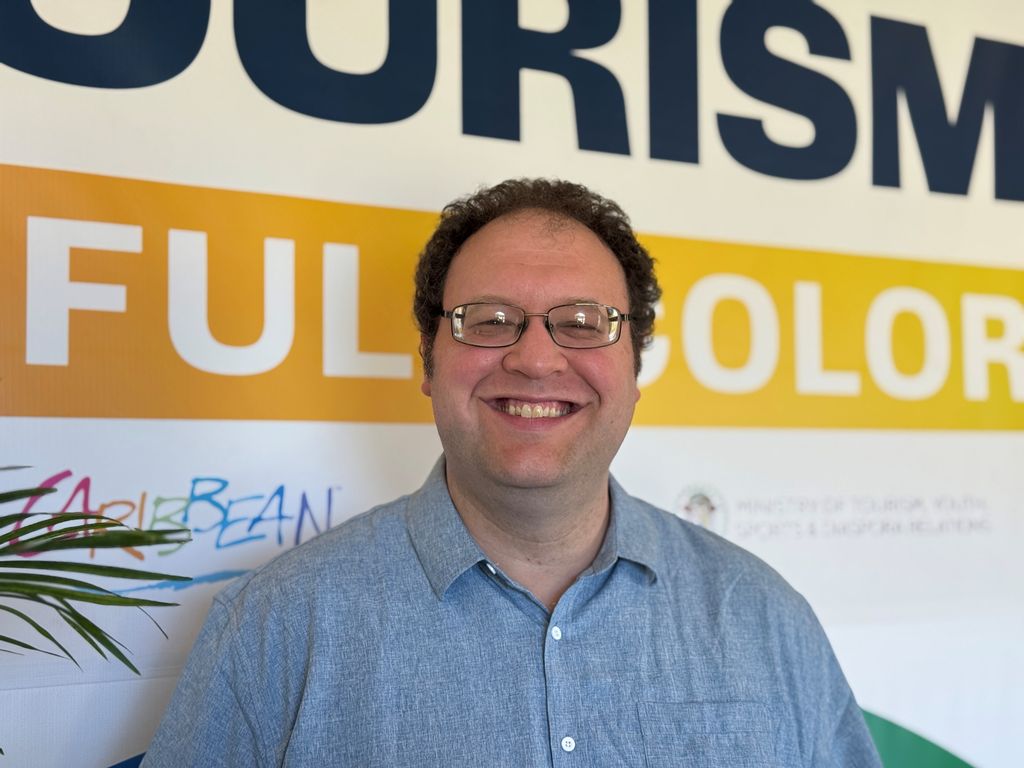
The Caribbean welcomed 35 million visitors in 2025, according to the Caribbean Tourism Organization (CTO), once again surpassing pre-pandemic levels. But did every visitor truly feel welcome in the region? That’s the question Roni Weiss, the executive director of Travel Unity, a non-profit organisation working to create a more diverse and inclusive travel industry, is putting to destinations.
In a sit-down interview with Guardian Media at the CTO’s recently concluded Sustainable Tourism Conference in Belize, Weiss explained that the modern traveller and their needs have changed. Modern travellers can be any combination of differently abled, be of a different race/ethnicity, identify as LGBTQ+, be a traveller of size, et cetera, Weiss said. And he argues that meeting their needs is more than just about being seen.
Drawing reference to Maslow’s hierarchy of needs model, he said, “If we have dietary restrictions and we aren’t able to get the food we want, we’re not going to have a good experience. If we don’t drink alcohol and everything is centred around that, we’re not going to have a good experience. If we don’t feel safe, and that could just be a general feeling of unsafeness, or that could be because of a specific aspect of our identity, where we feel like we just are not safe for whatever reasons, if we feel like we don’t belong somewhere, we’re not welcome there, then why do we want to be there? And why would we return?”
The US is a major source market for many Caribbean countries, with Canada not far behind, Weiss said, and as destinations continue to target travellers from those markets, they will need to decide whether they are going to accept and cater to travellers with different identities.
Data from the International Gay and Lesbian Travel Association (IGLTA) estimates the LGBTQ+ tourism market to be worth over US$200 billion annually. But more than anything, people want to feel safe in a destination, he said
“Yes, we’re talking about same-sex couples who also have families, but we’re also talking about a family where their child identifies as transgender. Are they going to feel welcome there?” Weiss asked.
“I think that’s a really important thing to understand about a big subset of American travellers, which is they’re aware of those identities, especially if they’re a parent. They’re going to be even more concerned about making sure that their kids feel safe and good about those travels,” he said.
And the delivery of service doesn’t have to be complicated, Weiss argues.
“If you do have a same-sex couple coming and they’re checking in and you have a heterosexual couple coming in, you’ve got to treat them the same way. You go, how many beds would you like? I don’t think we need to be in everybody’s heads or hearts to go, do you approve of this? That’s not what this needs to be. It just needs to be, how are we actually treating people within the lived situations?” he said.
Director of Product at the Curacao Tourist Board, André Rojer, explains that being inclusive has paid off. Curacao recorded a nine per cent increase in visitor arrivals compared to 2024, welcoming approximately 1.7 million visitors in 2025. As a fully autonomous country within the Kingdom of the Netherlands, Rojer credits part of that success to the Dutch for their approach to inclusivity.
He said, “They are the front runners of inclusivity and are absolutely welcoming to LGBT [travellers]...They don’t raise an eyebrow about that at all. It has been embraced right away - packages, tour operators, travel agents, influencers coming in.”
Rojer also explained how he ensures the destination remains accessible for disabled travellers.
“We did a full scan of all properties on the island and made sure that they have all of the physically challenged adaptations needed, how many rooms per hotel are adapted,” he said.
We even went further to parks, recreational places, and tours. So we look at the different companies now to make sure all those things are in place. Those are the small elements that are important.”
According to UN Tourism, 1.3 billion people already experience significant disability, but disabled people aren’t exactly staying home. A 2024 study by the Open Doors Organization found that disabled US travellers spend nearly US$50 billion on travel annually. Add in a travel companion for care/company, and that figure doubles to over $100 billion per year.
Grégoire Dumel, local and regional manager at the Saint-Martin Tourist Board, told Guardian Media that while the market segment might be small, the destination has been making strides towards catering for all travellers. Using the island’s building code as an example, he pointed out that a portion of all hotels’ ground units are designed to cater for disabled users. Even something as simple as dialysis treatment, he says, has been taken into consideration.
“We have over two million visitors by cruise on the island, and a lot of them, when they arrive in St Martin, [need] dialysis because for dialysis, you’ve got to be able to do it every two or three days. According to the destinations they will be visiting, they’re going to make sure that there is a dialysis point.
“They can’t do it on the ship. So they will come down, and they will do it in St Martin, for three to four hours, and then go back to the ship,” he said.
Dumel admits, however, that more can be done.
He said, “Ramps at the beaches, all our parking areas—if you’re doing 20 parking spaces, there will be four or five parking spaces for [handicapped persons]. So it’s something that is already in the system... but I think as a tourism authority, there’s much more that we can do to make sure that those visitors or tourists are as welcome as an [able-bodied] person.”
Travel and tourism contributed US$11.6 trillion to global GDP in 2025, representing 9.8 per cent of the global economy, according to data from the World Travel and Tourism Council (WTTC). So for Weiss, the message to stakeholders is simple: “If you have any sort of economic interest in tourism, you want to make sure that people have a good experience, feel like people cared about them, because that’s how they return and tell other people that they should too.”