
RADHICA DE SILVA
Senior Multimedia Reporter
radhi[email protected]
NOGALES, Arizona — U.S. border agents patrolling Arizona’s vast and unforgiving frontier are confronting criminal organisations with billion-dollar resources while operating under comparatively limited budgets, a disparity officials say has become one of the biggest challenges in securing the border.
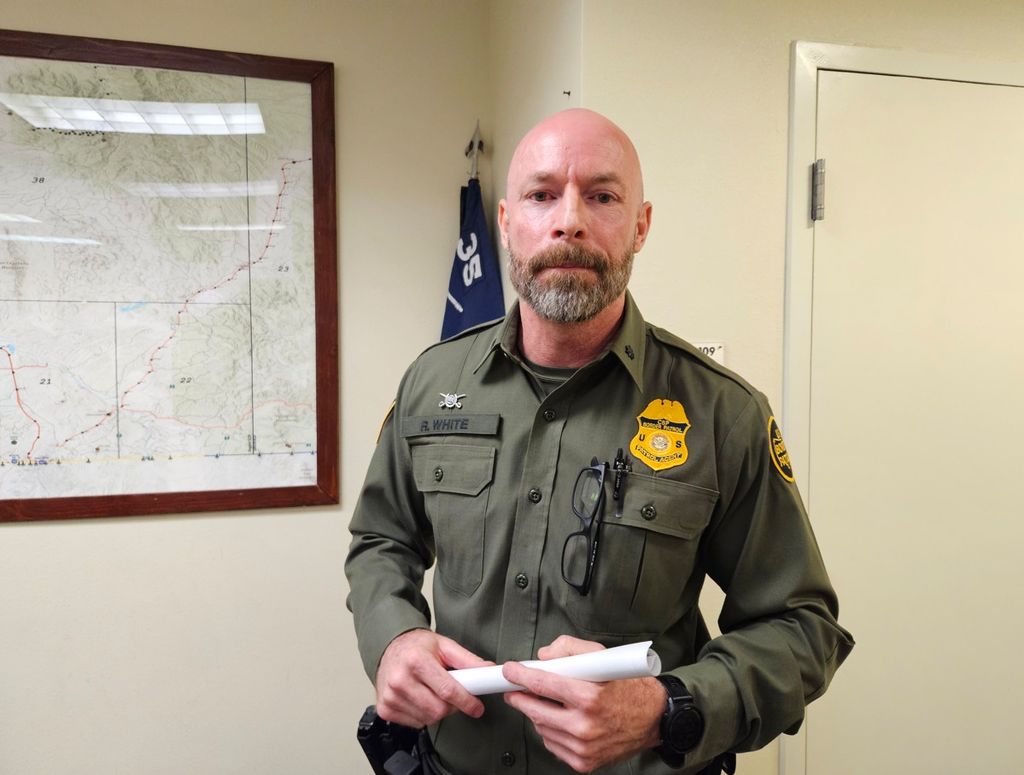
Deputy Agent in Charge Rich White said the financial imbalance between Mexican cartels and U.S. Border Patrol operations creates an uphill battle in an environment already defined by punishing terrain and logistical obstacles.
“Our operating budget is only in the millions compared to the adversary in the billions,” White said during a briefing in southern Arizona during the Foreign Press Centres Reporting tour, which takes place between May 17 and 23. Journalists from around the world, including Pakistan, India, Germany, the United Kingdom, The Gambia, Chile, Colombia, Nigeria, Kenya, Peru and Spain
According to White, Arizona’s Border Patrol sector operates with a budget of roughly US$24 million to US$25 million. Yet approximately US$22 million of that amount is consumed simply by keeping vehicles operational — paying for fuel, maintenance and truck tyres needed to cover the state’s enormous territory.
That leaves only a few million dollars for equipment upgrades, tactical adjustments and other operational needs.
“When you really think about how big we are and our mission set, a few million dollars for an operating budget is nothing,” White said.
He contrasted that with cartel organisations operating south of the border.
“Billions,” he said when asked about cartel resources. “Every day they’re using all of that money to leverage and try to get people across to beat us.”
White said cartel organisations possess the financial flexibility to rapidly invest in sophisticated technologies, engineering projects and smuggling innovations.
“They can drop US$100 million on new radio technology, US$100 million on engineers to design tunnels, millions in vehicles — whatever they need,” he said.
The imbalance is especially pronounced in Arizona, where geography itself often works against enforcement efforts.
The state’s borderlands include steep mountain ranges, massive canyon systems and elevations that can rise between 8,000 and nearly 10,000 feet. Some areas are marked by sheer cliffs dropping hundreds of feet and isolated stretches requiring agents to travel long distances simply to reach patrol zones.
“The mountains out here are rugged,” White said. “You have to walk miles and miles and miles before you see or hear anything.”
Unlike urban sectors where agents may rely on bicycles or foot patrols in populated environments, Arizona presents a patchwork of dramatically different landscapes — from city streets to wilderness terrain so remote that officials say access itself becomes a challenge.
Some sections near the border lack roads entirely.
“There are parts where you have to hike ten miles through a canyon just to get near the border,” White said.
That reality means Border Patrol cannot maintain a constant presence everywhere.
“We literally don’t have enough to cover every square inch of every bit of the border at all times,” he said.
Instead, agents must constantly shift surveillance assets and personnel based on intelligence and migration patterns.
Authorities rely heavily on a combination of fixed and mobile technology, including remote cameras, radar systems and mobile surveillance trucks placed strategically in areas with limited visibility.
But even advanced systems face limitations in the difficult terrain, White said.
He noted there are areas where visibility is restricted by geography, forcing agents to reposition resources and make strategic choices about where surveillance is most effective. Despite this, there is total coverage of the areas.
Complicating matters further is the mix of public and privately owned land along the border. He said border officials often negotiate with ranchers and landowners for access rights, infrastructure placement and temporary leases for surveillance systems.
Meanwhile, officials say criminal groups continue adapting.
Cartels increasingly deploy drones to monitor agent movements and exploit terrain limitations. White said authorities are building counter-drone programs and working with the U.S. military and Mexican counterparts to respond to evolving threats.
Despite technological support, White said the basic challenge remains unchanged as their dedicated agents work collaboratively to secure a vast, rugged landscape against well-funded criminal networks that continually evolve.