
KEJAN HAYNES
Lead Editor – Newsgathering
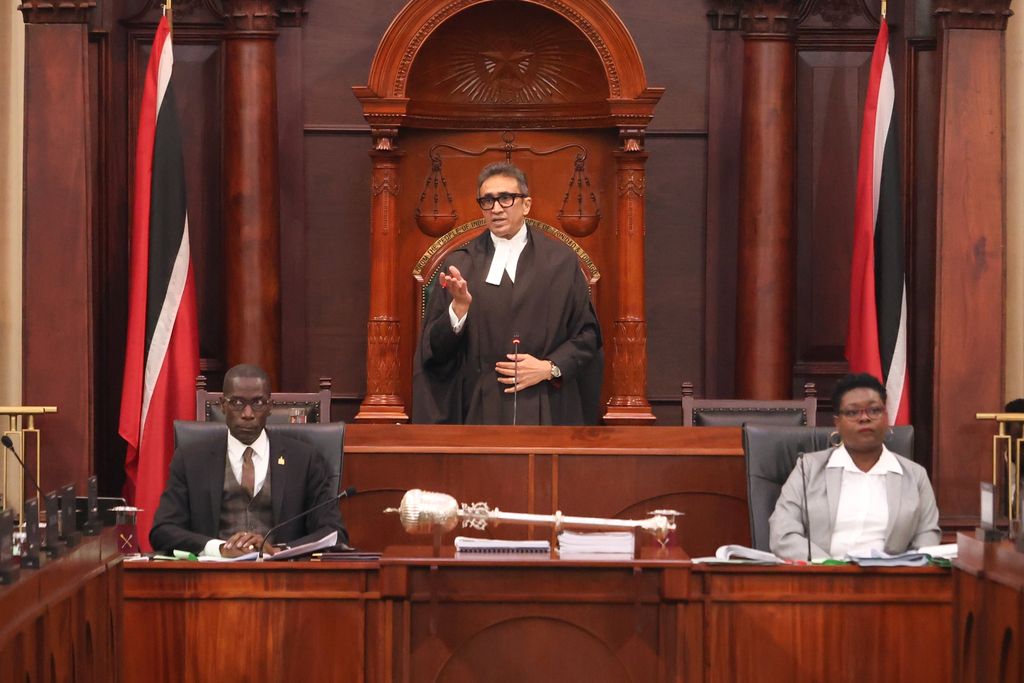
House Speaker Jagdeo Singh dismissed concerns about government accountability in Parliament today as a “tired old story” while defending Homeland Security Minister Roger Alexander's refusal to answer questions tied to the ongoing State of Emergency and alleged threats against senior law enforcement officers.
The clash erupted after Marvin Gonzales challenged the Government’s decision to invoke Standing Order 28(3), which allows a minister to decline to answer a parliamentary question if, “in his opinion the publication of the answer would be contrary to the public interest.”
The same provision also appears under Standing Order 27 governing urgent questions.
Gonzales had asked Roger Alexander two questions:
“i. how many persons have been charged under the Anti-Gang Act since the declaration of the State of Emergency on March 03, 2026; and
ii. whether anyone has been charged in relation to the alleged plot to murder senior law enforcement officers in Trinidad and Tobago?”
Alexander declined to answer.
“I am constrained to invoke the provisions of Standing Order 28 (3). Of the Standing Orders, Mr. Speaker, out of deference for the work of the Trinidad and Tobago Police Service,” he said.
When Gonzales attempted to ask a supplemental question, Singh stopped him immediately.
“Have a seat. If the Minister invokes the public interest exception in 28(3). And 28(3) is very clear,” Singh said.
“A Minister may decline to answer a question if, in his opinion, the publication of the answer would be contrary to the public interest.”
Singh then challenged Gonzales to justify why a supplemental question should even be allowed.
“What possible supplemental question could arise from the blanket invocation of the public interest exception? I need you to justify why a supplemental question arises in those circumstances. I don't wish to be regaled with the tired old story of accountability and all of that, which you've traversed here before.”
The Speaker’s remarks prompted Gonzales to argue that the questions dealt directly with issues used by the Government to justify the State of Emergency.
“And for the benefit of the viewing public, Mr. Speaker, the citizens of Trinidad and Tobago who are looking at these proceedings, these questions are filed in order to get the executive arm of the state to account for critical matters of governance in Trinidad and Tobago,” Gonzales said.
“The question that was filed for the Minister was basically to ask the Minister whether persons have been charged under the Anti Gang Act since the state of emergency and whether anyone has been charged in relation to the alleged plot to murder senior law enforcement officers in Trinidad and Tobago.”
“These questions are in the public interest, Mr. Speaker, because, Mr. Speaker, this country, this country is under a state of emergency based on these factors and the people of Trinidad and Tobago are deserving of answers to these critical things.”
Gonzales was interrupted before he could finish.
Singh defended the standing order, arguing that Parliament itself deliberately created the public interest exception.
“The fundamental question the entire body collectively has to answer is if it were not intended for the public, the public interest exception to apply, then why include it in these standing orders?” Singh asked.
He said the exception appears across several categories of parliamentary questioning, giving ministers discretionary authority to withhold answers.
“So each tier of questioning the parliament collectively as a body has given the minister the residual discretionary power to refuse to decline the answer.”
“I don't want to say refuse because that's a strong word, but in neutral term would be to decline the answer.”
Singh, who is an attorney and had no previous parliamentary experience before becoming Speaker, then referred to the courts, something he frequently does during debates in the House.
“Where the public interest exception is invoked, a judge at common law has the discretionary power to say, let me see that material and I will make a decision based on the fairness of the trial,” he said.
“There are no fairness concerns here. So, I have no power to go behind the invocation of the public interest.”
“All right. The invocation of the public interest seems to be an absolute bar. The way these standing orders are constructed.”