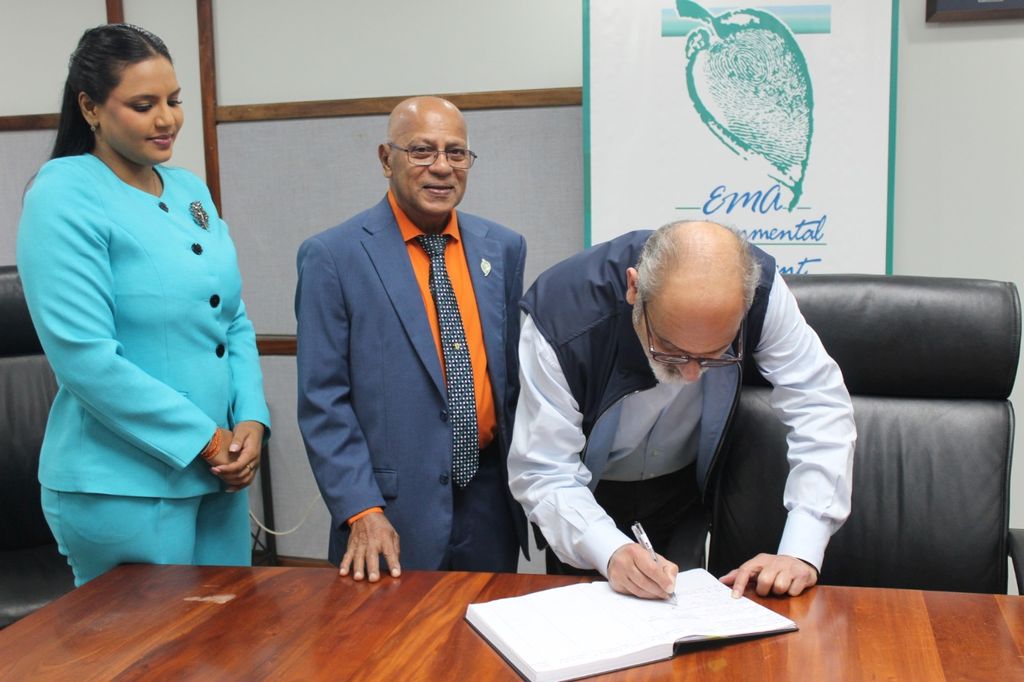

The Environmental Management Authority (EMA) has granted a Certificate of Environmental Clearance (CEC) for the development of a Marriott-branded hotel and resort at Rocky Point, Mt. Irvine, Tobago.
The approval was issued to Superior Hotels of Trinidad and Tobago Limited under CEC6451/2022 for the project on approximately 11.99 hectares of land.
According to the EMA, the development forms part of efforts to support investment and economic activity while maintaining environmental oversight under the Authority’s legislative mandate.
The project will include a 200-room hotel, villas, townhouses, recreational facilities and green spaces. The development is aimed at increasing accommodation capacity in Tobago and supporting international visitor arrivals.
EMA Technical Manager (Ag.) Sally Maharaj said the approval reflected the Authority’s approach to engagement with stakeholders and its focus on balancing development with environmental requirements.
“This approval represents a key strategic effort by the EMA under the guidance of the new Board of Directors, reflecting a strengthened, more collaborative approach to engagement with stakeholders. It underscores our commitment to improving the ease of doing business while upholding rigorous environmental standards, in support of sustainable development across Trinidad and Tobago,” Maharaj said.
The EMA stated that the application was subjected to an Environmental Impact Assessment (EIA), which examined potential effects on physical, biological and socio-economic environments.
The assessment process included public consultations and discussions with stakeholder groups.
According to the EMA, the review found that environmental and social impacts had been identified and addressed through mitigation measures included in the project’s design.
The EMA said measures will be implemented to protect coastal ecosystems, including coral reefs, through controls on effluent discharge, setbacks, earthworks and wastewater management.
Additional measures are expected to address impacts on sea turtles and nesting habitats through construction scheduling, lighting controls, beach management and pollution prevention programmes supported by monitoring systems.
The EMA also noted that the approved development does not include coastal or marine works.
The project includes provisions for drainage and water quality management, preservation of cultural heritage sites such as Fort Monck, and public access to the shoreline.
EMA officials said the development is expected to generate employment during the construction and operational phases and increase demand for local goods and services.
Chairman of Superior Hotels Trinidad and Tobago John Aboud welcomed the approval and said the company experienced collaboration during the application process.
“We have noted greater collaboration, hand-holding, not comprising environmental standards, but guiding throughout the process. We are very encouraged by the EMA’s new approach to the approvals process. As an investor and developer, this level of efficiency and collaboration will go a long way in strengthening investor confidence and encouraging further development within Trinidad and Tobago,” Aboud said.
The EMA said while its assessment focused on environmental matters within its remit, approvals from other agencies would still be required.
Those agencies include the Town and Country Planning Division, the Water and Sewerage Authority and divisions of the Tobago House of Assembly.
The EMA said the process was intended to ensure that development projects proceed through a coordinated framework involving environmental review and oversight by multiple agencies.