Somalia hunger crisis worsens as drought displaces more than 500,000 people
 27 April 2026
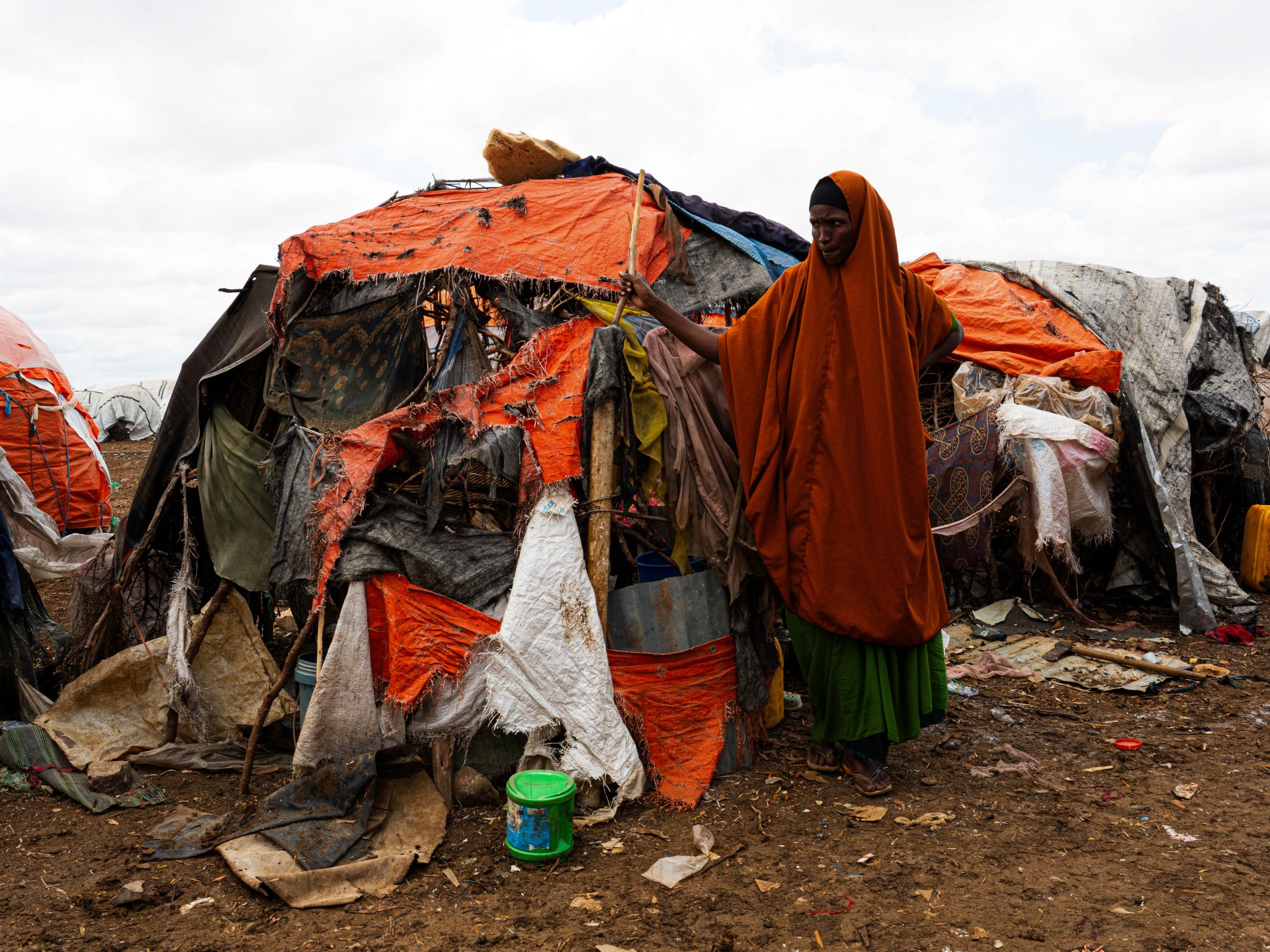

Across Somalia, communities are suffering through a deepening hunger crisis, driven from their homes by drought and left waiting for critical humanitarian assistance that has not arrived.
September’s failed Deyr rains mark the latest blow in a relentless climate crisis, destroying livelihoods, killing livestock, and forcing another year of harvest failure.
More than 500,000 people have been displaced so far this year – more than 90 percent of them by drought – in addition to the 3.3 million Somalis already uprooted.
Displaced families now face the highest risk of starvation, according to the UN OCHA’s Somalia Humanitarian Needs and Response Plan 2026.
Fatima, 40, has fled five times – three times because of conflict, twice because of drought. Each time she has left behind land, livestock, and the small possessions her family has managed to save.
“This is the fifth time I have fled,” she says. “I am still facing the drought and I have nothing to feed my family.”
Families have walked for days, eating wild plants along the road and have arrived in displacement camps in Baidoa and Dollow with nothing.
Many reach the sites malnourished and exhausted, carrying children too weak to walk. What they find there is not relief, but abandonment.
Aid funding in Somalia has declined sharply. This year, only 14 percent of the funds requested for humanitarian response have been received, according to OCHA’s Financial Tracking Service.
Somalia was intentionally left out of the $2bn global humanitarian aid pledge announced by the United States for this year due to allegations of aid diversion, corruption and the destruction of a US-funded World Food Programme (WFP) warehouse in the country, according to officials.
Advertisement
“Humanitarian services are one of the only things we can rely on, but it is completely gone,” says a man displaced from Bakool who walked more than 100km to reach Baidoa. The April–June rainy season, known as Gu, has begun, but it offers limited relief.
For families who have lost their herds and farms after years of successive droughts, rain alone cannot rebuild what has been destroyed. People need immediate assistance.
This photo essay is provided by the Norwegian Refugee Council.
Related News

Former Israeli PMs Bennett, Lapid unite to challenge Netanyahu in elections
US panel approves Trump’s design for massive arch in Washington, DC
US forces attack and seize Iranian ship Touska near Strait of Hormuz