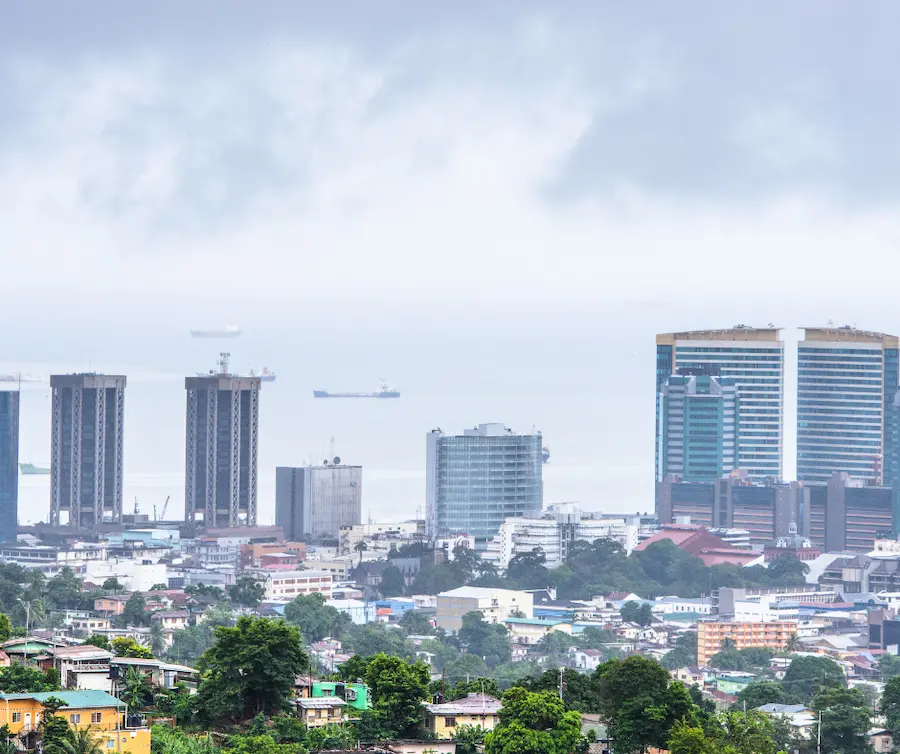
Iran reopens Strait of Hormuz, but Trump says blockade on Iranian ships and ports will stay in force
 17 April 2026

Iran said Friday it fully reopened the Strait of Hormuz to commercial vessels, but President Donald Trump said the American blockade on Iranian ships and ports “will remain in full force” until Tehran reaches a deal with the U.S., including on its nuclear program.
Iranian Foreign Minister Abbas Araghchi posted on X that the crucial waterway through which about 20% of the world’s oil is shipped was now fully open to commercial vessels, as a 10-day truce between Israel and the Iran-backed Hezbollah militant group in Lebanon appeared to hold.
Trump initially celebrated, posting on social media that Iran announced the strait “is fully open and ready for full passage.” But minutes later, he issued another post saying the U.S. Navy’s blockade would continue until “UNTIL SUCH TIME AS OUR TRANSACTION WITH IRAN IS 100% COMPLETE.”
Trump imposed the blockade earlier this week after Iran restricted traffic through the strait due to fighting in Lebanon, which Iran claimed to be a breach of the Pakistan-brokered ceasefire reached between the U.S., Israel and Iran.
At the time Trump said the blockade would enforce an “all or none” policy in hopes of pressuring Iran to reopen the strait.
Trump’s decision to continue the blockade despite Iran’s announcement appeared aimed at sustaining pressure on Tehran as the fate of the two-week ceasefire reached last week remains uncertain. Direct talks between the U.S. and Iran last weekend were inconclusive, as the two nations differed over Iran’s nuclear program and other sticking points.
Truce in Lebanon could help US-Iran peace efforts
Oil prices fell on hopes of a deal. The head of the International Energy Agency had warned that energy shocks could get worse if the strait did not reopen. Iran closed the crucial waterway shortly after the war began.
The truce in Lebanon offered a pause in fighting between Israel and Hezbollah and could clear one major obstacle to a deal between Iran and the United States and Israel to end weeks of devastating war. But it was unclear whether the militant group would recognize a deal it did not play a role in negotiating and which will leave Israeli troops occupying a stretch of southern Lebanon.
Trump said in another post that Israel is “prohibited” by the U.S. from further strikes on Lebanon and that “enough is enough” in the Israel-Hezbollah war. The White House did not immediately respond to a question about whether the prohibition spans both offensive and defensive strikes.
Celebrations in Beirut
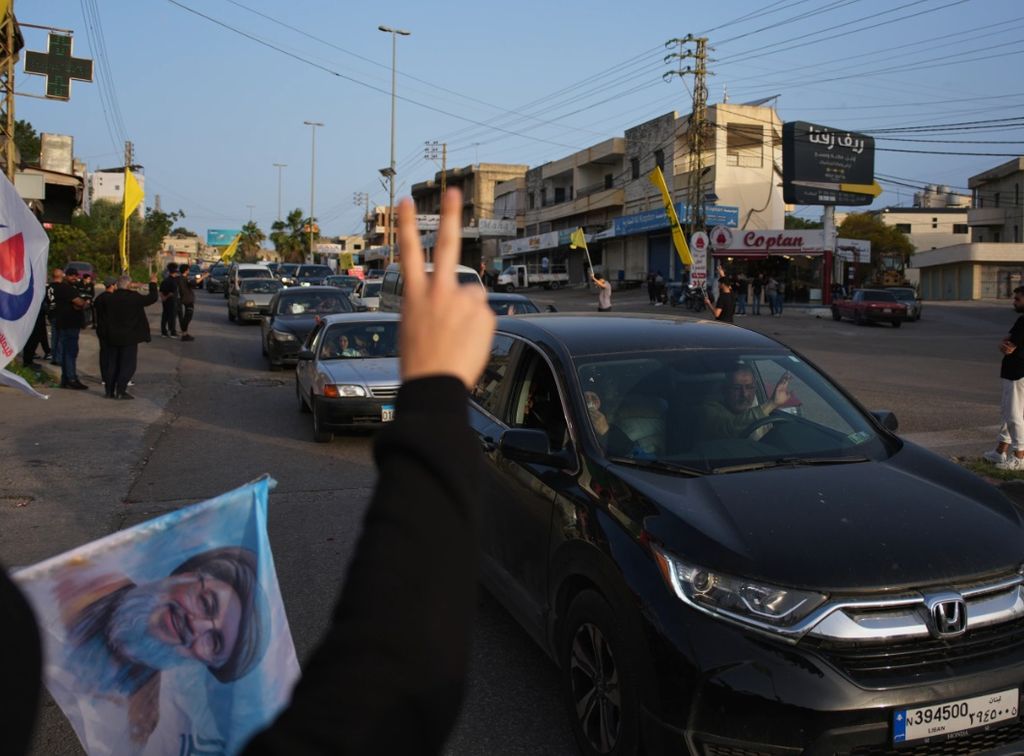
Meanwhile in Beirut, barrages of gunshots rang out across the Lebanese capital as residents fired into the air just after midnight to celebrate the beginning of the truce. Displaced families began moving toward southern Lebanon and Beirut’s southern suburbs despite warnings by officials not to attempt to return to their homes until it became clear whether the ceasefire would hold.
A spokesperson for the U.N. peacekeepers in southern Lebanon said Friday they had not observed any airstrikes since midnight, but accused the Israeli military of violating airspace and of artillery shelling in southern Lebanon. The Israeli military did not immediately comment. According to the agreement shared by the State Department, Israel can act in self-defense against imminent attacks but cannot carry out offensive operations against southern Lebanon.
Trump heralded the deal a “historic day for Lebanon,” even as he expressed confidence the war with Iran would soon end.
By KAREEM CHEHAYEB, ABBY SEWELL and MELANIE LIDMAN
BEIRUT (AP)