
Senior Reporter
otto.carring[email protected]
Members of the public will pay from $960 to $1,000 to travel between Trinidad and Tobago via Caribbean Airlines (CAL) under peak-period pricing, as Government moves ahead with a proposed plan to introduce unsubsidised flights on the domestic airbridge.
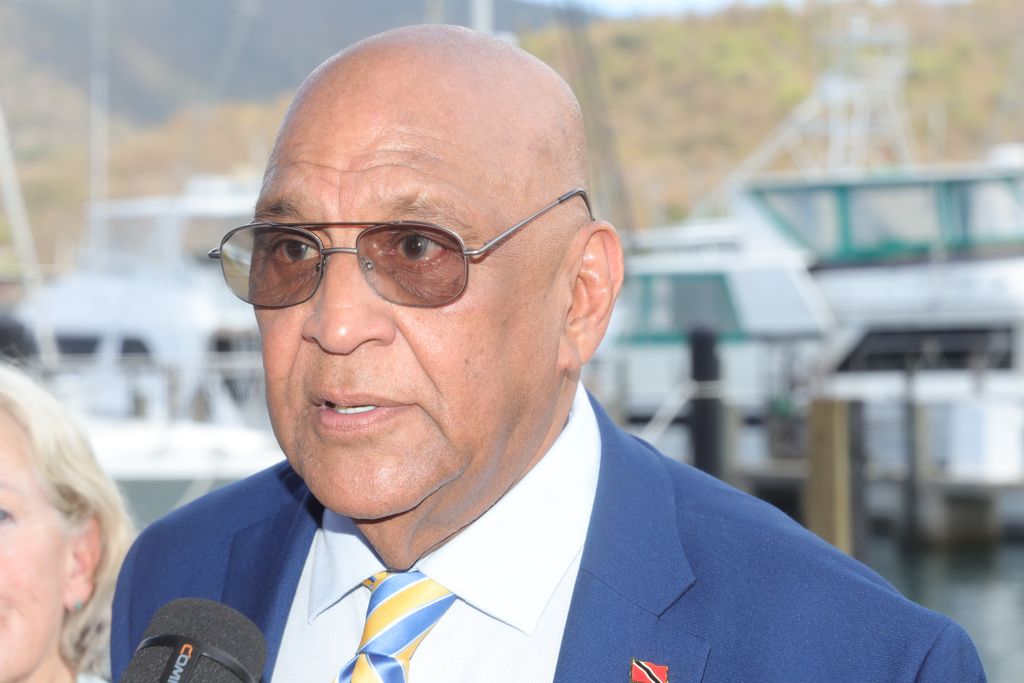
Minister of Trade, Industry and Tourism Satyakama “Kama” Maharaj revealed this yesterday, as he said Government is looking to roll out morning and evening flights between T&T without subsidy, aimed at easing financial pressure to operate the airbridge and improve seat availability during high-demand periods.
CAL currently offers flights to Tobago at a subsidised cost of $400.
Speaking to Guardian Media during the launch of the Sail Clear platform at Cruise Inn, Chaguaramas, Maharaj said the proposal would allow passengers to purchase guaranteed return fare seats at market-based rates.
“We’re looking at two unsubsidised flights at peak times, morning and evening, where passengers pay for a guaranteed seat. If demand increases, more flights can be added,” Maharaj said, adding that the move is intended to improve reliability on the route while reducing the financial burden on CAL, which currently operates heavily subsidised domestic services.
“If you want a flight tomorrow, you pay. I think it would be about $800 to $1,000 return, which is nothing—but you have a secure seat.”
He added that the service would cater to the demand.
“If we need more, we put more,” he said.
Maharaj also said Government is in talks with external carriers to service the route, while keeping open the possibility of a locally driven operation.
“We have a few in mind and discussions are going on. Maybe we’ll get someone to do this, Tobago Express or whatever you want to call it,” he said.
On the planned relocation of the domestic checkpoint, the minister noted that some adjustments may be required as the system is introduced, particularly as passengers adapt to new booking and travel arrangements.
Speaking to Guardian Media about the proposal yesterday, former Civil Aviation Authority director general Ramesh Lutchmedial said he sees no issue with the introduction of unsubsidised peak-hour flights between Trinidad and Tobago, noting that current inter-island fares are already heavily subsidised and below market value.
Lutchmedial explained that the Government currently provides a public service obligation (PSO) subsidy to keep air travel between the islands affordable for travellers who rely on the service for work, business and personal travel. He noted that the subsidy applies broadly to all passengers, including tourists, but suggested that differentiated pricing could be considered.
“I’ve always held the view that government heavily subsidises travel between Trinidad and Tobago,” he said, adding that while affordable travel is essential for residents, there may be room to reconsider whether non-residents should benefit from the same subsidy.
He pointed out that tourism stakeholders may be concerned that higher fares could impact visitor arrivals, making the issue a delicate balance between affordability for locals and competitiveness for the tourism sector.
However, Lutchmedial stressed that he supports the introduction of market-rate fares for certain peak-time services.
“I don’t see a problem with that. I would support it,” he said, noting that passengers willing to pay market prices during peak periods make the arrangement viable.
Meanwhile, economist Dr Vanus James said the introduction of unsubsidised seats on the airbridge could be a practical way to improve access and efficiency in the domestic aviation system but only if it is properly structured and based on data-driven policy design.
James argued that the system must balance affordability with the reality that some passengers are willing and able to pay more for priority access and flexibility.
“Some of it requires means testing. Age might be a factor. This might be a factor. That might be a factor. But there will be people who will be prepared to pay to get access to flights and pay a premium to get access,” he said.
He explained that a tiered pricing model similar to airline cabin classes on international routes could be applied locally, allowing different price levels for different levels of service and urgency.
“You have to think through that. Something down that road you have to head. You can have $600 seats rather than $400 subsidised seats. You can have $800 seats rather than $400 subsidised seats,” he noted.
He argued that similar principles could be extended to public transport systems more broadly, including ferry services and even urban transport, where not all services must cater strictly to the “least common denominator.”
James added that policy decisions should be informed by data on who travels, how often they travel and under what conditions, warning against politically convenient but poorly designed solutions.
However, businesswoman Diane Hadad questioned if the proposal would serve more as elitist segregation, as opposed to a solution to the inter-island transport woes.
Asking if these flights would then be given higher priority than the subsidised flights, she said, “Are we going to make sure that those flights fly and the $400 ones are delayed? Or if we have a breakdown, we going to make sure that the $1,000 people fly? There are a lot of things that have not been discussed or addressed.”
She added, “It has to be elitism, because the man who has the money and can afford it, he is going to pay his $1,000. I don’t know what the formula is. Nobody has explained that. They haven’t even had a discussion with the people over here who live over here.”
She said this is the second consecutive government that has pointed to the cost of the subsidy for the airbridge, without significantly addressing connectivity concerns that have emerged both via air and sea transportation between the islands.
“I do not know if the person sitting at board level, or the persons who have been mandated to treat with that entity, have any knowledge of the airline industry? Do they understand it, and do they understand the needs of the people of Tobago and the rights of those people as citizens of the twin-island state and country, Trinidad and Tobago. So, there are many things that the people on the island of Tobago require that are not available,” Hadad said.
Attempts to contact chairman of the Tobago Division of the Trinidad and Tobago Chamber of Industry and Commerce, Curtis Williams, on the matter were unsuccessful. —With reporting by Peter Christopher